
12 C
Cape Town
Friday, July 17, 2026

Banner

Home Blog Page 283

Knysna faces potential “Day Zero” amid water crisis

knysna
Image: Akkerkloof dam


Western Cape Minister for Local Government, Environmental Affairs and Development Planning Anton Bredell has announced plans to approach the provincial cabinet to motivate for a provincial disaster classification, citing the ongoing drought in the Southern Cape and the surge in wildfires experienced across the province in recent weeks.


According to Bredell, a disaster declaration from the National Disaster Management Centre would enable the province to respond more effectively.


“A disaster declaration from the National Disaster Management Centre will allow us to focus across line functions and also to move funding quickly between programmes if and when needed,” said Minister Bredell


The announcement followed a briefing by the Knysna Joint Operations Committee (JOC) on Tuesday.


According to Bredell, the situation in Knysna remains critical, with the town’s main water source, the Akkerkloof Dam, currently at just 15% capacity. Without rainfall or alternative water sources, Knysna now has a water buffer of only 10 days, down from 13 days a week ago.


The committee is reportedly prioritising short-term interventions to bolster the water supply. These include the development of several natural springs with good-quality water, the refurbishment of seven existing boreholes requiring cleaning and new pumps, finalising an agreement to utilise 10 boreholes on private land, and securing access to a borehole located at a local mosque.


Bredell stressed that immediate action is required from all stakeholders to prevent a potential “Day Zero” scenario.


“At this stage, Knysna consumes more water, 12 ML per day, than it can supply. We need to get consumption down to 50 litres per person per day, and together with the efforts to develop additional sources, we will get through this difficult time.”


Turning to wildfires, Bredell said the current fire season has been exceptionally demanding, with more hot and dry conditions expected into April and May.


The province’s R17 million aerial firefighting budget has been depleted, prompting internal financial adjustments to keep its fleet of 21 aircraft operational.


More than 100,000 hectares of land have already burned, with recent fires in the Overstrand and Cape Winelands regions involving over 500 firefighters working to protect communities, infrastructure and biodiversity.


READ MORE: WCape road fatalities drop but road safety remains a concern

In Numbers: Western Cape Delivers Across-the-Board Gains in Matric Results

western cape


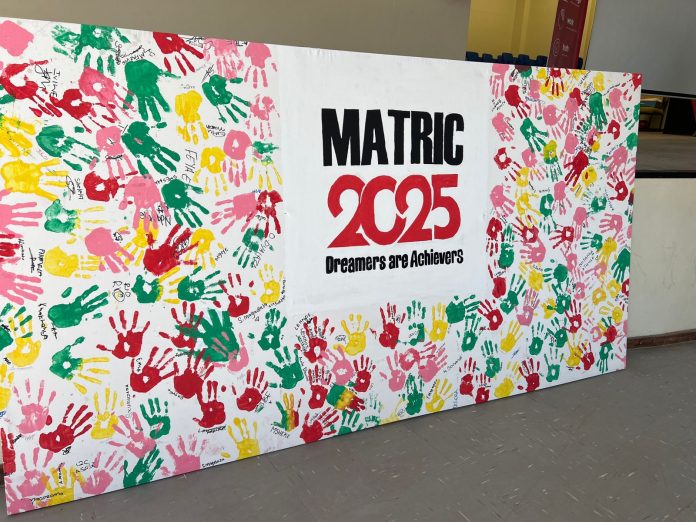
Celebrations are continuing as the Western Cape Class of 2025 has delivered the highest matric pass rate and bachelor’s pass rate ever for the province.


The matric pass rate increased from last year’s record-breaking 86.6% to 88.2%, which is the highest pass rate the province has received since the National Senior Certificate was introduced.


The bachelor’s pass rate, a key indicator of quality matric passes, increased from 47.8% to 49.2%. This is also the highest ever for the Western Cape, and the 2nd highest in the country.


Western Cape candidates have achieved the 2nd highest distinction rate in the country, with 13,234 candidates earning a total of 31,220 distinctions in 2025.


The province also tops the country’s scores in Mathematics, achieving a pass rate of 73.7% for Mathematics. WC candidates delivered the 2nd highest Physical Science pass rate in the country, at 80.6%.


Learners with Special Education Needs matric pass rate is 91.9%, and the province has the 2nd highest bachelor’s pass rate for LSEN candidates in the country at 60.4%.


The Class of 2025 achieved this with the highest retention rate in the country at 70%, which is also the top retention rate our province has had since 2021.


Two Western Cape candidates received the top awards on the national stage.


  • Abigail Kok, from York High School in George, is the Class of 2025’s top candidate and the top candidate in Physical Science.
  • Takunda Muchuweni, from Jan Kriel School in Kuils River, is the top LSEN candidate in South Africa


Two WC districts have achieved pass rates of over 90% in 2025:


  • The Overberg District, with a 92.4% pass rate (3rd highest district pass rate in the country), and a bachelor’s pass rate of 49.5%!
  • The Metro East Education District has a matric pass rate of 90.2% and bachelor’s pass rate of 50.2%.


All remaining WC districts scored over 80% this year:


  • Metro North Education District – 89.2%
  • Eden and Central Karoo Education District – 89.1%
  • Metro South Education District – 87.7%
  • West Coast Education District – 87.4%
  • Metro Central Education District – 87.0%
  • Cape Winelands Education District – 84.6%


Continued improvement is also seen across no-fee school quintiles, with all quintiles increasing their pass rates and achieving a pass rate of above 80%.


  • Quintile 1 achieved a matric pass rate of 82.0% and a bachelor’s pass rate of 36.1%.
  • Quintile 2 schools increased their pass rates again this year, with a matric pass rate of 85.5% and a bachelor’s pass rate of 38.2%.
  • Quintile 3 schools achieved a similar increase, with a matric pass rate of 84.3% and a bachelor’s pass rate of 38.9%.
  • The matric pass rates for Quintile 2 and Quintile 3 schools have exceeded the pass rate for Quintile 4 (83.7%).
  • More importantly, the bachelor’s pass rates for Quintiles 1, 2 and 3 all exceed that of Quintile 4 (34.4%), demonstrating that no-fee schools are rapidly catching up in terms of quality of matric passes.


READ: Debunked: No, you don’t pass matric with 30% in South Africa


Debunked: No, You Don’t “Pass Matric With 30%” in South Africa

matric


Every year, as matric results are released, the same claim resurfaces: that learners only need 30% to pass matric. It is widely shared on social media, repeated in comment sections and used to discredit the National Senior Certificate.


It is also false.


South Africa does not have a 30% matric pass mark. The idea is a myth built on a misunderstanding of how the pass system works.


Where the 30% Figure Comes From


The confusion arises because 30% is the lowest mark allowed for one or two subjects in certain pass categories. But it is never enough on its own to pass matric.


Learners must meet minimum requirements across all seven subjects to obtain the National Senior Certificate. That includes higher marks in key subjects like Home Language and, for university access, designated subjects such as Mathematics and Physical Science.


In other words, you cannot scrape 30% across the board and pass. That learner will fail.


How the NSC Pass System Actually Works


There are three main types of matric passes, each with its own requirements:


1. Higher Certificate Pass


To achieve this, a learner must:

  • Get at least 40% in Home Language
  • Get at least 30% in two other subjects
  • Get at least 40% in three other subjects
  • Pass six of seven subjects


2. Diploma Pass


To qualify, a learner must:

  • Get at least 40% in Home Language
  • Get at least 40% in three other subjects
  • Get at least 30% in two other subjects
  • Pass six of seven subjects


3. Bachelor’s Pass (University Entrance)


This requires:

  • At least 40% in Home Language
  • At least 50% in four designated subjects
  • Pass six of seven subjects


So while a learner may score 30% in one or two subjects, they must still achieve much higher marks in the rest to pass overall.


That is not “passing with 30%”. That is passing with a balanced set of results.


Why the Myth Persists


The “30% pass” claim sticks around because:

  • People confuse the lowest subject mark allowed with the overall pass requirement
  • Headlines often oversimplify results
  • The system is more complex than a single number


What the Department of Basic Education Says


The Department of Basic Education has repeatedly clarified that 30% is not the matric pass mark. Education ministers, including the current Minister Siviwe Gwarube, have stressed that the NSC is earned by meeting minimum requirements across a full subject package, not by scraping through on one low mark.


In her 2025 results address, Gwarube put it plainly:

“30% is not the matric pass mark. The NSC is earned by meeting minimum requirements across a full subject package.”


Why This Matters


Reducing matric to “30%”:

  • Undermines the effort of learners who work hard across multiple subjects
  • Misrepresents the standard of the qualification
  • Distracts from real issues, like early learning, quality teaching and subject mastery
  • Most learners who pass matric achieve well above 30% in the majority of their subjects – especially those qualifying for Diploma and Bachelor passes.

The first-ever autistic Barbie doll has been born

The first-ever autistic Barbie doll has been born
Nandi Madida


The first-ever autistic Barbie doll has been born. According to a media statement, the doll was developed in partnership with the Autistic Self Advocacy Network (ASAN). According to a leading global toy and family entertainment company, Mattel, Inc., the doll was in development for a period of over 18 months.


“Barbie has always strived to reflect the world kids see and the possibilities they imagine,” said Jamie Cygielman, Global Head of Dolls, Mattel.


The first-ever autistic Barbie doll sees the light of day


This development process was done in partnership with ASAN. The Autistic Self Advocacy Network is a non-profit disability rights organisation run by and for autistic people. It advocates for the rights of the autistic community.


The first-ever autistic Barbie doll has been born
Nandi and Nefertiti Madida


It joins the Barbie Fashionistas collection, which features the most diverse range of skin tones, hair textures, body types, and various medical conditions and disabilities.


“The doll helps to expand what inclusion looks like in the toy aisle and beyond because every child deserves to see themselves in Barbie.”


Barbie® Introduces the First Autistic Barbie Doll


The Barbie design team made intentional design choices for the autistic Barbie doll to authentically reflect some experiences that individuals on the autism spectrum may relate to. This was done in close collaboration with ASAN.


The first-ever autistic Barbie doll has been born
Screenshot: Rafael Ortega


An Executive Director at Autistic Self Advocacy Network (ASAN), Colin Killick, said, “It is so important for young autistic people to see authentic, joyful representations of themselves, and that’s exactly what this doll is.”


The autistic Barbie doll features and accessories include:

  • Face and Body: Along with a new face sculpt, the autistic Barbie doll features elbow and wrist articulation, enabling stimming, hand flapping. There are also other hand gestures that some members of the autistic community use to process sensory information or express excitement.
  • Eye Gaze: The doll is designed with an eye gaze shifted slightly to the side. This reflects how some members of the autistic community may avoid direct eye contact.
  • Accessories: Each doll comes with a pink finger clip fidget spinner, noise-cancelling headphones and a tablet.
    • Fidget Spinner: The doll holds a pink finger clip fidget spinner that actually spins, offering a sensory outlet that can help reduce stress and improve focus.
    • Headphones: Pink noise-cancelling headphones rest on top of the doll’s head as a helpful and fashionable accessory that reduces sensory overload by blocking out background noise.
    • Tablet: A pink tablet showing symbol-based Augmentative and Alternative Communication apps (AAC) on its screen. This serves as a tool to help with everyday communication.
  • Sensory-Sensitive Fashions: The doll wears a loose-fitting, purple pinstripe A-line dress with short sleeves and a flowy skirt. This provides for less fabric-to-skin contact. Purple shoes complete the outfit, with flat soles to promote stability and ease of movement.


Championing Representation for Children through Play


Staff at Mattel, Inc. say the doll was created with guidance from the autistic community. This was to represent common ways autistic people may experience, process, and communicate about the world around them. At the same time, this doll invites more children to see themselves represented in Barbie.


Barbie Voice Note Nandi Madida (1).wav


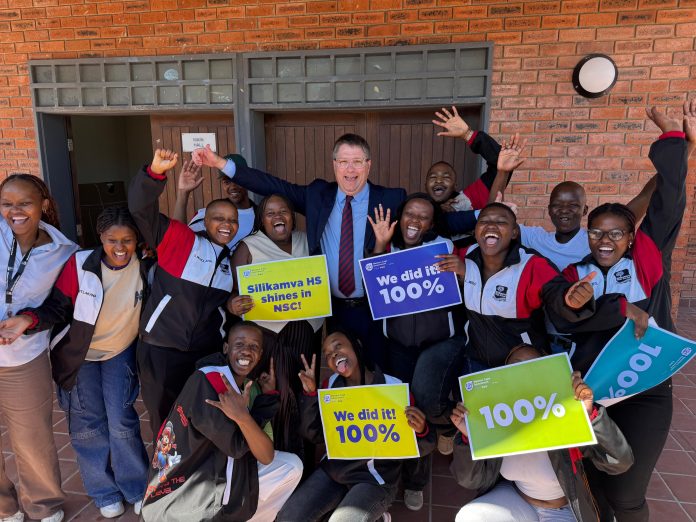
Watch: Silikamva High School make history with 100% Matric Pass Rate

matric


Western Cape Education MEC David Maynier celebrated the release of the Class of 2025’s individual results at Silikamva High School in Hout Bay, and the school’s record-breaking results this year.


Silikamva is a Quintile 3 no-fee school founded in 2013 and has struggled in the past, with a matric pass rate of just 40.4% in 2019.


To turn things around, the school management team decided to invest in improving the school’s culture, with the help of their collaboration school operating partner, Common Good.


Their decision to focus on continuous improvement, personal growth, discipline, motivating learners and staff, and building relationships with parents and the surrounding community has paid off.


For the first time since the school was founded, the matric Class of 2025 achieved a matric pass rate of 100%.


“The school’s name means ‘we are the future’, and with matric results like these, that future is very bright!” – MEC David Maynier


In addition, they achieved an outstanding bachelor’s pass rate of 76.0%, which is a clear indicator of the school’s focus on the quality of their matric passes, which opens up greater opportunities for their matriculating learners.


The school’s candidates earned 75 subject distinctions, with a 100% pass rate for 8 subjects, including Physical Science.


Principal Siphathisiwe Nkahla-Nkohla shared the secret to the school’s success:


“Our results are a reflection of the strong academic culture we have inculcated as a school, the use of data to improve results, the commitment of our educators and the support of parents and our school operating partner (Common Good).
We are proud of what has been achieved and we look forward to our matriculating learners using this solid foundation to access further education, meaningful opportunities and to become responsible, contributing citizens in the future.”


District results


Two Western Cape districts have achieved pass rates of over 90% in 2025.


The Overberg Education District is 1st place with a 92.4% pass rate (3rd highest district pass rate in the country) and a bachelor’s pass rate of 49.5%


The Metro East Education District maintains the 2nd spot, with a matric pass rate of 90.2% and a bachelor’s pass rate of 50.2%.


All the remaining districts scored over 80% this year:


• Metro North Education District – 89.2%
• Eden and Central Karoo Education District – 89.1%
• Metro South Education District – 87.7%
• West Coast Education District – 87.4%
• Metro Central Education District – 87.0%
• Cape Winelands Education District – 84.6%


Across districts, the number of underperforming public ordinary schools with pass rates of 60% or below has declined even further this year, from 5 schools in 2024 to just 2 in 2025.


Quintile results


Maynier says they continue to see improvements across no-fee school quintiles, with all quintiles increasing their pass rates and achieving a pass rate of above 80%.


  • Quintile 1 achieved a matric pass rate of 82.0% and a bachelor’s pass rate of 36.1%.
  • Quintile 2 schools increased their pass rates again this year, with a matric pass rate of 85.5% and a bachelor’s pass rate of 38.2%.
  • Quintile 3 schools achieved a similar increase, with a matric pass rate of 84.3% and a bachelor’s pass rate of 38.9%.


The matric pass rates for Quintile 2 and Quintile 3 schools have exceeded the pass rate for Quintile 4 (83.7%).


More importantly, the bachelor’s pass rates for Quintiles 1, 2 and 3 all exceed that of Quintile 4 (34.4%), demonstrating that our no-fee schools are rapidly catching up in terms of quality of matric passes.


Re-marks, re-checks, and June exams


Maynier has encouraged all learners who did not pass their exams not to give up and to continue doing whatever they can to complete Grade 12.


They can apply for a re-mark or re-check if they do not feel their results reflect their performance, or write the exams in June.


More information on these options is available on the WCED website.

error: Content is protected !!