


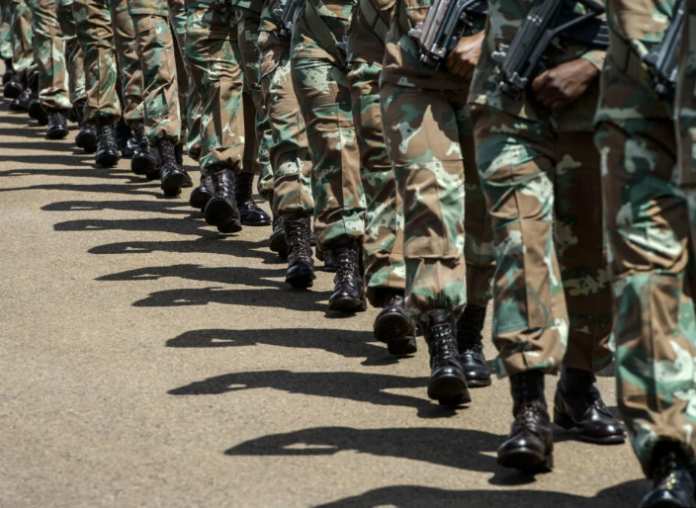
There have been mixed reactions to President Cyril Ramaphosa’s announcement during his State of the Nation Address on Thursday night that the SANDF will be deployed to gang-infested areas of the Western Cape soon.
Ramaphosa said a tactical plan is being finalised, and Parliament will be informed of the scale and the duration of the deployment. Further details will be shared with the public in due course. Community crime fighters have long called for the deployment of the army.
The Western Cape Provincial Community Police Board has welcomed the announcement, saying the SANDF must serve as a short-term force multiplier to stabilise high-risk areas, enhance visible security, and create space for broader state interventions.
The Board has, however, emphasised that military deployment is not a substitute for effective, professional policing.
“Lasting reductions in crime will depend on measurable investment in strengthening SAPS’ investigative capacity, crime intelligence, anti-corruption efforts, and community-oriented policing, as mandated by the Constitution.”
Western Cape community police board spokesperson Rafique Foflonker has called for a clearly defined operational plan, transparent oversight mechanisms, and a time-bound strategy, alongside a parallel commitment to institutional capacitation and coordinated socio-economic interventions.
Mayor Geordin Hill-Lewis has also welcomed the short-term deployment of the army, but challenged the President to act urgently on real solutions for upping gang crime convictions by devolving powers for City police to help SAPS investigate gang, gun, and drug crime.
“Any short-term relief for families in gang-impacted communities is most welcome, and our City police will be on hand to support SAPS and the SANDF, as will our safety technology. But Mr President, while we welcome the army, it is only short-term. We urge you to also act now on real solutions to up gang crime convictions by devolving more powers to City police.”
The MMC for Safety and Security, JP Smith, says stabilisation is not enough; we need convictions.
“As with previous deployments, I know that stabilisation alone is not sufficient if criminals continue to roam freely and case dockets go missing. I demand that the criminals terrorising communities in the Western Cape be arrested and successfully prosecuted. It cannot be that case-dockets go missing, cases are withdrawn, or investigations go cold, resulting in criminals never seeing their day in court. I call on the President to think not only in the short term, but also in the long term. It is time for the expansion of Metro Police’s policing powers to include investigations, intelligence-gathering and forensic powers so that we can begin bringing criminals to book and keep our communities safe in the long run.”
MP Ian Cameron, who is the chair of Parliament’s Portfolio Committee on Police, agreed that while this intervention is justified, given the high levels of gang violence, stabilisation is not a strategy.
He says the SANDF cannot replace the investigative and intelligence functions of the South African Police Service or the Directorate for Priority Crime Investigation.
“Soldiers can assist with visibility and area control. They cannot dismantle drug networks, build racketeering cases or secure sustainable convictions. What we need instead is structural reform.”
Cameron says the City of Cape Town’s Metro Police has demonstrated operational capacity, and agreed with Smith and Hill-Lewis that the City should be granted enhanced forensic authority, particularly ballistic analysis powers in gang-related gun violence.
“Where municipal capability exists and can measurably improve safety outcomes, it should be enabled within a coordinated national framework. If reform enhances safety, it should not be resisted.”