13.1 C
Cape Town
Sunday, June 28, 2026
Home Blog Page 5

Bafana Bafana make history, progressing to the FIFA World Cup knockout phase

bafana


Messages of congratulations are pouring in this morning for Bafana Bafana, who have progressed to the knockout stages in the FIFA World Cup for the first time.


They beat Korea 1-0 in Monterrey in the early hours of Thursday morning, South African time.


President Cyril Ramaphosa says Bafana Bafana displayed an inspired team performance of discipline in defence and precision in their attack.


He praised Coach Hugo Broos and scorer Thapelo Maseko, adding that the country is united behind the team ahead of their next match against Canada.


The team will now face co-hosts Canada in a Round of 32 match on Sunday, 28 June, at 21:00.


Apartheid-era informer in court for murders of young activists

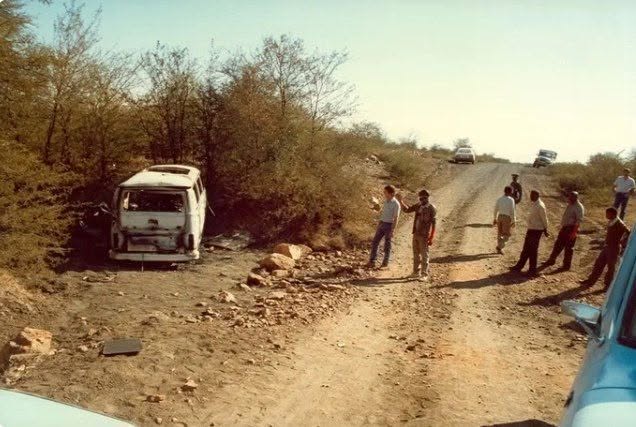
A police photograph from 1986, following the murders of 10 youths from Mamelodi.


A former apartheid-era informer is due to appear in court in connection with the murders of young activists during that time. 


The Directorate for Priority Investigations (Hawks) confirmed that the 74-year-old suspect would appear in the Benoni Regional Court on Thursday on 15 counts of murder, as well as arson, kidnapping, defeating or obstructing justice and other weapon-related charges. 


“Ongoing investigation that has resulted in a 74-year-old former apartheid informer, commonly known as an Askari, appearing before the Benoni Regional Court today, 25 June 2026, on multiple charges,” read the Hawks statement.  


The investigation stems from three matters brought before the Truth and Reconciliation Commission (TRC) and links the suspect to incidents known as Operation Zero Zero, the Nietverdiend/Mamelodi 10 and the KwaNdebele 9. 


According to the Hawks, the incidents allegedly followed a similar pattern. 


“Young people were lured under the guise of receiving military training, provided with explosives, and subsequently smuggled out of the country during the apartheid era,” read the Hawks statement. 


Prosecutors allege that the suspect, who worked under Eugene de Kock, tricked young people into thinking they were joining missions against the apartheid government. 


“Instead, they met their deaths at the hands of the suspect and two accomplices who allegedly operated from Vlakplaas under the command of Eugene de Kock.” 


The Hawks said the case forms part of its “ongoing pursuit of accountability for apartheid-era atrocities”. 

IN FULL: Hill-Lewis calls for calm ahead of possible 30 June unrest


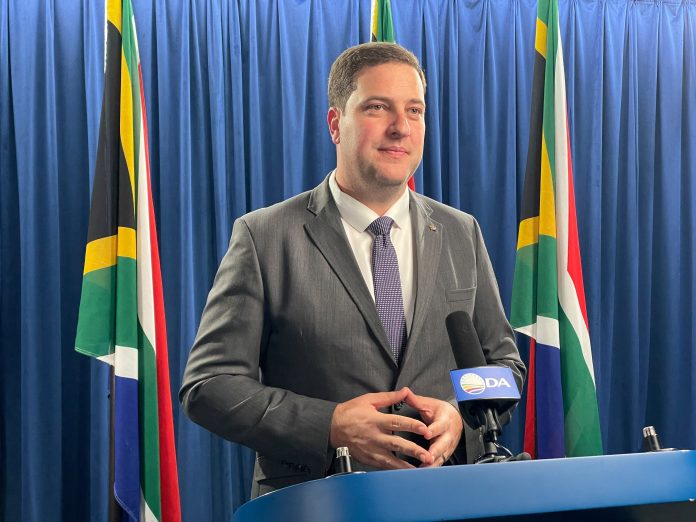
Democratic Alliance leader Geordin Hill-Lewis has appealed for calm ahead of threatened anti-migrant protests and possible unrest planned for 30 June.


In an online address, Hill-Lewis acknowledged public frustration over unemployment, crime, illegal immigration and government failures, but warned that anger must not be allowed to descend into hatred or violence.


He condemned politicians and vigilante groups that scapegoat foreign nationals, calling on law enforcement agencies and all spheres of government to uphold the law, prevent violence and protect communities.


Hill-Lewis argued that South Africa’s challenges stem from weak institutions and a stagnant economy, not migrants, and urged citizens to stand for peace, constitutional values and the rule of law.


His speech in FULL:


My fellow South Africans,


In the coming days, our country faces a test of leadership, of law, and of who we are as a people.


Across South Africa, many people are angry and frustrated. I understand that frustration.


Millions of South Africans cannot find work. Families are struggling. Communities feel abandoned. People see illegal immigration, corruption, crime, and a government that too often talks and talks — while ordinary people pay the price.


But I want to say this clearly tonight: Our frustration must never become hatred.
And it must never become violent.


We must never allow certain politicians or vigilantes to abuse the hardship caused by a failing economy to scapegoat and incite violence against foreign nationals to promote their own agendas.


We are better than that.


South Africans are not a hateful people.
We are a decent, generous, resilient people.


In our transition to democracy, we were an example to the world that divisions can be resolved peacefully.


Now at this moment, let us once again show the best of who we are, not the worst of who we are.


Let us show the best of our values. The best of our country.


If people have come to our country illegally, the law must be applied – but it must be applied with the full knowledge that we are dealing with human beings.


So we must condemn those who speak words they know may cost lives but and speak them anyway.


To act with such lack of concern exposes a gaping hole in their souls where their humanity should be. 


These people are not leaders. And their words promise only violence and chaos for our country.


To them I say: you do not speak for the people of South Africa.


We know why South Africa is in this position.


We are in this position today because the institutions which are supposed to enforce the law have been broken by years of corruption and bad government.


And we’re in this position because South Africa’s economy is simply not growing nearly fast enough to create jobs.


The work of fixing these broken institutions is not easy or quick. It is about getting honest, competent people in government and rebuilding the ability to actually uphold the law.


But, fortunately, we have a shining example of what serious reform looks like where the DA is in national government.


At Home Affairs, DA Minister Leon Schreiber is doing the hard, painstaking work of building new systems and institutions to undo decades of failure: securing our immigration system, digitalising and fixing broken processes, fighting fraud and corruption, and ensuring that those who are here illegally are processed lawfully and, where required, deported while upholding inherent human dignity.


That is how a serious country deals with illegal immigration and rebuilding the state.


Now, as for next week, threats of violence and anarchy cannot be acceptable in a constitutional democracy.


The law must be enforced by the state — not by mobs, not by vigilantes, and not by politicians who stoke hatred for votes.


Now is the time for SAPS and the criminal justice system to step up and enforce the law without fear or favour.


No individual or group gets to set deadlines for who may live in South Africa.


No one may demand another person’s papers in the street. No one may threaten a family, close a shop, block a road, or loot a business.


These actions do not demonstrate the values of the best of our country.


And wherever the DA governs, let me be absolutely clear: we are the party that will protect law and order.


As Mayor of Cape Town, I have instructed our Law Enforcement services to be ready, visible and firm. We will work with SAPS. We will keep roads open. We will protect businesses, public transport, schools and places of worship of all people.


And I call on every government in South Africa — national, provincial and local — to do the same.


Earlier today, I reached out to President Ramaphosa to say that this must be a moment for all governments to work together — DA governments, ANC governments, provincial governments, local governments and national government.


Every mayor, every premier, every minister and every law enforcement agency has a duty to lower the temperature, prevent violence, protect communities and uphold the law.


Let us unite now to lower the temperature and stop any violence before it begins.


This is a moment for every government to show that the law still means something.
Because that is what real government does.

Our responsibility as a government is to protect people, uphold the law and keep order.


We must also be honest about the real crisis. South Africa’s deepest problem is not a vulnerable person selling vegetables on a corner who happens to not be born here. It is an economy that does not grow, a state that does not work, and a government that has failed to create jobs, secure our borders, fight crime and deliver basic services.


That is the real work: jobs, growth, safety, clean government, well managed migration and a state that works.


So tonight I call on every South African: do not be drawn into hatred. Do not share messages that inflame fear.


Stand for your country by standing for the best of what it means to be South African, by standing for peace, order and the Constitution.


Let us show the world who South Africans really are.


Geordin Hill-Lewis
Leader of the Democratic Alliance

 

Fuel Prices and Funding Cuts Force MyCiTi Fare Hike

MyCiTi


The City of Cape Town has announced that MyCiTi bus fares will increase from 1 July 2026, subject to approval of the City’s draft budget later this month.


The fare adjustments are aimed at ensuring the long-term sustainability of the service as operating costs continue to rise. The City says higher fuel prices, maintenance expenses and looming cuts in national government funding have placed significant pressure on its public transport budget.


Under the proposed changes, fares for trips of up to 20 kilometres will increase by between 38% and 45%, while fares for longer journeys will rise by between 32% and 37%. The Monthly Pass will increase from R1,000 to R1,500.


Mayoral Committee Member for Urban Mobility, Councillor Rob Quintas, said the City had absorbed the impact of soaring diesel prices for several months to shield commuters from immediate fare hikes.


“We have protected MyCiTi commuters from the devastating impact for four months already at a cost of about R9.1 million per month.”


He noted that rising fuel costs linked to the ongoing conflict in the Middle East have affected transport operators across the board.


“Our operational costs in providing a world-class public transport offering, matched with fuel price increases, have informed our current fare adjustments.”


Quintas stressed that MyCiTi remains a subsidised public transport service and that the City does not generate a profit from fares.


“MyCiTi remains one of the most affordable public transport services, especially when you travel outside of peak periods.”


Two Operations, Hundreds of Illegal Marine Products Seized

Marine life


Cape Town law enforcement authorities have made two significant arrests in separate marine resource protection operations, seizing hundreds of illegally harvested abalone and West Coast rock lobster products.


The City of Cape Town’s Marine and Environmental Unit, working alongside the South African Police Service (SAPS) Gordon’s Bay and GBSEC Armed Response, intercepted a vehicle along Clarence Drive in Gordon’s Bay on Wednesday, 24 June 2026, after receiving intelligence about suspected illegal abalone transport.


Law Enforcement spokesperson Wayne Dyason said officers stopped and searched the vehicle and discovered 743 units of abalone believed to have been unlawfully harvested and transported.


“Two suspects, a male and a female, were arrested and charged under the Marine Living Resources Act. The abalone was seized as evidence, while the suspects were detained for further processing.”


In a separate operation on Saturday, 20 June 2026, Marine and Environmental Unit officers acted on information about illegal West Coast rock lobster sales at a property in Sherwood Park, Manenberg.


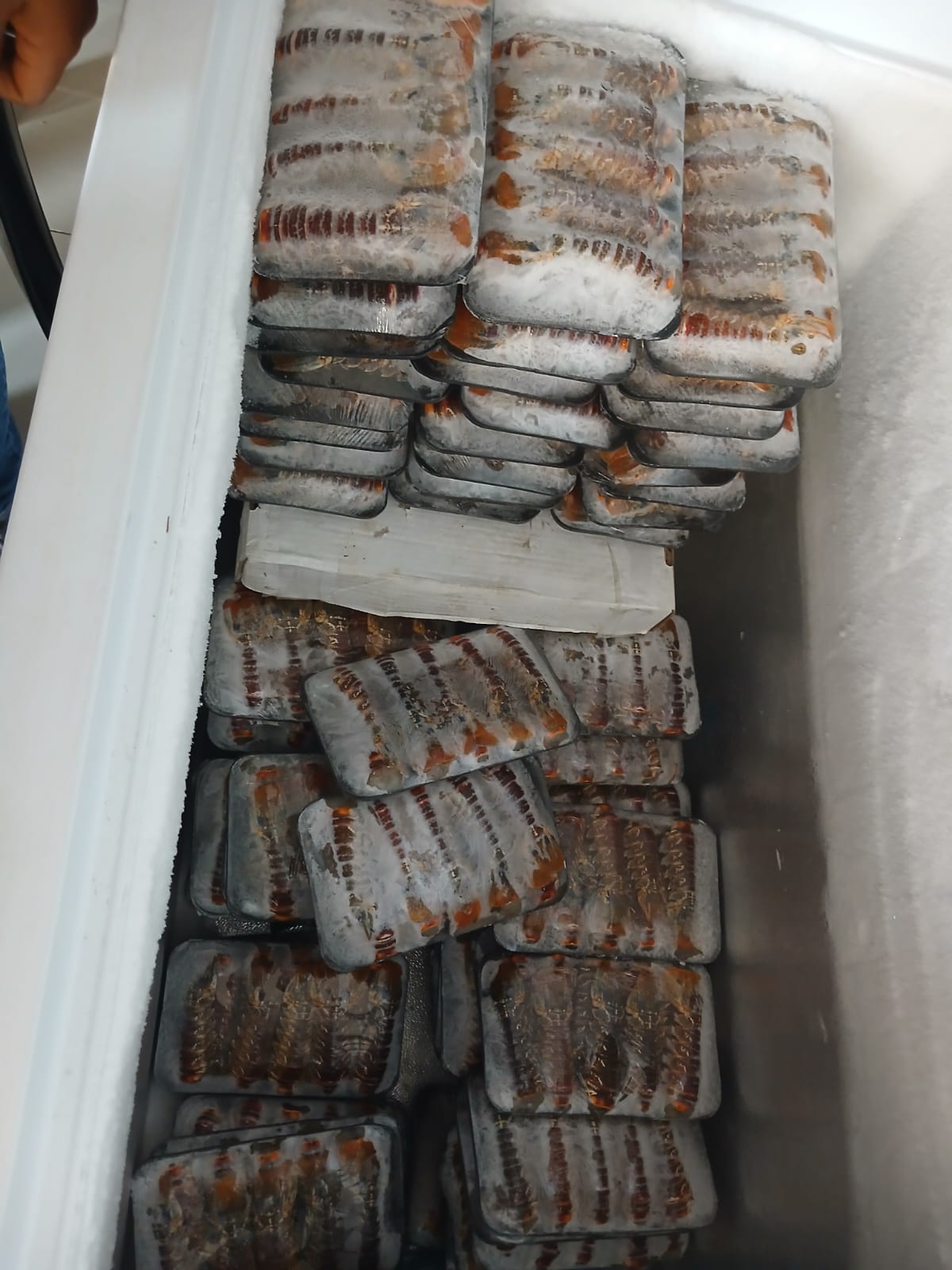
Dyason said upon arrival, officers gained access to the premises and discovered 720 West Coast rock lobster tails. The man at the property was unable to provide any documentation proving legal possession and was arrested.


“He was charged under the Marine Living Resources Act for possession without a permit, as well as for possessing lobster tails that were not in whole form, which is prohibited under the legislation.”


Dyason said community involvement continues to play a crucial role in tackling marine crime.

“We encourage residents to report any suspicious activity related to the illegal trade of marine resources. Members of the public are urged to report such incidents on 021 480 7700 from a cellphone or 107 from a landline. The City of Cape Town offers a reward of up to R5,000 for information leading to a successful enforcement outcome.”

error: Content is protected !!