

13.1 C
Cape Town
Monday, June 29, 2026
Home Blog Page 6

There’s growing concern that 296 babies were born to very young mothers


There’s growing concern that 296 babies were born to very young mothers in the Province in recent years. These girls were aged 10 to 14 years during the 2024/25 financial year.


There’s growing concern that 296 babies were born to very young mothers


The MPP and the DA’s Western Cape Spokesperson on Social Development, Wendy Kaizer-Philander, has expressed concern about the matter. She says the 296 pregnancies raise serious concerns about child abuse.


The MPP says this is evidence of child sexual abuse


Kaizer-Philander says the statistics were released by the Western Cape Department of Health and Wellness. She says it should raise the alarm among residents. The MPP added that when a child as young as 10 years old presents as pregnant, there can be no ambiguity. She says this is evidence of child sexual abuse and, at a minimum, statutory rape. Kaizer-Philander added that such cases must be reported to the South African Police Service. It should also be investigated without delay, as required by law.


Children must be protected


Kaizer-Philander, who is also the DA Western Cape Spokesperson on Social Development, added that the party is unequivocal in its position that children must be protected. She says perpetrators must be held accountable, and every institution with a legal duty to act must do so without hesitation.

“Failure to report, investigate, and prosecute cases of child rape and statutory rape not only denies victims justice but also encourages a culture of impunity for perpetrators,” she added.


High number of teenage pregnancies in the province


The MPP added that the Standing Committee on Social Development in the Western Cape Parliament will call the Departments of Social Development, Education, and Health and Wellness, together with the National Prosecuting Authority (NPA) and the South African Police Service’s Family Violence, Child Protection and Sexual Offences (FCS) unit, to appear before the committee. She says the committee will rigorously assess the effectiveness of current interventions aimed at addressing teenage pregnancy, child sexual abuse, and statutory rape. This will happen at the same time, while they identify the factors contributing to the persistently high number of teenage pregnancies in the province.
Couple Arrested After Police Uncover R900,000 Drug Stash in Mfuleni Raid

Drugs seized in Mfuleni


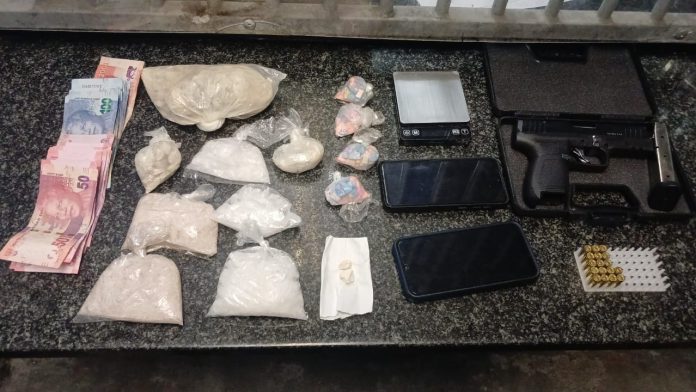
Two suspects have been arrested following a drug raid in Mfuleni that resulted in the seizure of a variety of narcotics with an estimated street value of R900,000, a modified imitation firearm and an undisclosed amount of money.


The operation was carried out by the Anti-Economic Crime Task Team in conjunction with the Counterfeit and Illicit Goods Policing Team at a property in Minstrel Street during the early hours of Wednesday morning.


Police spokesperson Ndakhe Gwala says officers acted on information received and conducted a search of the premises at approximately 4:30am.


“Officers confiscated 433.16 grams of crystal meth, two sachets of crack cocaine, 13.71 grams of mandrax powder, four mandrax tablets, 6.693 grams of ecstasy, a modified imitation firearm and an undisclosed amount of cash.”


A 51-year-old man and his 29-year-old girlfriend were arrested on charges of possession and dealing in drugs, as well as possession of a prohibited firearm.


The suspects are expected to appear in the Blue Downs Magistrates’ Court once they have been formally charged.


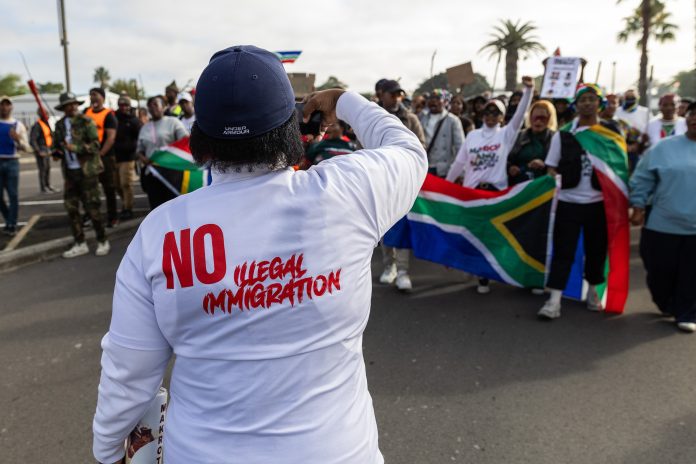
Law enforcement deployments increased ahead of 30 June protests

law - concerns over Dunoon protest
About 100 March and March supporters walked from Du Toit Park in Bellville to the Parow Police Station on Saturday. Image credit: Ashraf Hendricks


Law enforcement deployments have been increased in the Western Cape in anticipation of possible disruptions that could take place during anti-immigration planned protests on 30 June 2026.


The Western Cape Minister for Police Oversight and Community Safety, Anroux Marais, says intelligence-gathering efforts are underway to provide early warning of any threats to public order and safety.


The Western Cape Provincial Disaster Management Centre has also activated contingency measures to support any required emergency response.


The Provincial Joint Operational Centre (ProvJOC) has reportedly also been activated, and all relevant stakeholders are working closely to ensure public safety and stability.


The minister has been briefed on the matter at the Western Cape Provincial Operational Command Centre (POCC) on the South African Police Service’s operational readiness to respond to any incidents.


Marais has called on residents to refrain from any acts of violence, intimidation, or lawlessness during or ahead of the planned protests.


“The Western Cape Government acknowledges the frustrations regarding issues affecting residents and their communities. We also respect the constitutional right of residents to protest peacefully. However, any protest action must be peaceful, lawful and within the confines of the Constitution. The rule of law must be respected at all times,” added Marais


The minister urged all law-abiding citizens to reject calls for violence and to refrain from participating in any activities that could destabilise communities or undermine the rule of law.


“There can be no justification for violence, intimidation, damage to property, looting or attacks on individuals. Such actions place lives at risk and divert valuable law enforcement resources away from the fight against crime.”


Residents have also been strongly warned against the spread of misinformation and disinformation on social media platforms. This is because the spreading of misinformation or disinformation aimed at provoking unrest may constitute a criminal offence and could result in criminal charges.


“Residents are urged to act responsibly online and to refrain from sharing unverified information, inflammatory content or messages intended to incite violence or create fear.”


Marais further emphasised that concerns relating to immigration must be addressed through lawful and established channels.


READ MORE: City Cape Town remains stable as authorities monitor 30 June protest plans

“Meat Exhaustion Day”: The appetite for meat is outpacing what the planet can sustain

meat


The animal welfare organisation FOUR PAWS says the World has officially reached “Meat Exhaustion Day” today, 24 June 2026, a phrase they coined to describe the day when global meat consumption exceeds the recommended annual intake under the Planetary Health Diet.


This means that halfway through the year, consumption of meat is now more than double the recommended levels. And FOUR PAWS says this happens yearly, with high-income countries using up their yearly recommendation within a few months.


The Planetary Health Diet, developed by the EAT-Lancet Commission, recommends a threshold of meat intake of 16.4 kilograms per person per year, yet global consumption averages at 34.5 kilograms – more than double.


In Global North regions such as North America, Europe, and Australia, intake exceeds this by 70–80%, with countries like the United States and Australia reaching their Meat Exhaustion Day as early as mid-March.


South Africa reached its threshold sometime in May 2026.


An expert on Animals Farmed in Inappropriate Conditions at FOUR PAWS, Asma Al Hajal, says humanity is consuming far beyond what animals and the planet can sustain.


“Meat Exhaustion Day makes that imbalance impossible to ignore. Behind every bite is a system that impacts billions of animals, drives the climate crisis, and pushes ecosystems to the brink. The current global food system is broken, and as consumers, it is important to make informed decisions when choosing what to eat, knowing where our food is sourced and what its impacts are.”


To this end, FOUR PAWS has developed a meat consumption calculator, which encourages people to make small dietary changes that can collectively lead to a big difference.


Users can enter the amounts of different types of meat they eat. The calculator then visually shows how their diet impacts farmed animals and how it compares to the EAT-Lancet recommendation.


It then suggests tailored adjustments to help users stay within the recommended limit of 16.4 kilograms of meat per year.


WATCH: South Africa now makes a critical molecule for lab-grown meat

NGO’s pushing for Maternal Support Grant

maternal grant
Image by Marjon Besteman from Pixabay


A coalition of 15 NGO’s are pushing to introduce a Maternal Support Grant (MSG) in South Africa, which it argues could help put an end to child stunting and save South Africa’s public health system up to R13.8 billion annually.


The Department of Social Development has been exploring the evidence and economic benefits of the grant since 2012, and the case for its adoption grew in urgency earlier this year, when President Cyril Ramaphosa launched the mission to end stunting in his State of the Nation Address.


Ramaphosa singled out support for pregnant women and building on the Child Support Grant.


The MSG Advocacy Coalition says this grant does precisely that, and they are now pushing to fund it while the budget window is open.


This includes ensuring they have access to sufficient nutritious food, especially protein, to support healthy pregnancies.


Government departments have until Friday, 26 June, to stake their claims on the next three years of spending, including whether to fund a Maternal Support Grant for pregnant women living in poverty.


The Coalition, which includes researchers, argue that for every R1 invested, modelling shows society gets back around R30, mostly through preventing premature deaths and cutting healthcare costs.


At roughly R2 billion a year, the grant could save the public health system up to R13.8 billion annually.


Research shows that about 13% of South African babies are born underweight, the single strongest predictor of childhood stunting, yet an unemployed or informally employed woman gets no income support during pregnancy at all.


That means women stretching food, skipping meals and delaying antenatal care at the exact moment their baby’s development is being decided.


The Coalition says introducing this proposed grant would fill a long-standing gap in South Africa’s social protection system by providing income support to women during pregnancy, a period when good nutrition, health and maternal wellbeing impact an unborn baby’s growth and development.


A chief specialist scientist at the South African Medical Research Council, Wanga Zembe, says systematic reviews show that when pregnant women receive income support, they are
more likely to eat better, attend antenatal clinic visits, and give birth to healthier babies.

“This reduces low birth weight, improves early childhood development, and maternal mental health and saves lives. If we are serious about ending stunting, we must start where it begins — during pregnancy.”


Project Lead of Embrace, Julie Mentor, says the Maternal Support Grant addresses a specific maternity protection gap faced by women who are unemployed, informally employed or otherwise excluded from the Unemployment Insurance Fund maternity benefit and formal employment protections.


“For many women, this means trying to carry a pregnancy without any reliable income — stretching food, skipping meals or delaying essential care. Without targeted support, many vulnerable mothers are left to navigate pregnancy without the resources they need to protect their own health and that of their babies.”


Nutrition Lead for the Hold My Hand Accelerator, Liezel Engelbrecht, says the MSG’s primary purpose is not general income support but the protection of maternal and child health during a critical developmental window.


“The MSG offers a practical, evidence-based intervention that is not only affordable but also cost-saving, and it can be advanced while the social development department’s wider basic income support policy framework continues to be debated and costed.”


The Coalition says the MSG is a temporary intervention focused on pregnancy and the immediate postnatal period, which means it is fiscally manageable and reduces concerns around long-term dependency.


“The window to shape the next three years of spending is now open. Securing funding for
the MSG is an important step in strengthening South Africa’s social protection system
and improving outcomes for mothers and children,” Engelbrecht concludes.

error: Content is protected !!