

14.6 C
Cape Town
Sunday, July 12, 2026
Home Blog Page 234

SANParks backtracks on indemnity form requirement at Boulders, Cape Point

park
Boulders Beach Boulders recorded an impressive year-on-year growth of 21.9% in visitors in December 2023. PIC: Liesl Smit


SANParks has backtracked on a requirement for visitors to sign an indemnity form before accessing Cape Point and the Boulders Penguin Colony, following concerns raised by tour guides and regular Table Mountain users.


In an initial statement shared on social media, SANParks said that Table Mountain National Park would require indemnity forms to be completed at all park gates, effective 10 February 2026.


The indemnity forms, park management said, would be an interim measure while SANParks completes the implementation of an ID scanning system for South African residents, which would ensure locals get the discounted rates.


But tourism role-players immediately baulked at the measure, saying this added red tape would harm tourism at these key sites by causing unnecessary delays for entry.


In a statement issued on 11 February, SANParks said that only digital ID scanning will be used at the Cape Point (Cape of Good Hope) and Boulders Penguin Colony entrances, and that indemnity forms will no longer be required for general day visitors.


Indemnity forms will apply only at designated picnic and braai facilities, namely Newlands Forest, Oudekraal, Silvermine, and Tokai Picnic & Braai Site. This does not apply to open-access areas, Wild Card holders, or Activity Permit holders.


The Table Mountain Aerial Cableway and Kirstenbosch Botanical Gardens are not included in this process.


Park Management says all personal information will be managed in accordance with the Protection of Personal Information Act (POPIA).
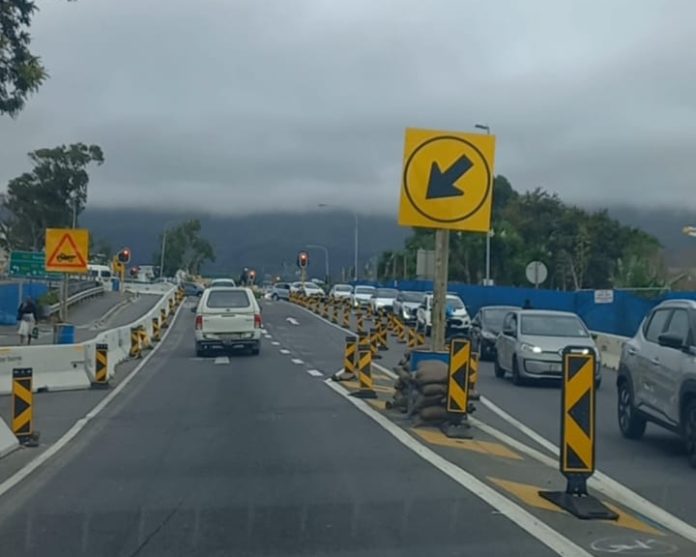

 

MyCiti Construction: More traffic pain for Claremont residents


The City of Cape Town’s Urban Mobility Directorate has advised residents and road users in the Claremont area of temporary road closures along Imam Haron Road to allow for the MyCiTi phase 2A construction works to proceed in the vicinity.


These temporary road closures will be in place from Monday, 16 February 2026, until the end of May 2026, if all goes as planned.


The following closures will take effect from 16 February:


Closure of the intersection of 1st Avenue/Imam Haron Road


• No access into or out of 1st Avenue
• Detour via Wade Road


Closure of the intersection of 2nd Avenue/Imam Haron Road


• No access into/out of 2nd Avenue
• Detour via 3rd Avenue


Closure of Markham Road between Chichester Road and Imam Haron Road


• No access in/out of Markham Road
• Detour via Belvedere/Chichester Road


The City’s Mayoral Committee Member for Urban Mobility, Councillor Rob Quintas, says he empathises with road users who are affected by this and the frustration it causes, but promises there is light at the end of the tunnel.


“We want to thank you once again for your patience and cooperation while all these works are underway. Please always factor in additional travel time, approach construction areas with caution and follow the temporary signs and guidance from flag personnel. Where possible, please use alternative routes.”


The added pressure on Claremont’s roads comes as urgent repairs are underway to Stanhope Bridge after the existing retaining wall on the southeast quadrant of the bridge failed on 26 January 2026. Currently, only one lane is available in each direction until further notice.


Work on the Stanhope Bridge forms part of the MyCiTi Phase 2A construction project, which will connect Khayelitsha and Mitchells Plain to Claremont and Wynberg.


Construction is expected to be completed by the end of 2027.


2026 Year of the Fire Horse: Your Guide to Wealth and Luck


The Chinese Lunar New Year is almost here! On Tuesday, February 17, 2025, we officially gallop into the Year of the Fire Horse.


This transition is more than just a date on the calendar; it’s an opportunity to reset your energy. Recently on The Joyride with Angel Campey, the team dived into the “dos and don’ts” of this ancient cultural tradition.

If you’re looking to invite prosperity and high-octane luck into your home, here is your essential guide to an auspicious year.

🍊 THINGS TO DO (For Good Luck)

✅ 1. Clean Before, Not During

Do your big house clean before New Year.
It symbolises sweeping out bad luck.

But once New Year starts? Put the broom down. You’re “sweeping away” fresh luck.


✅ 2. Wear Red (Even If It’s Just Socks)

Red = luck, happiness, protection.

If you’re not brave enough for a full red outfit, red underwear, socks, lipstick… it still counts.


✅ 3. Open Windows and Doors

On New Year’s Day, open windows and doors for a bit.

It’s meant to let good energy and opportunities in.

Basically: “Fresh air, fresh luck.”


✅ 4. Eat for Your Future

Certain foods = certain blessings:

  • Dumplings = money
  • Noodles = long life (don’t cut them!)
  • Fish = abundance
  • Oranges = wealth

So yes… eating is self-care AND manifestation.


✅ 5. Say Positive Things

Only good vibes on New Year’s Day:

No complaining.

No arguments.

No negativity.

You’re setting the “tone” for the year.


🚫 THINGS NOT TO DO (If You Don’t Want Bad Luck)

❌ 1. Don’t Cry

Crying = symbolising sadness for the year ahead.

So even if Eskom emails you…hold it together till tomorrow.


❌ 2. Don’t Break Anything

Breaking plates, glasses, mirrors = bad luck.

If something does break by accident, people often say a quick “good luck” phrase to cancel it out.


❌ 3. Don’t Wash Your Hair on Day One

Sounds random, but:

“Hair” sounds like “fortune” in Chinese.


So washing = washing away money.


Bad hair day > bad money year. Choose wisely.


❌ 4. Don’t Lend or Borrow Money

Starting the year in debt = money stress all year.

So don’t borrow.

Don’t lend.

Pretend you’re “financially unavailable” for 24 hours.


❌ 5. Don’t Use Bad Language

No swearing, insults, or harsh words.


Your first words of the year are meant to attract your future.


So maybe… not “Where’s my %#$% wallet?!” at 6am.


Call Centre Investment Strengthens Local Economy in Mitchells Plain

New call centre in Mitchells Plain


The City of Cape Town says a new Business Process Outsourcing (BPO) investment, known as call centres, in Beacon Valley, will bring hundreds of jobs and training opportunities to residents in and around Mitchells Plain.


The Mayor of Cape Town, Goerdin Hill-Lewis says the Beacon Valley facility will include both office space and a training centre for new recruits.


Hill-Lewis says the investment was facilitated by CapeBPO, the City’s special purpose vehicle for supporting the BPO sector.


“This is the second major call centre investment in Mitchells Plain during this term. Call centre jobs have doubled over the last decade, with over 100 000 Capetonians now employed in the sector.”


The BPO sector contributed R23 billion to Cape Town’s economy in 2024, with Mitchells Plain providing the largest share of the city’s BPO workforce at 16.3%.


Mayoral Committee Member for Economic Growth James Vos, highlighted that such investments bring jobs closer to where people live while boosting skills development.


“We are also ensuring more Capetonians are trained and work-ready to take up these opportunities. This Mitchells Plain development is a strong example of how targeted partnerships can translate into real jobs and economic impact for local communities.”


CapeBPO CEO Clayton Williams says over the next 10 years, they hope to locate 20 000 BPO seats across the Cape Flats.


“We would like to thank all the stakeholders involved for their unwavering commitment and we believe that in partnership with the City of Cape Town and our private sector constituents, we will watch this dream become a reality.”


The Beacon Valley centre follows the first Mitchells Plain BPO facility, opened in 2022 on Watergate Boulevard, reinforcing the area’s growing role as a hub for inclusive economic growth.


Tariff Hike Controversy: Consumers to Pay for NERSA’s Mistake

Electricity increase


South African households are once again facing the burden of skyrocketing electricity bills, with the National Energy Regulator of South Africa (NERSA) approving tariff hikes of 8.76% for 2026/27 and 8.83% for 2027/28.


The increases, affecting Eskom’s direct customers from 1 April 2026 and municipal utilities from 1 July 2026, come as the regulator attempts to recover an additional R54.734 billion to correct its own errors.


NERSA’s spokesperson Charles Hlebela says the extra revenue is intended to correct a regulatory asset base error, with the total amount to be recovered in phases.


“The redetermination follows a High Court judgment which remitted NERSA’s decision on Eskom’s Generation Regulatory Asset Base (RAB) for 2025/26, 2026/27 and 2027/28 for redetermination. The redetermination was conducted using the approved MYPD4 (Multi-Year Price Determination) Methodology, following a public consultation process in line with the court judgement.”

Also read: Steeper electricity  price hikes loom as nersa settles with eskom after R54bn “error”


NERSA’s decision has sparked widespread outrage from both local government and labour unions.


The City of Cape Town’s Mayoral Committee Member for Energy, Xanthea Limberg says the steep increase is unfair to consumers.


“Instead of rubber stamping this additional Eskom tariff hike, NERSA should have completed a full, error-free assessment of Eskom’s financials. It is now public knowledge that Eskom is in a better financial position than forecasted to NERSA, based on actual interim Eskom financial results. In fact, Eskom is already generating substantial profits even under the lower originally approved tariffs.”


The City is now considering legal action against NERSA’s approval of the extra hike.


Meanwhile the Congress of South African Trade Unions (COSATU) warns that South African households will feel the strain, with tariff hikes far exceeding initial projections and placing additional pressure on already tight budgets.


Cosatu’s Matthew Parks says repeated increases above inflation since 2006 are not a sustainable solution.


“This hike by NERSA undermines the ongoing and already complex discussions between the Presidency, the Ministries for Electricity and Energy as well as Trade, Industry and Competition with Eskom and heavy intensive industries on a reduced electricity tariff that can enable smelters and other embattled sectors to keep their operations going and save their employees’ jobs.”

error: Content is protected !!