DA MP Nicholas Gotsell claims a Western Cape police officer, who is said to have been dismissed, is still on duty at Athlone SAPS.
Gotsell said he made the discovery on Friday, 6 February.
In a social media post, Gotsell claims the constable has had several disciplinary transgressions since 2020. He had been found guilty of multiple offences since then.
“… including: assault common, crimen injuria, insubordination, making derogatory remarks, displaying disrespect towards his commander, late for duty, absent from duty, improper conduct, and unacceptable behaviour,” Gostell listed.
Gotsell said this information on the constable came to light in response to a parliamentary question, at which time he was informed that the constable in question was dismissed.
“He was handed a 1 month suspension without salary on 5 separate occasions and, on another, received a verbal warning. The reply under 1583 further states that: ‘It should be noted that the specified member was dismissed from the SAPS on 2025-12-10’”
Despite confirmation of his dismissal, Gotsell said he found the constable at the station, working in the “charge office”.
“A senior officer confirmed that it is indeed the same man parliamentary question 1583 says was dismissed,” said Gotsell.
Gotsell further alleges that the Western Cape Provincial Police Commissioner “continuously overturns the dismissals of crooked and ill-disciplined cops”.
He also questioned whether Parliament was misled and indicated that he intends to raise the matter when the Commissioner appears before the Select Committee on Security and Justice on 18 February.
“In the meantime, I am duty bound to report this lie to Parliament’s Ethics Committee,” said Gotsell
*The Western Cape SAPS and the office of Western Cape Provincial Police Commissioner, Lieutenant General Thembisile Patekile, did not respond to SmileFM’s query by the time of publication. Their reply will be added to this article once received.
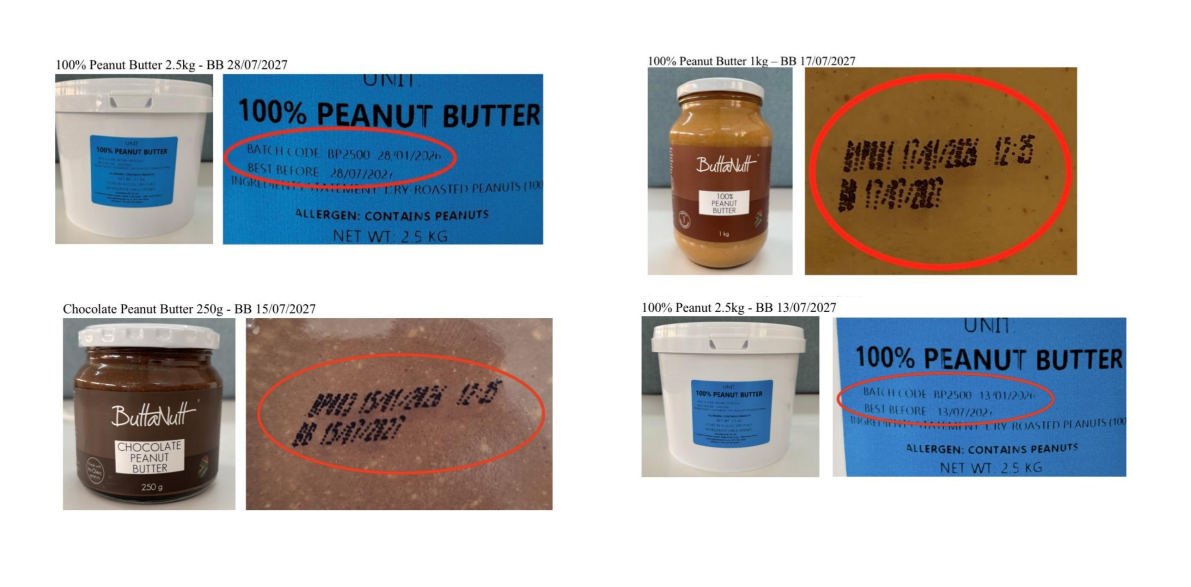
The National Consumer Commission (NCC) has this week announced that products from the peanut butter brand, ButtaNutt (Pty) Ltd, have been recalled for health and safety reasons.
According to the NCC, it had received a product recall notification from the peanut butter manufacturer after it found higher-than-legally-acceptable levels of aflatoxin in the product.
These high levels of Aflatoxin can reportedly lead to several health complications, including nausea, vomiting, and abdominal pain.
According to the commission, the affected products failed to meet the quality standards as set out under the Department of Health’s Regulation R.1145 Governing Tolerance of Fungus-Produced Toxins in Foodstuffs.
The NCC Acting Commissioner, Mr Hardin Ratshisusu, has advised consumers to immediately stop consuming the affected products and return them to the point of purchase for a full refund.
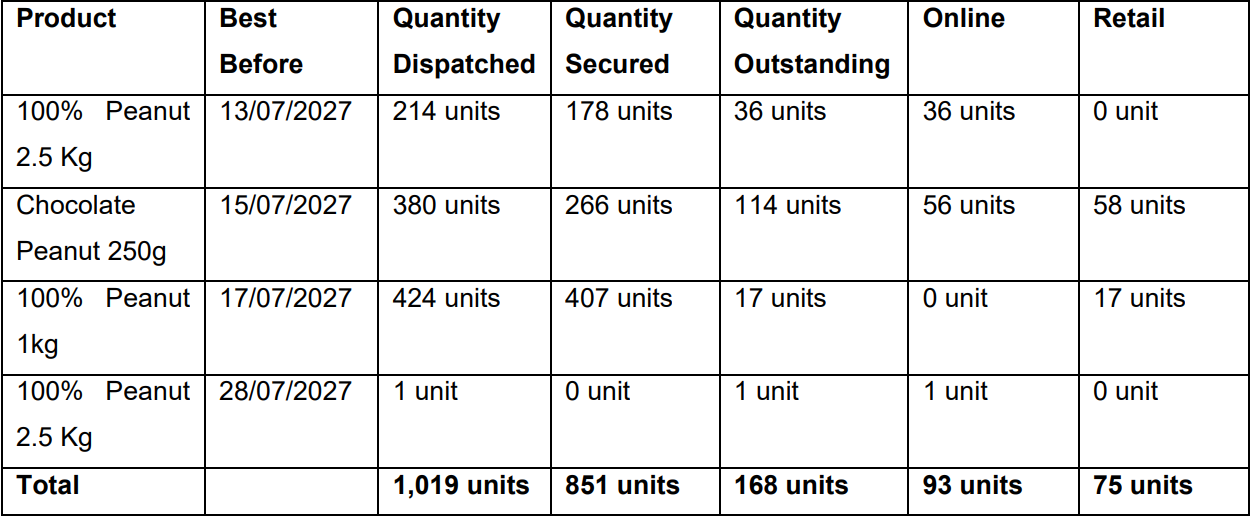
The affected products were manufactured on 15 January 2026 and distributed as follows:
These products were sold in the Western Cape, Gauteng, KwaZulu-Natal and the Eastern Cape at various retailers, as listed below:
De Dekke Trading (Pty) Ltd t/a De Dekke Spar
Jackson’s Real Food Market – Kyalami
Sea Point Spar
Cannon Rocks Holiday Resort CC
Helshoogte Foods CC t/a Stellenbosch Superspar
Irene Townships (PTY) Ltd t/a Irene Farm Shop
Jacksons Real Food Market – Bryanston
Pick’n Pay Retailers (Pty) Ltd – Scottburgh (KZN)
Pick’n Pay Retailers (Pty) Ltd – The Pavilion (KZN)
Tait Supamarket t/a Bedford Spar
The Spar Group LTD t/a Sonstraal Spar 1967/001572/06
Wilderness Village Market (Pty) Ltd T/A Spar Wilderness Village
“The NCC is engaging the supplier on the extent of the contamination, including potentially from the raw nuts’ supplier,” added Ratshisusu
According to Ratshisusu, the NCC is monitoring this recall in accordance with the Consumer Protection Act.
About 10,000 students will need food support at UWC this year. A spokesperson for the University, Gasant Abader, says they’ve launched the Feed the Need campaign to this effect. He says this is a focused call for assistance to ensure that hunger does not undermine students’ chances of success.
“The academic year begins with hope, ambition and the promise of opportunity. Yet for thousands of students, this period is also marked by hunger – a reality that threatens learning, academic success and student wellbeing.”
About 10,000 students will need food support at UWC
Abader says student hunger is not an abstract challenge. He says it’s immediate and deeply personal. It affects concentration, attendance, retention and the ability to complete a qualification. He says between February and April, their students are most vulnerable as the academic year commences and they settle into campus life.
Student Representative Council President Mcntosh Khasembe fills one of the donation boxes, which will be placed on campus. Image: Shelley Christians/UWC
He added, “Nutrition is essential for learning, and without it, even the most capable students are placed at an unfair disadvantage.”
Uphold the dignity of students while meeting their basic needs
According to a press statement, to meet this need, the University estimates that approximately R7,4-million in food is required to support affected students for about two months. Abader says contributions may take the form of cash donations or non-perishable groceries. This will allow the University to respond flexibly and at scale.
“UWC recognises that hunger carries stigma, and every effort is made to uphold students’ dignity while meeting their basic needs.”
He says that all assistance is delivered in a dignified and discreet manner and will protect students’ privacy and ensure that support is experienced as care rather than charity.
UWC Student Assistant, Sandile Shange, packs the shelves at the food bank at UWC. Calls have gone out to donate to the FEED THE NEED campaign. 06 Febraury 2026. Image: Shelley Christians/UWC
A first-year student from a rural village tells his story
For Gerhard*, a first-year student from a rural village in the Northern Cape, arriving at UWC represents both hope and uncertainty. His family made significant sacrifices to send him to university, believing that education would open doors not only for him but also for those back home who depend on him.
SRC President, Mcntosh Khasembe
“Student hunger is not an abstract challenge. It is immediate and deeply personal, affecting concentration, attendance, retention and the ability to complete a qualification.”
In the first weeks of the academic year, however, the reality of student life set in. Gerhard will have to attend lectures on an empty stomach for days. He dreads sitting in class, struggling to concentrate while hunger sets in. Right now, it is a quiet and isolating experience, but he is aware that many of his peers are also facing similar experiences.
Through UWC’s food support programme, Gerhard will receive a simple but nourishing meal of rice, beans, and vegetables — sufficient to restore his energy, improve his concentration, and reaffirm his sense of belonging at the University. More than nourishment, the meal affirms that he is seen, valued, and that his presence at the University truly matters.
*Not his real name
Abader says, “Stories like Gerhard’s are not isolated. They reflect the lived experience of thousands of UWC students navigating the gap between enrolment and financial aid disbursement.”
The University has called on staff, alumni, corporates, philanthropic organisations and members of the public to stand with students during this vulnerable period. Food collection boxes will be placed in faculty offices and at building entrances such as the library and administrative buildings. You will also find boxes at security offices at the main university entrances, and at other clearly visible and easily accessible points across campus.
“Each contribution — whether financial or in kind — directly supports students’ ability to remain engaged in their studies and to persist toward graduation.”
Behind every great loaf, cake, and bake is an unstoppable business that masters quality, scale, and consistency.
This time on Future 50, powered by FNB Business, we’re shining the spotlight on Supa Foods, a Durban-based manufacturer supplying wholesale baking solutions to businesses and bakeries across South Africa.
1 of 7
They are helping to feed the nation while building a proudly local success story. Catch Future 50 on The Ryan O’Connor Breakfast Show, powered by FNB Business. An Authorised Financial Services Provider and Credit Provider.
The Democratic Alliance (DA) in the Eastern Cape has launched a campaign to mobilise formal objections to several newly gazetted geographical name changes, arguing that communities were not properly consulted and that government priorities are misplaced.
The Department of Sport, Arts and Culture confirmed that a number of approved name changes have now been published in the Government Gazette, triggering a one-month formal objection period during which members of the public may submit representations.
The changes include East London to KuGompo City, Graaff-Reinet to Robert Sobukwe Town, Aberdeen to Xamdeboo, Adendorp to Bishop Limba, and Barkly East to Ekhephini.
DA claims communities were misled
DA spokesperson for Sport, Recreation, Arts and Culture in the Eastern Cape, Leander Kruger, said the party believes Minister Gayton McKenzie misled residents about the future of some of the name changes.
Kruger claims the minister previously indicated that the Graaff-Reinet name change would not be approved because other priorities needed attention, yet later signed off on the change along with several others.
The DA says it is seeking clarity from provincial and national naming committees on how proposals it believes were previously rejected have now progressed to the gazetting stage.
Organising formal objections
With the objection phase now open, the DA says it will assist residents in submitting legally compliant objections within the prescribed timeframe. According to the party, it will distribute template objection letters and make online forms available for those unable to visit in person.
“All completed objections will be submitted to the Department of Sport, Arts and Culture within the prescribed one-month objection period,” Kruger said, urging as many residents as possible to participate.
Concerns over consultation and priorities
While the DA says it supports reconciliation and nation-building, it argues that name changes should not be “forced or poorly consulted”. The party maintains that meaningful dialogue and community support are essential when decisions affect the identity and heritage of towns.
It also questioned whether government resources should instead be focused on pressing service delivery challenges. The DA pointed to issues such as failing infrastructure, unemployment and unreliable basic services in towns affected by the changes, including East London, Barkly East, Graaff-Reinet, Aberdeen and Adendorp.
“Decisions that affect the names, identities, and heritage of our towns and communities cannot be taken without the consent of the people who live there,” the party said.
Government’s position
The Department of Sport, Arts and Culture has said the approvals form part of a broader national process aimed at transforming South Africa’s naming landscape. The department says the work supports social cohesion, recognises diverse heritage and helps address colonial and apartheid-era naming legacies.
According to the department, the South African Geographical Names Council’s role includes standardising place names and ensuring they reflect indigenous languages, cultural heritage and natural heritage. The renaming of towns and other features is also described as contributing to symbolic reparations and restoring dignity.
With the names now gazetted, the focus shifts to the public participation process, where objections and comments submitted during the official window will be considered before the changes are fully implemented.