14.3 C
Cape Town
Saturday, July 11, 2026
Home Blog Page 215

WATCH: Home Affairs corruption laid bare in SIU report

SIU


South Africa’s immigration system was effectively turned into a “marketplace” where permits, visas and even citizenship outcomes were sold for cash, according to explosive findings released by the Special Investigating Unit (SIU).


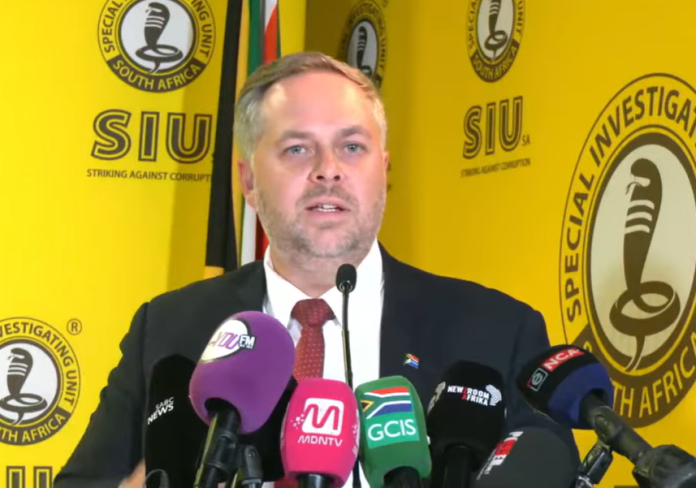
Presenting the interim report on Monday, the SIU’s  Acting head, Leonard Lekgetho, said its investigation uncovered widespread corruption involving Department of Home Affairs officials, syndicates and external actors who exploited systemic weaknesses to secure fraudulent immigration status.


The probe was authorised by President Cyril Ramaphosa under Proclamation 154 of 2024, following allegations of large-scale fraud within the department.


Officials allegedly sold permits for cash


According to the SIU, officials entrusted with safeguarding South Africa’s borders instead turned immigration processes into profit-making schemes.


Investigators found evidence that asylum seeker permits and visas were issued unlawfully in exchange for payments ranging from R500 to R3,000. Transactions were allegedly concealed through cash hidden in application files, electronic wallet transfers using unregistered cellphone numbers, and payments routed through spouses’ bank accounts.


Cyber forensic analysis of seized devices revealed direct communication between officials and applicants, including WhatsApp messages used to fast-track approvals. In several cases, payments were deposited shortly after permits were approved, establishing what investigators described as a clear link between approvals and bribery.


The SIU said four officials earning less than R25,000 per month collectively received more than R16.3 million in unexplained deposits. Some allegedly purchased multiple properties and developed high-value homes inconsistent with their salaries.


In one instance, deposits totalling R8.9 million flowed through a construction company registered in the name of an official’s spouse, with payment references linked to permanent residence applications.


Asylum system exploited


The investigation began after a whistleblower alleged that foreign nationals were fraudulently obtaining asylum permits and later using them to secure permanent residence and citizenship.


Search-and-seizure operations conducted with the Hawks at five Refugee Reception Offices led to the confiscation of computers, cellphones and documents, with 237 items subjected to forensic analysis.


The SIU found that applicants were able to remain in South Africa for extended periods by exhausting appeal processes, even when asylum claims lacked merit.


Religious figures and external actors implicated


The report also detailed how certain religious leaders allegedly exploited immigration loopholes.

Shepherd Bushiri case


Malawian preacher Shepherd Bushiri allegedly secured permanent residence through fraudulent documentation and conflicts of interest involving an adjudicator who belonged to his church.


Investigators said a chartered accountant admitted to being paid simply to sign a financial independence letter supporting Bushiri’s application. The SIU further raised concerns about large cash payments linked to aircraft purchases and the alleged diversion of religious donations into personal assets and company holdings.


Timothy Omotoso investigation


Nigerian pastor Timothy Omotoso was found to have entered South Africa using a fraudulently obtained work permit and later exploited administrative loopholes, including an unlawfully granted ministerial waiver, to extend his stay despite visa noncompliance.


Kudakwashe Mpofu conviction


The SIU confirmed that Kudakwashe Mpofu obtained a fraudulent permanent residence permit in 2018 for R3,000. Despite irregularities, he secured senior executive positions at the North-West Development Corporation, earning up to R1.6 million annually.


Mpofu was later convicted of fraud in the Mmabatho Regional Court and sentenced to three years’ correctional supervision with an additional suspended sentence.


Border control failures highlighted


Investigators also examined the case of Nigerian national Prince Daniel Obioma, who allegedly overstayed a visitor’s visa but later re-entered South Africa without any official movement record before being linked to a high-profile McLaren crash in Cape Town in 2025.


The SIU said the case exposed serious failures in border management and movement control systems.


Identity fraud and DNA manipulation uncovered


The report revealed additional schemes involving identity fraud, including foreign nationals allegedly using the fingerprints of unsuspecting South African citizens while substituting their own photographs on passport applications.


Investigators also uncovered evidence suggesting DNA samples used in immigration applications were manipulated to favour certain applicants, prompting warnings to multiple government departments and international partners, including Interpol.


Abuse of the retirement visa category was also flagged, with investigators noting that the absence of age restrictions and poor post-approval monitoring created opportunities for fraud.


Wider national impact


The SIU warned that immigration corruption has far-reaching consequences across sectors such as housing, banking, healthcare, education and infrastructure, contributing to urban overcrowding, labour tensions and potential tax revenue losses.


The unit said the findings demonstrate that corruption in the visa system was “organised, deliberate and devastating to public trust”.


Recommendations to government


Among its recommendations, the SIU called for:


  • stricter employee vetting and ethics training,
  • integrated verification systems across government departments,
  • stronger quality assurance before visas are issued,
  • improved monitoring of visa compliance after approval, and
  • tighter access controls and biometric safeguards at Home Affairs offices.


The SIU concluded that without coordinated reforms across government, systemic vulnerabilities in South Africa’s immigration framework will persist.


“The findings make one thing clear,” investigators said. “South Africa’s immigration system was treated as a commodity, permits and visas were sold, traded and laundered.”


Minister welcomes report


Home Affairs Minister Leon Schreiber has welcomed the SIU’s interim report, emphasising that the investigation spans 20 years between 2004 and 2024.


He says since he took office, 20 months ago, the Department has made major strides in holding corruption to account and driving digital transformation to close systemic loopholes.


Schreiber also confirmed that a total of 20 officials have already been dismissed since April last year.


75 disciplinary cases against all implicated individuals have also been completed, over the past two financial years, resulting in 16 suspensions without pay and 22 written warnings.


Police Investigate Murder and Arson in Lower Crossroads

Eersterivier vigilantism


Philippi East police have registered a case of murder and arson after a man was shot and killed and a shop set alight in Sheffield road and Somi Crescent, Lower crossroads on Friday.


The South African Police Service (SAPS) says they attended to the scene following a complaint and found the shop in flames.


Police spokesperson Ndakhe Gwala says an unknown man came to the store, demanding money from the new owner.


“When the owner refused, the deceased threw a petrol bomb inside the shop and fled on foot.”


The victim was later found a few meters away with gunshot wounds to the upper body, face, and arm. No arrests have been made.


It is still not clear who shot the deceased man, however,  investigations into the matter are ongoing.


Thailand human trafficking recruiters arrested in Kraaifontein

hawks arrest human trafficking suspects


Two suspected recruiters appeared in the Bellville Magistrates Court on Monday, in connection with the alleged trafficking of victims after promises of a work opportunity in Thailand.


According to the Hawks, the arrest of the two Kraaifontein residents, 44-year-old Adam Douglas and his wife, 50-year-old Yolanda Douglas, on Friday comes after four victims were rescued by the team in May last year, after reacting to information received about people who were recruited to work at a Call Center in Thailand, but then taken to Cambodia.


After their “job applications” were successful, upon their arrival in Thailand, they did not stay in Thailand as promised; instead, they were taken to Cambodia. On arrival in Cambodia, their passports were taken away by the traffickers and their freedom of movement was impeded.


According to Hawks spokesperson, Warrant Officer Zinzi Hani, the victims were employed in a call centre where they were instructed to make calls to certain targeted individuals under the pretence that there were cases opened against them and they must pay a particular amount to avoid arrest.


“They were forced to work very long hours and they were never paid for the work done, they then launched a protest demanding their money.” added Hani


Hani says three of the victims’ passports were handed back to them, and the fourth victim could not get her passport.


Through interventions by families and NGO’s, arrangements were made for the victims to be returned home. The investigation led to warrants of arrest being issued against the suspects.


The Provincial Head of the Hawks Western Cape, Major General MS Makgato, gave a stern warning to the public, saying that traffickers often use online platforms to target vulnerable individuals by promising legitimate job opportunities or a better life, only to confiscate documents and force victims into various forms of exploitation.


“We urge that victims should come forward to report such as the authorities work with government departments to dismantle these networks and bring perpetrators to justice.”


The two accused face charges of Contravention of Trafficking in Persons. The matter was postponed to 26 February 2026 for bail information and a formal bail application.

Uncertainty reigns after US Supreme Court ruling on Trump tariffs

tariffs
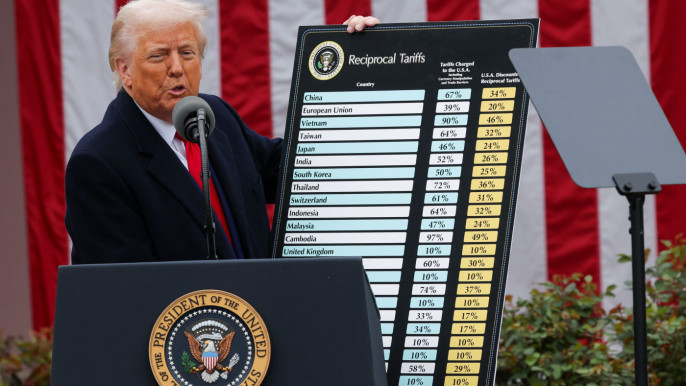
US President Donald Trump announces "Liberation Day" tariffs on 2 April.


Local economists say the recent United States Supreme Court ruling against President Donald Trump’s reciprocal tariffs provides temporary relief for global trade partners, but caution that the threat of new tariffs remains.


The court decision, delivered on 20 February, declared the sweeping tariff measures illegal, reaffirming that changes to US import duties must comply with the rule of law and congressional authority.


Professor Raymond Parsons, an economist at the North-West University Business School, described the ruling as a welcome development for countries such as South Africa that have faced an increasingly aggressive US trade stance.


He said the judgment confirmed that businesses affected by tariff changes have legal remedies available to challenge such measures. However, Parsons noted that key questions remain unresolved.


“The Supreme Court did not address whether the illegal import duties already paid would need to be repaid, and this will have to be litigated separately,” he said.


Although the ruling effectively invalidated the 30% import tariff previously imposed on South African goods, Parsons warned that expectations of a return to stable trade conditions may be premature.


Within days of the judgment, the US administration announced a new broad tariff of 15% on imports for a 150-day period, pending congressional approval. Certain sector-specific tariffs, including those affecting steel and automotive products, also fall outside the scope of the court’s decision.


According to Parsons, the rapid policy shifts are likely to prolong uncertainty for businesses.


“The immediate economic impact is inevitably a recipe for more confusion and uncertainty about future US trade policy,” he said, adding that South Africa urgently needs clarity given its significant trade relationship with the United States.


He also stressed that negotiations around the future of the African Growth and Opportunity Act (AGOA) remain separate from the court ruling, meaning difficult trade discussions with Washington still lie ahead.


Meanwhile, Wandile Sihlobo, chief economist at the Agricultural Business Chamber of South Africa, said the revised tariff announcement could improve conditions for South African agricultural exporters, if it remains in place.


Sihlobo explained that the proposed 15% tariff would represent a significant reduction from the earlier 30% duties that weighed heavily on exporters.


“If this is a new possibility, then it will bode well for South Africa,” he said, adding that lower tariffs could restore competitiveness for local producers in the US market.


The United States accounts for about 4% of South Africa’s agricultural exports, including citrus, grapes, berries, wine, fruit juices, apples, pears, apricots and nuts.


Sihlobo says trade data already shows the impact of earlier tariff uncertainty. South African agricultural exports to the US declined by 11% year-on-year in the third quarter of 2025 to 144 million US dollars, before dropping sharply by 39% in the final quarter to 81 million dollars.


Annual agricultural exports to the US totalled 504 million US dollars in 2025, down 3% from the previous year, a decline partly cushioned by higher export volumes during a temporary tariff pause earlier in the year.


Sihlobo cautioned that frequent policy changes and rapid announcements from the US administration continue to create instability for exporters and investors alike.


Law Enforcement Faces Resistance as Illegal Firearms Are Seized in Mitchells Plain

Law enforcement seize weapons


What began as a call for help quickly revealed the dangerous reality facing law enforcement and communities alike.


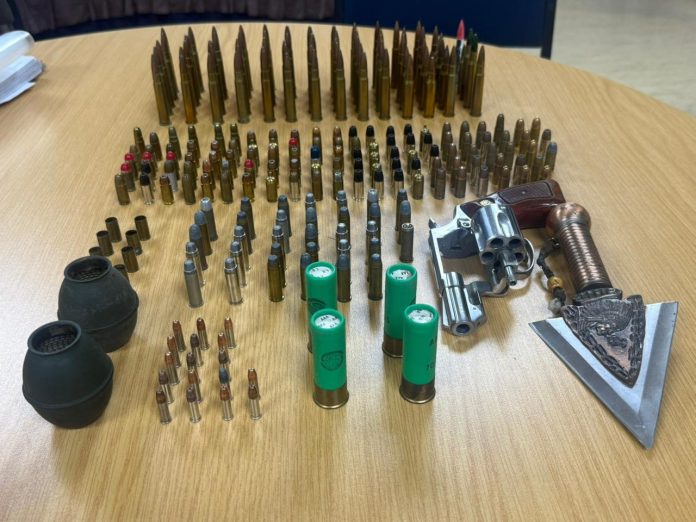
Metro Police officers responded to a domestic violence complaint at a home in Lentegeur, Mitchells Plain yesterday, only to uncover a deadly cache of illegal weapons and ammunition.


Mayoral Committee Member for Safety and Security JP Smith says when officers arrived, they were alerted to firearms on the property.


“While one weapon was legally licensed, another firearm belonging to a deceased relative had never been surrendered. The discovery escalated further when officers recovered more than 230 rounds of illegal ammunition, including 87 rifle rounds, 109x 9mm, and 33 revolver rounds, along with two grenade casings and several empty cartridges.”


Smith says officers requested the assistance from the K9 Unit and Bomb Squad.


“Our operations were abruptly halted when a crowd gathered outside the property and turned riotous, forcing officers to withdraw for their own safety.”


Successful arrest


A 48-year-old man was arrested and detained at South African Police Service (SAPS) in Lentegeur on charges of illegal possession of a firearm and ammunition, as well as contravening the Domestic Violence Act.


Smith stressed that the incident reflects a troubling pattern where communities call for help, only to obstruct justice when police respond.


“This incident once again highlights the challenge City enforcement agencies and SAPS face with ongoing public interference. Communities cannot call for help and then turn on law enforcement by obstructing their work.”


Smith warned that obstruction of justice is serious and can lead to arrests.


“We are urging residents to work with law enforcement, not against them, and to report suspicious or criminal activity via the Public Emergency Communication Centre on 021 480 7700.”

error: Content is protected !!