14.3 C
Cape Town
Saturday, July 11, 2026
Home Blog Page 216

Francois Wins The Best Year of His Life

After weeks of excitement, 120 Golden Tickets, and countless vuvuzela moments, we have our winner.

Congratulations to Francois, who has officially won The Best Year of His Life on Smile FM.

From groceries, fuel and insurance, to gym memberships, pamper days, take-aways, streaming subscriptions, weekend getaways and even a family cruise — Francois and his family are set for an unforgettable year ahead.

What started with listening out for a single vuvuzela turned into a life-changing moment at our Grand Finale event. And we couldn’t be happier to share it with you.

Watch the moment Francois found out he’d won in the video above — and relive the excitement with us.

BUDGET 2026: Parties, business and tax experts outline expectations

budget


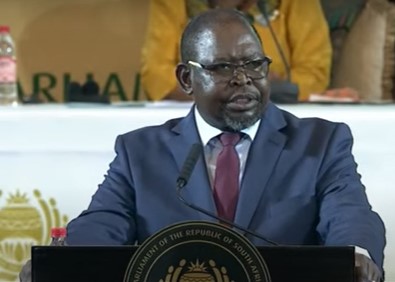
Political parties, industry groups, economists and business organisations have outlined their expectations for the 2026 Budget, with calls for tax relief, fiscal discipline and reforms aimed at accelerating economic growth, while protecting households and businesses under financial pressure.


Finance Minister Enoch Godongwana is expected to table the national budget on Wednesday, 25 February, amid rising debt-service costs, slow economic growth and mounting pressure to avoid new taxes.


DA calls for tax relief and spending reforms


The Democratic Alliance (DA) says Budget 2026 must avoid both direct and indirect tax increases, arguing that South Africans are already heavily taxed.


DA finance spokesperson Mark Burke said personal income tax brackets and rebates should be adjusted in line with inflation to prevent bracket creep, where taxpayers effectively pay more tax despite stagnant real incomes.


The party expects no increases in personal income tax, corporate tax or VAT, and says government should begin shifting toward reducing taxes rather than raising them.


The DA also warned that debt-service costs, currently consuming about 22 cents of every rand collected, are crowding out spending on essential services such as health, education and policing. It called for tighter controls on state-owned enterprise debt and clearer progress on spending reforms, including action against so-called “ghost workers” in the public sector.


ACDP: Fiscal consolidation showing progress


The African Christian Democratic Party (ACDP) believes improving tax collection and a potential revenue windfall should remove the need for tax increases.


ACDP parliamentary whip Steve Swart said fiscal consolidation appears to be gaining traction, with projections pointing to a growing primary budget surplus and stabilising debt levels, although still high.


The party argues that stronger economic growth of between three and five percent annually is needed to meaningfully address unemployment, well above current projections of around 1.4 percent growth next year. It also called for structural reforms in energy, logistics, water infrastructure and local government to unlock investment and job creation.


SME sector pushes VAT threshold reform


Small business funder Lula has renewed its call for government to raise the compulsory VAT registration threshold from R1 million to R3 million, arguing that the current limit discourages business expansion.


Chief Risk Officer Garth Rossiter said the existing threshold has effectively become a “glass ceiling” for many small enterprises, forcing owners to limit growth to avoid costly compliance requirements.


According to Lula, increasing the threshold would unlock liquidity and productivity across the SME sector, which contributes roughly 40% of South Africa’s GDP. The organisation argues that allowing businesses to scale more easily would ultimately increase corporate tax revenues through higher profits and employment.


Rossiter added that beyond tax reform, businesses need long-term certainty around infrastructure, particularly reliable energy and water supply, warning that economic growth cannot be sustained without expanding capacity to support new digital and industrial investment.


Healthcare sector warns against cutting medical tax credits


The Board of Healthcare Funders (BHF) has urged government to retain and inflation-adjust medical scheme tax credits, warning that removing them could push hundreds of thousands of South Africans out of private healthcare cover.


Managing director Katlego Mothudi said the credits remain essential financial support for nearly nine million medical scheme members, many of whom are low- and middle-income earners.


The organisation cautioned that failing to adjust credits in line with inflation effectively increases healthcare costs for households and could add pressure to an already strained public health system while National Health Insurance reforms are still being phased in.


Tax experts expect stronger enforcement, limited tax hikes


The South African Institute of Taxation (SAIT) expects government to rely more on improved tax compliance rather than higher tax rates to boost revenue.


Acting deputy CEO Keitumetse Sesana said enhanced digital enforcement and data analytics by SARS are likely to intensify audits and compliance checks as authorities work to close an estimated R800-billion tax gap.


SAIT analysts also anticipate targeted tax incentives to stimulate investment in sectors such as renewable energy, digital infrastructure and small businesses, alongside the rollout of global minimum tax rules expected to generate additional corporate tax revenue.


Industry warns excise increases could fuel illicit trade


Meanwhile, spirits producer Diageo South Africa has called for a pause in excise tax increases, warning that government taxes on spirits could exceed R100 per bottle following the budget.


The company argues that sustained excise hikes have contributed to the growth of illicit alcohol markets, undermining legitimate producers and costing the state billions in lost revenue each year.


Economists predict a steady, consolidation-focused budget


Economists broadly expect a relatively stable budget focused on consolidation rather than sweeping policy changes.


Johann Els, chief economist at PSG Financial Services, predicts a largely uneventful but positive fiscal framework supported by stronger-than-expected revenue collections from mining, VAT and personal income tax. Improved revenues could help narrow the budget deficit and support gradual debt stabilisation without major tax shocks.


Household impact remains central


Financial planners say ordinary South Africans will ultimately feel the budget through changes affecting take-home pay, fuel costs, healthcare affordability and social spending priorities.


With households already spending a large share of income on essentials such as food, housing and transport, analysts warn that even modest policy shifts could have noticeable effects on monthly budgets.

Ryan’s School Run: Wynberg Boys Junior School

On Fridays we pop out to one of Cape Town’s schools. In the 4th edition of Ryan’s School Run we visited Wynberg Boys Junior School. The school is home to about 800 learners.


This year they celebrate their 185th birthday and are recognised as one of South Africa’s leading boy’s schools. Rooted in a proud history, the school remains steadfast in upholding the timeless principles focusing on Academics, Culture, Service, and Sport.


View this post on Instagram


A post shared by Smile 90.4 FM (@smile904fm)

City’s Graffiti Unit tackles youth gang tags

City’s Graffiti Unit tackles youth gang tags
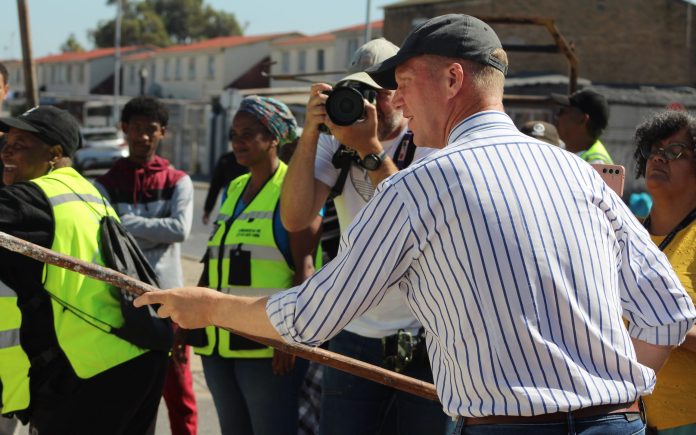
Cleaning in action with Alderman Smith assisting .


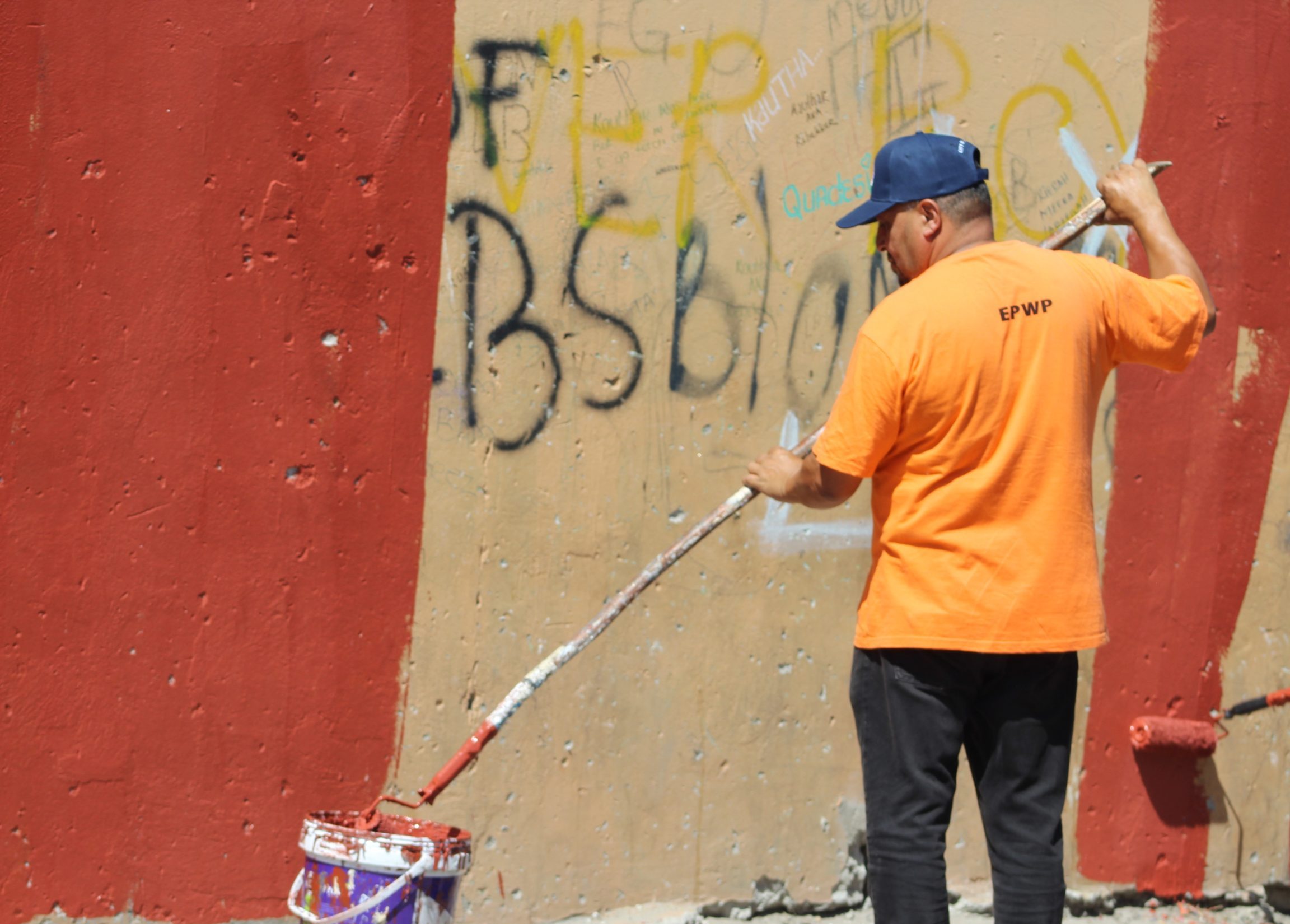
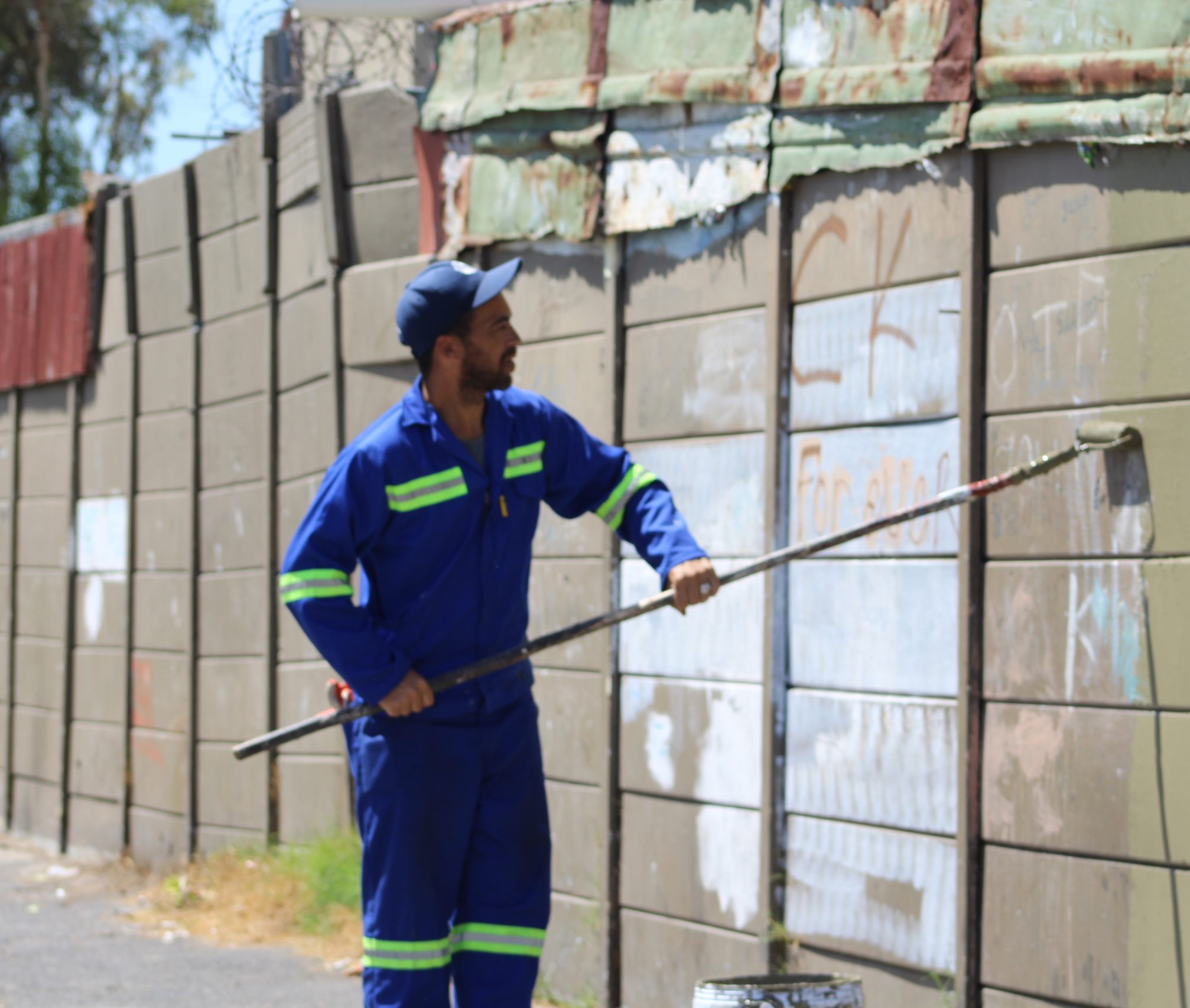
The City’s Graffiti Unit is tackling youth gang tags. The Unit hosted a community clean-up in Manenberg this week, targeting gang tags made by youth as they mark their territories. These tags have been linked to a recent increase in violent stone-throwing incidents in the community. The specialised unit within the Law Enforcement Department is tasked with cleaning illegal graffiti daily throughout the metropole. During the last three months of 2025, the unit removed nearly 10 000 square meters of graffiti.


“Gang graffiti has an immense psychological impact on residents living in communities like Manenberg,” said the Mayoral Committee Member for Safety and Security, Alderman JP Smith.


City’s Graffiti Unit tackles youth gang tags


In terms of the Graffiti by-law, graffiti constitutes any one of, or a combination of, any inscription, word, figure other than a figure indicating a street number, letter, sign, symbol, sketch, picture, drawing, or design that is applied to any natural surface or man-made surface on any property and which is visible to a person from a public place.


Smith added, “This is not just a drawing on a wall. It is a clear message sent by gangs to assert their dominance over law-abiding residents, while warning rival gangs not to enter.”


Removing illegal graffiti helps to prevent urban decay


Removing illegal graffiti helps to prevent urban decay, reduces crime, and protects property values. The by-law states that the owner or occupier of a property has the responsibility to ensure that the property remains free of illegal graffiti. The first offence for someone caught in the act of defacing property carries a fine of R1500. The offender will also be served a compliance notice to have the graffiti removed at their expense.


City’s Graffiti Unit tackles youth gang tags
Cleaning in action.

Complaints received by the unit are investigated and recorded in a register, with each case file containing evidence such as photographs and statements by complainants.


The Graffiti Unit does more than enforce the by-law


The Graffiti Unit not only enforces the by-law, but they will also assist where a formal application for mural art is received, by doing site inspections of the locations where the proposed mural will be situated, and who the affected parties and property owners will be. Following an inspection, a report is then submitted to the City’s Arts and Culture branch, which is responsible for facilitating applications.


City’s Graffiti Unit tackles youth gang tags
Cleaning in action.


‘As part of our research, it was established that the youth who are involved in daily violent altercations have created various groupings. Subsequently, they have taken to tagging their gang names across the community to mark their territories. This is a very concerning trend, and it speaks to the ongoing grooming of youth to join gangs.


The clean-up in Manenberg was inspired by a recent pilot project


The clean-up in Manenberg was inspired by a recent pilot project undertaken by the Safety and Security Directorate focusing on the formation of Youth gangs known as “klipgooiers”. The project will include social and enforcement interventions.


He added, “The clean-up was the first step in showing the gangs that we will not allow our youth to carry on these traditions and together, we will take our communities back from gangs.”


City’s Graffiti Unit tackles youth gang tags
The cleaning team.

The City urges residents to make use of the C3 platform to log graffiti and gang tags in their communities, where the logged service request will be handed over to Law Enforcement.


Who to contact:


The public is reminded they can report stone throwing and other incidents by phoning the City’s Public Emergency Communication Centre on 021 480 7700 or using the City’s anonymous tip-off line on 0800 1100 77.


READ MORE: For detail with regards to the enforcement of illegal graffiti, visit the relevant By-law


Police investigate man’s death after Mitchells Plain truck incident

kidnapped teenagers
Image shown is for illustrative purposes only.


Police in Mitchells Plain are investigating after a man is believed to have been fatally struck by a waste truck in the area.  


According to the SAPS, officers discovered the body of an unidentified man next to a truck on Jakes Gerwel Drive in the Colorado shortly before midday last Thursday. 


Western Cape SAPS spokesperson Constable Ndakhe Gwala confirmed that a culpable homicide case was being investigated.  


“The circumstances surrounding the incident are under investigation,” Gwala said.  


The City of Cape Town said it is aware of footage circulating on social media allegedly showing the fatal incident. City spokesperson Luthando Tyhalibongo said the incident involved a “refuse compactor vehicle” of the Urban Waste Management Directorate. The vehicle belongs to a cleansing contractor for the directorate.  


He noted that the vehicle crew reported the incident to the police. He added that the City would “cooperate fully with the investigation” and is committed to assisting and transparency as the probe continues.  


“At this stage, it would be inappropriate to speculate or comment further while investigations are being finalised,” Tyhalibongo said. 


Tyhalibongo further noted that contractors for the municipality are required to adhere to strict safety protocols.  


“In line with contractual obligations, we have requested a full incident report.”  


He extended condolences to the deceased’s family. 


“The safety of residents and staff is of paramount importance to the City. We are deeply concerned by the incident and extend our deepest condolences to the family and loved ones of the deceased… Anyone who observes unsafe driving behaviour by any vehicle on public roads are encouraged to report such incidents to the City’s official channels,” said Tyhalibongo.  
error: Content is protected !!