19.1 C
Cape Town
Saturday, July 11, 2026
Home Blog Page 212

V&A Waterfront: Major Granger Bay expansion planned

granger


A major new development is planned for Cape Town’s V&A Waterfront, with plans to expand the Granger Bay precinct through land reclamation, new coastal infrastructure and mixed-use development.


According to a Draft Scoping Report released as part of the Environmental Impact Assessment (EIA) process, the project would see approximately 3.2 hectares of land reclaimed from Table Bay to create new public spaces, coastal protection structures and commercial and residential developments.


The proposed site lies west of Beach Road and north of Granger Bay Boulevard, on the western edge of the existing Waterfront precinct.


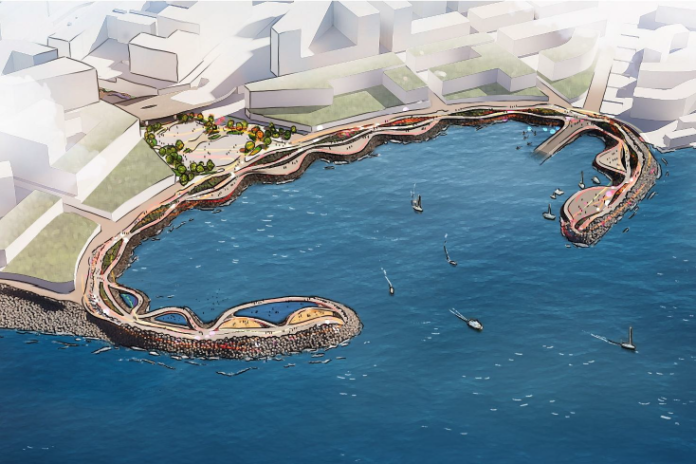
Developers plan to construct two breakwaters and a permanent rock revetment to form a new sheltered bay. The infrastructure is intended to protect the shoreline from storm surges and rising sea levels while creating calmer waters for recreational activities such as swimming, kayaking and boating.


Plans also include a range of public amenities, such as an extended coastal promenade, pedestrian walkways, landscaped public areas, tidal pools and a slipway. The development aims to extend public access along the coastline beyond the current Waterfront boundary.


In addition to public spaces, the proposal includes mixed-use buildings accommodating hotels, serviced apartments, private residential units, leisure facilities and commercial space. About 78,000 square metres of development rights already allocated within the broader V&A Waterfront precinct would be used for the project.


Because the development involves construction within the coastal zone and reclaiming land from the sea, it requires environmental authorisation under the National Environmental Management Act. The reclamation component must also receive national approval and parliamentary ratification in terms of coastal management legislation before construction can begin.
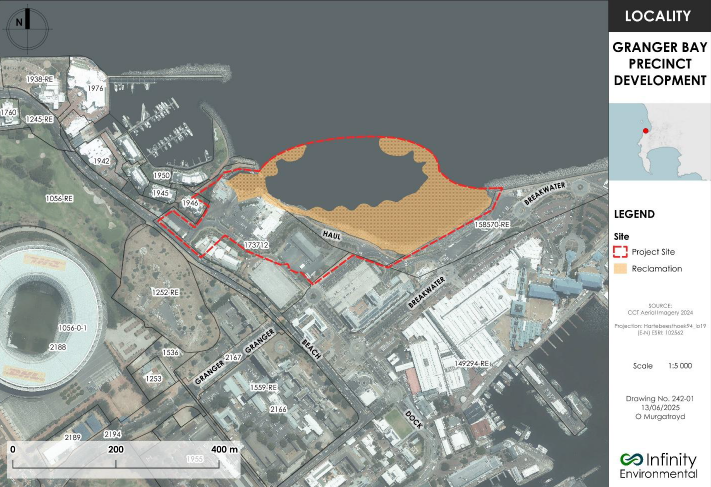
 

granger


The project is currently in the scoping phase of the EIA process, which identifies potential environmental, social and economic impacts that must be assessed in detail. The draft report has been released for public review, allowing interested and affected parties to submit comments before the assessment moves to the next stage.


If approved, construction of the coastal protection structures is expected to take place in phases over approximately three years.


Authorities will make a final decision on environmental authorisation only after specialist studies are completed and public participation processes are concluded.

 

N2 Hell Run: Doctor Hit by Brick Near Airport

N2


As the debate rages on over the City’s planned project to build a R114 million “security wall” along the N2, a doctor from Germany has become the latest victim on the so-called Hell Run.


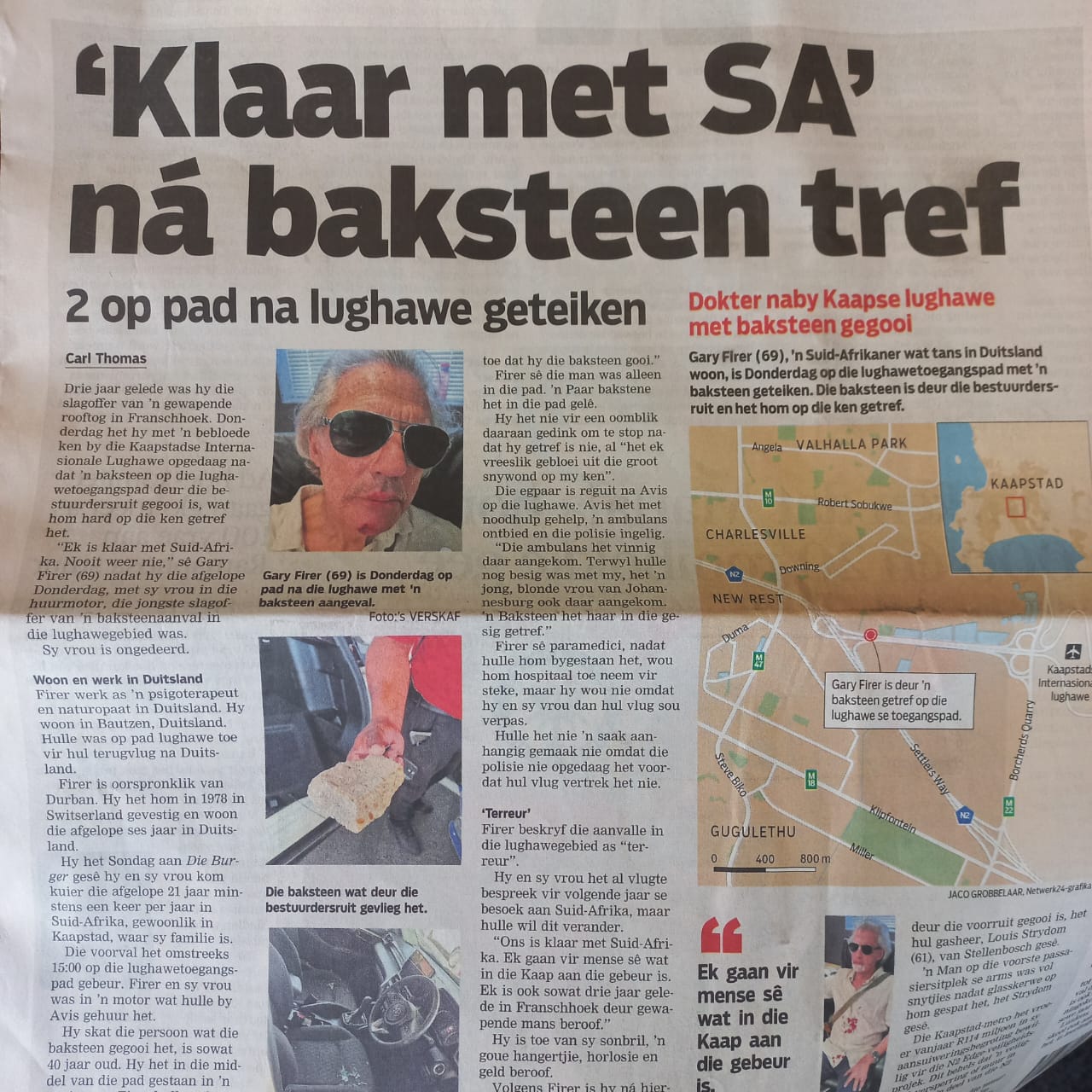
69-year-old Gary Firer and his wife were on their way back to Cape Town International Airport in their rental car on Thursday, 19 February, at around 3 PM, to fly back to Germany, when a brick was thrown through the driver’s side, hitting him on the chin.


In an interview with Die Burger, Firer, who originally hails from Durban, said they were driving on Airport Approach Road when they spotted a man standing in the middle of the road, and it appeared that the man wanted Firer to stop the car.


Die Burger’s report (24 February) on the attack on Gary Firer on Airport Approach Road, which occurred on 19 February.


He says the man then pointed at glass shards on the road, which he thought were probably from previous attacks. Firer then hit the gas, driving around the man. That’s when he lobbed the brick through the window. There were also other bricks lying in the road.


Firer says he raced straight to Avis at the airport, not thinking for a moment to stop. Avis provided first aid, called an ambulance and informed the police.


He claims another victim was being attended to as well.


“The ambulance arrived quickly. While they were still busy with me, a young, blonde woman from Johannesburg also arrived. A brick hit her in the face.”


Firer says paramedics, after assisting him, wanted to take him to the hospital for stitches, but he didn’t want to because he and his wife would then miss their flight.


He told Die Burger that while he and his wife visit South Africa regularly, he will never return, and he plans to warn others as well.


The attack on Firer came hours before an influencer, StephanZA, claimed he was almost hijacked on the airport access road, on Thursday night. He recounts the ordeal in a YouTube video.


A day before, on 18 February, three gun-toting suspects attempted to stop motorists near the Mew Way off-ramp.


Mayor Geordin Hill-Lewis, who took his “security wall” pitch to communities along the problematic stretch earlier in the month, said this incident provided further impetus for getting a proper security barrier up and running.


The City has allocated R114m in its adjustment budget for this. Hill-Lewis says the N2 Edge safety project not only aims to improve safety for commuters, but also for pedestrians, and communities along the earmarked 9km stretch of the N2.


Besides safety barrier repairs and reinforcements, the City says the project will bring various safety improvements for adjacent communities, including new pedestrian crossings, improved lighting and access control, safety barriers for recreational spaces, safer grazing practices, and reduced scope for illegal dumping.


There has, however, been vehement backlash against the project, with some detractors claiming the City is “criminalising poverty.”


The GOOD Party says crime along the N2 is a result of the DA’s “persistent failure to advance bold, progressive, and people-centred solutions.”


“Instead of addressing deep service delivery backlogs in Kanana, Barcelona, Europe and surrounding informal settlements, the City has opted for divisive and cosmetic interventions that prioritise image management over meaningful change.”


Activist Zackie Achmat said the City must work on making informal settlements safer, not erect an “Israeli apartheid wall.”

“Working-class people in Gugulethu, Khayelitsha, Silvertown, Valhalla Park, and Mitchell’s Plain face much worse crime on a minute-by-minute basis. We do not need an Israeli apartheid wall. The City of Cape Town has bought enough security toys to effectively patrol the N2. Or, are they kept in JP Smith’s toy cupboard? Make informal settlements safe, and we will all be safer.”


SEE: Permanent closure of Buttskop Road and deadly rail crossing on the cards

buttskop
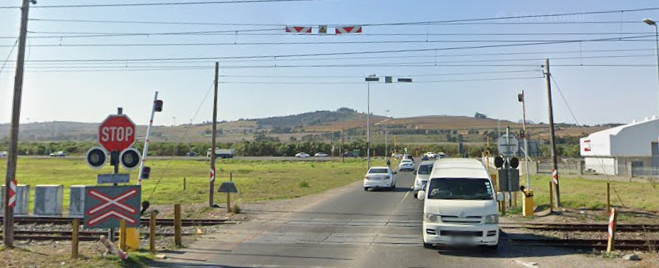
Buttskop Road rail level crossing. IMAGE: Google Maps


The City of Cape Town has proposed the permanent closure of a section of Buttskop Road in Blackheath as part of long-term plans to get rid of the Buttskop rail level crossing, which was the site of a tragic accident that claimed the lives of ten schoolchildren in 2010. 


A public participation process opened on Wednesday, inviting residents to provide input on the plans.  


The City’s Mayoral Committee Member for Urban Mobility, Rob Quintas, said the proposal is part of broader plans to remove the level crossing, which has been a safety concern for some time.  


“The proposed changes will allow for a permanent solution, which will see a substantial increase in the overall safety for all road users in the area. The Buttskop rail level crossing has been the subject of several rail and road safety investigations in recent years due to the number of fatal crashes at this location,” said Quintas.  


The crossing gained national attention on 25 August 2010 when a scholar transport vehicle overtook stationary traffic at a closed boom and was struck by an oncoming train. Ten children were killed in the collision, while the driver survived. The incident prompted multiple safety investigations and calls for the crossing’s removal. 


Now, the City is considering an alternative to improve safety. 


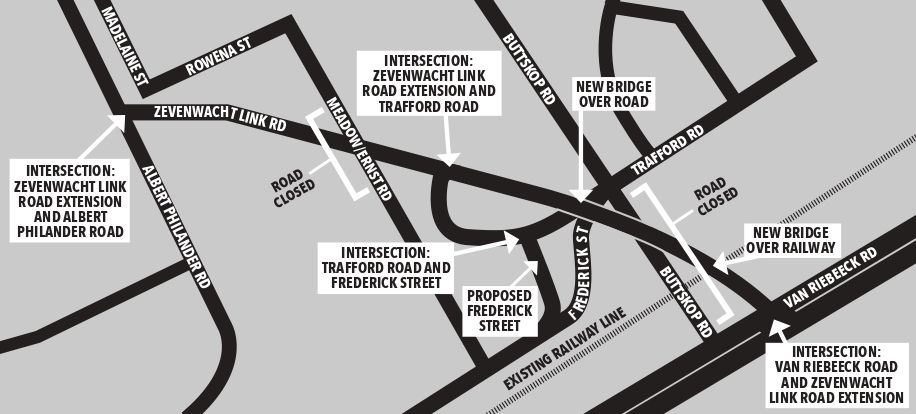
“The proposed alternative solution included the construction of a single carriageway along the future declared N7 between Albert Philander Road and Van Riebeeck Road, with new signalised intersections at both roads and the construction of a bridge over the rail line,” read the City’s statement. 


In order to do this, the City intends to close a section of Buttskop Road from Trafford Road to Van Riebeeck Road, and part of Meadow Road in Black Heath, to enable the extension of the Zevenwacht Link Road between Van Riebeeck Road and Albert Philander Road. Trafford Road will also be extended, and a “road-over-road bridge” will be built.  


Quintas urged residents to participate in the consultation process.  


“We would appreciate the input from the community on these important plans.” 


Residents may submit comments on the proposal until 25 March 2026, with an upcoming public open day scheduled at the Blackheath Community Hall on 26 February. 


READ MORE: City of Cape Town – Calls for comments on closure of Buttskop Road, Blackheath

City land auction: Latest court challenge defeated

auction
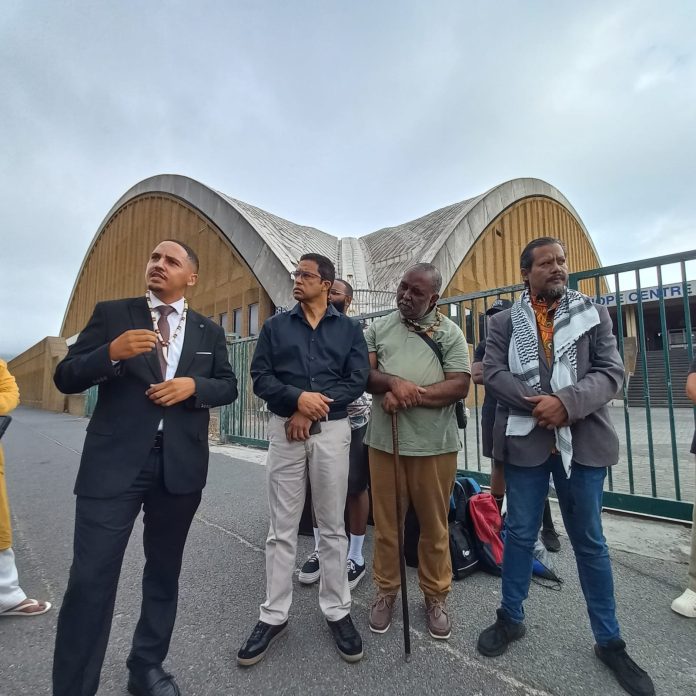
A group of concerned residents from all walks of life, including members of the Khoi-San community, and members of political parties, gathered outside the Good Hope Centre on Tuesday morning to express their opposition to the planned auction of 50 parcels of City land, including the iconic Good Hope Centre.


The City has welcomed the Western Cape High Court’s dismissal of attempts to block the release of 50 City-owned properties for private auction, including the iconic Good Hope Centre.


Housing activists staged a protest outside the Good Hope Centre on Tuesday morning, followed by a court challenge, in a bid to interdict the auction, which is set to take place on Thursday.


The City’s James Vos says this is the latest attempt to block the release of the land.


“We’ve said from the start that our land release process is lawful and transparent, and we are glad that the court has seen through these meritless applications. A total of four have now either been struck off the roll or dismissed with costs.”


Protestors alleged that the City had not followed the proper public participation channels when announcing the release of the land, arguing that it would not benefit the poor. They also demanded that the City prioritise housing.


But Vos says the demands from those opposing the auction, which includes indiginous groups, include baseless claims that unspecified land belongs to specific people.


“We firmly believe that the City’s land portfolio – rather than just sit idle – must drive economic growth across Cape Town. These properties are not being lost to Capetonians – instead, they will now realise their full economic and social potential through private investment to the benefit of residents.”


He says all properties identified for auction have been thoroughly assessed and confirmed as not required for municipal purposes.

The revenue generated from the sale or lease of these properties will also be reinvested directly into service delivery across Cape Town to the benefit of residents.

Vos says the City has further supplied the South African Human Rights Commission (SAHRC) with information on its ground-breaking Mayoral Priority Programme to accelerate affordable housing land release, which has released more land in this term of office than in the decade prior, with a total of 12 000 affordable units in the pipeline.


NCC probes sanitary pad suppliers after study raises concerns about chemical exposure

pads


The National Consumer Commission (NCC) has launched an investigation into nine sanitary pad and panty liner suppliers following new research that found traces of hormone-disrupting chemicals in commonly used menstrual products sold in South Africa.


The probe follows a study conducted by the University of the Free State titled The presence of Endocrine Disrupting Chemicals in sanitary pads: A study done in South Africa, which examined the safety of widely available menstrual hygiene products.


What the study found


The research, published in the journal Science of the Total Environment, tested 16 sanitary pad brands and seven panty liner products for endocrine-disrupting chemicals (EDCs), including phthalates, bisphenols and parabens.


Researchers found that all products tested contained at least two of the targeted chemicals. Bisphenols were detected in every sanitary pad analysed, while phthalates were more common in panty liners and parabens were present in most products.


Chemical detection rates ranged between 50% and 100% across the products tested. Scientists estimated daily exposure through skin contact could range between two and 20 nanograms per kilogram of body weight under normal conditions.


Although exposure levels were described as relatively low, researchers warned that repeated use over many years could lead to cumulative exposure.


NCC launches investigation


Based on the findings, the NCC has initiated an investigation into suppliers whose products were reportedly included in the study.


These include:


  • Kimberly-Clark South Africa (Kotex)
  • Procter & Gamble South Africa (Always)
  • Anna Organics
  • The Lion Match Company (Comfitex)
  • Johnson & Johnson South Africa (Stayfree)
  • Premier Group (Lil-lets)
  • Essity Hygiene and Health AB (Libresse South Africa)
  • My Time


The regulator said the investigation will assess compliance with sections 55 and 24 of the Consumer Protection Act, which guarantee consumers the right to safe, good-quality products suitable for their intended use.


Suppliers will be required to conduct further testing or submit recent laboratory results assessing the presence of endocrine-disrupting chemicals. The NCC will then determine whether additional regulatory steps, including possible product recalls, are necessary.


Acting Commissioner Hardin Ratshisusu said the findings raise serious concerns affecting millions of women and girls and have been prioritised for investigation. Suppliers will be given an opportunity to respond before any final determination is made.


What consumers should know


Health experts stress that the study does not signal an immediate health emergency. Instead, it highlights the need for awareness and further scientific investigation into long-term exposure risks.


Researchers say consumers concerned about chemical exposure may consider alternatives such as organic cotton products, menstrual cups or reusable options, while regulators and manufacturers work toward clearer ingredient disclosure and improved safety testing.


The NCC said it will also engage with other regulatory authorities and stakeholders as the investigation progresses.


*Note: This article was updated to remove reference to “Here We Flo” (HWF) products. Here We Flo ceased supplying the South African market in 2021 following the termination of its distributor arrangements, and any residual stock was destroyed. The UFS study also did not identify or test any HWF products. 

error: Content is protected !!