


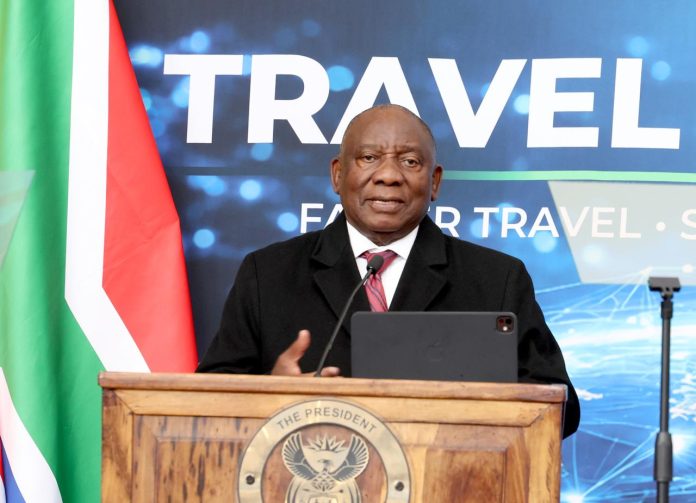
South Africa has launched a new Electronic Travel Authorisation (ETA) system to make it easier and faster for eligible travellers to visit the country.
President Cyril Ramaphosa, together with Home Affairs Minister Leon Schreiber, officially launched the system at OR Tambo International Airport on Wednesday, saying it would help boost tourism, trade and investment while improving border security.
“Every nation is known by the way it welcomes the world,” Ramaphosa said, adding that a country’s first impression often begins at its borders.
Travellers from eligible countries will be able to apply online without visiting a South African embassy or visa processing centre. Applications are expected to be processed more quickly, with more predictable decisions.
Ramaphosa said the system would make South Africa “more open to opportunity, more welcoming to legitimate travellers, more secure for our citizens and more competitive in the global economy.”
The system was initially introduced in four strategic markets, China, India, Indonesia and Mexico, to support South Africa’s G20 Presidency. It will now be expanded to additional countries.
The President said the reform should have a direct economic benefit, through increased tourism and investment.
“More visitors mean more hotel bookings. More restaurants filled. More tour operators employed,” he said.
“Visa reform is therefore not simply an immigration reform. It is an economic reform. It is a jobs reform.”
President Ramaphosa says making it easier for people to visit, invest, trade, study and do business in South Africa is critical to expanding opportunity for South…
— The Border Management Authority SA (@TheBMA_SA) August 12, 2026
Ramaphosa also stressed that making immigration more efficient would not mean weakening border controls.
“A modern immigration system is not a weaker immigration system. It is a smarter immigration system,” he said.
The system will use technology to improve biometric verification, identity management and risk assessment, while helping identify people who may try to abuse the immigration system.
Digital processing is eventually expected to extend beyond visitor authorisations to include work visas, study visas and other immigration services.