


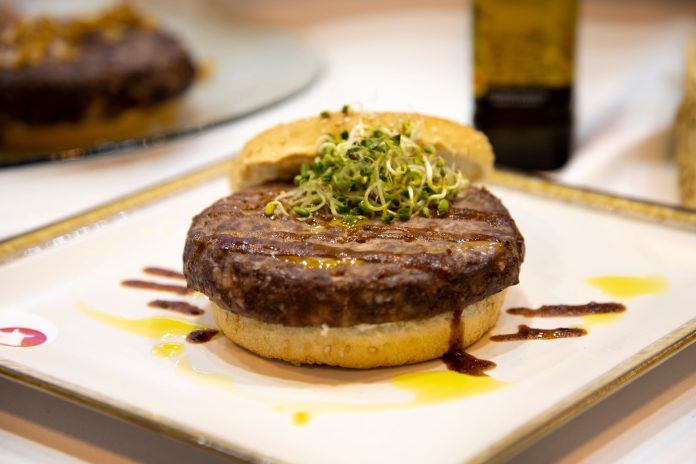
A Western Cape High Court appeal has overturned a ruling that held Beyerskloof Wine Bar liable after a woman swallowed a needle-like foreign object while eating a hamburger at the restaurant.
In a judgment delivered on Monday, 12 October, the court upheld the restaurant’s appeal, finding that Maxine Williams had failed to prove negligence on its part.
Williams swallowed the object while eating at the restaurant on 3 October 2020. She subsequently experienced discomfort and struggled to dislodge it from her throat.
She was taken to Stellenbosch Mediclinic, where X-rays confirmed that a needle-like object was lodged in her throat. An attempt to remove it was unsuccessful, and she remained in hospital for five days while doctors monitored its movement through her body.
Williams instituted a civil claim for damages against the restaurant.
In May 2025, the trial court found the restaurant liable for her damages, ruling that it had failed to serve safe food. The court relied on the legal principle res ipsa loquitur, meaning “the thing speaks for itself”, to infer negligence from the circumstances of the incident.
However, the appeal court found that this principle had been incorrectly applied.
Judge P.S. Van Zyl, writing for a unanimous panel, said the trial court had effectively shifted the burden of proof to the restaurant, when the responsibility to prove negligence remained with Williams.
“The maxim res ipsa loquitur played a leading role in the court a quo. It should have stayed in the wings,” the judgment states.
The court found that while the presence of a foreign object in the hamburger was not disputed, there was no evidence establishing how it had entered the food or whether the restaurant could reasonably have foreseen and prevented the incident.
The restaurant’s general manager testified that it had health and safety protocols in place, sourced its hamburger ingredients from third-party suppliers and had never experienced a similar incident.
The court acknowledged that the manager had not been on duty on the night in question, but found that the evidence did not establish that the restaurant had acted negligently.
It also rejected the argument that the restaurant’s control over the preparation and serving of the hamburger meant it was necessarily responsible for the foreign object.
The judgment emphasised that negligence requires proof that a reasonable person in the defendant’s position would have foreseen the reasonable possibility of harm and taken steps to prevent it, but that those steps were not taken.
The court found that there were no previous incidents or warning signs that would have alerted the restaurant to the risk. It also questioned what additional reasonable precautions could have been expected of the business, given the absence of evidence showing how the object entered the food.
The appeal court further clarified that South African common law does not impose automatic, or strict, liability on sellers simply because a product causes injury. A claimant must still establish the necessary elements of a delictual claim, including negligence where fault is alleged.
The appeal was upheld, and the original order was replaced with an order dismissing Williams’s claim.
Williams was also ordered to pay the restaurant’s legal costs for the trial, the applications for leave to appeal and the appeal itself, including counsel’s fees.