


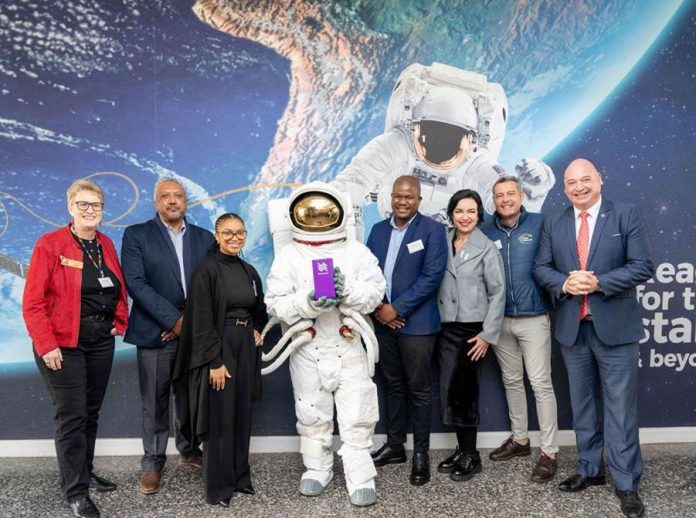
Rooibos seeds are heading to space. The country’s first Rooibos experiment destined for the International Space Station will see Rooibos seeds being studied as part of a pioneering initiative combining space research, agricultural innovation and STEM education.
Rooibos seeds are heading to space
The director of the SA Rooibos Council, Dawie de Villiers, says by using Rooibos, a unique and indigenous South African plant, the project engages learners in cutting-edge space science while exploring the potential role of plants in future space exploration and off-Earth living systems. He says as part of the programme, Rooibos seeds will be launched to the ISS in October. There it will be exposed to microgravity and space radiation for several weeks before returning to Earth. On their return, they will be planted alongside control seeds in a comparative study examining germination, growth, resilience and yield.
Cutting-edge space science
The launch of the Rooibos in Space programme took place this week at Parklands College’s Innovation Centre in Cape Town. It brought together representatives from government, academia, education, agriculture and the emerging space economy.
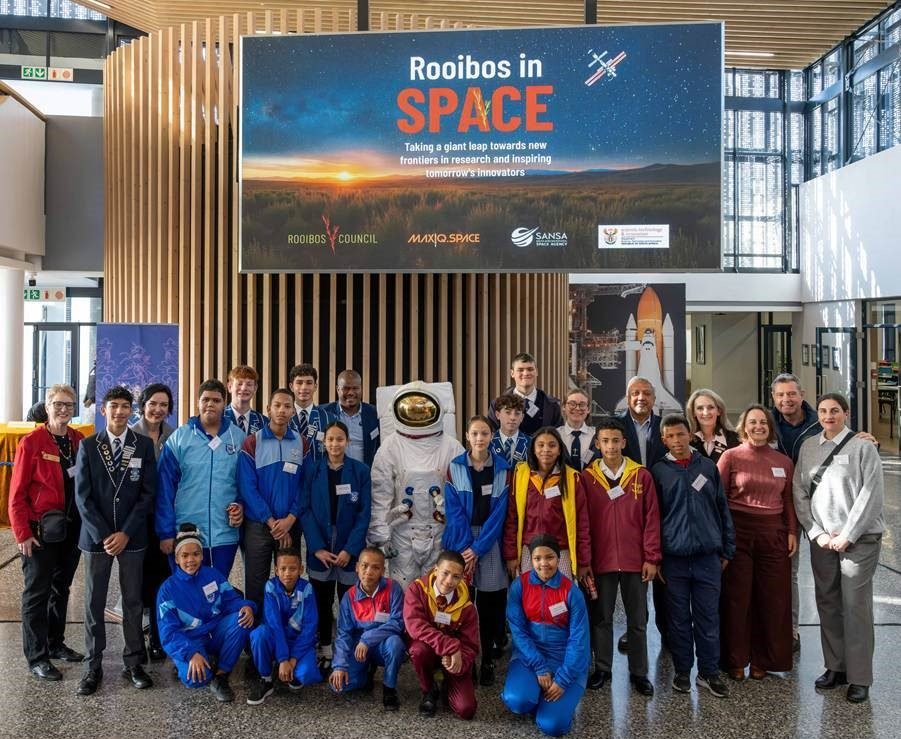
Photographer Patrick King
De Villiers says the initiative was conceptualised by the South African Rooibos Council (SARC) and is delivered in collaboration with MaxIQ Space, with support from the South African National Space Agency (SANSA). It connects Rooibos to a growing international focus on plant biology in space and the development of sustainable agricultural systems beyond Earth.
Rooibos is a unique and indigenous South African plant
He added that learners will carry out the experiment from seven schools in the Cederberg region. This region is the birthplace of Rooibos. De Villier says that, working with local Rooibos farms, learners will collect and analyse data as part of a structured scientific investigation. A parallel experiment at Parklands College will provide additional comparative data.