


The DA may need to go into coalitions in some councils in the Western Cape, with 16 hung councils now confirmed. Nine councils will be controlled outright by the DA.
A hung council occurs when no single political party or coalition wins an outright majority (more than 50% of the seats) in a municipal council.
When this happens, political parties and councillors must negotiate how the municipality will be governed within the 14-day window required by law to hold the first council meeting. The 14-day window period starts as soon as the IEC declares the election results, which is likely to happen on Sunday, 8 November.
An alternative to forming a coalition is ruling through Minority Government: A single party (or a group of parties) takes office and forms the executive/mayor’s office alone without a formal coalition agreement. They must govern with less than 50% of the seats.
The 16 hung councils are:
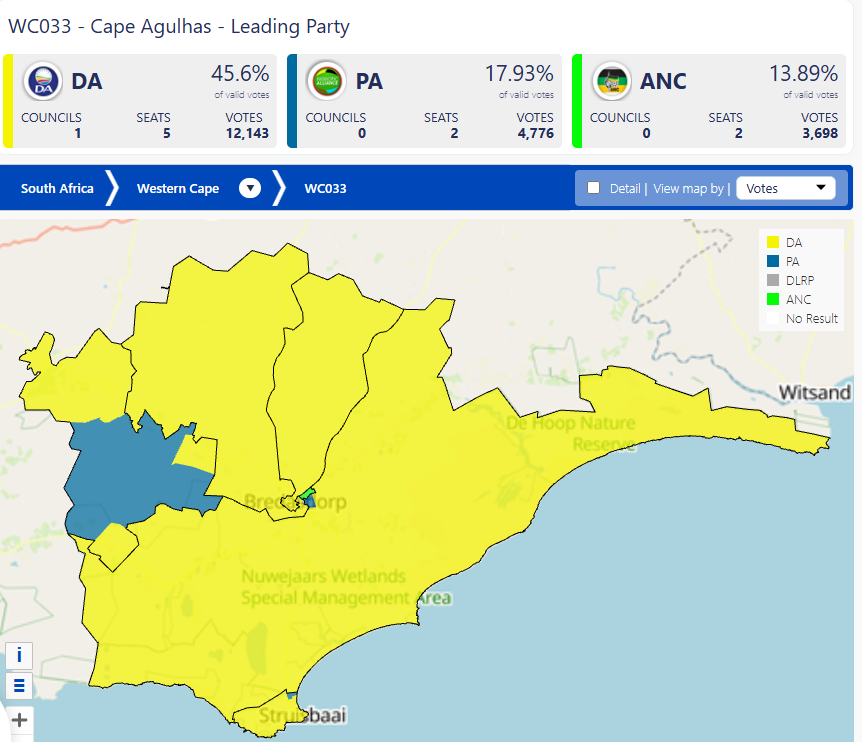
Matzikama, Witzenberg, Laingsburg, Kannaland, Cape Agulhas, Prince Albert, Oudtshoorn, Swellendam, Knysna, Saldanha Bay, Beaufort West, Langeberg, Theewaterskloof, Breede Valley, Cederberg and Bitou.
In some of these councils, negotiations may be more straightforward than in others as the DA has a larger share of the vote. But there are exceptions, including Prince Albert, where the Patriotic Alliance is likely to take control, and Kannaland, where ICOSA leads.
DA Leader Geordin Hill-Lewis has indicated that the party is willing to work with any party that has the best interests of residents at heart.
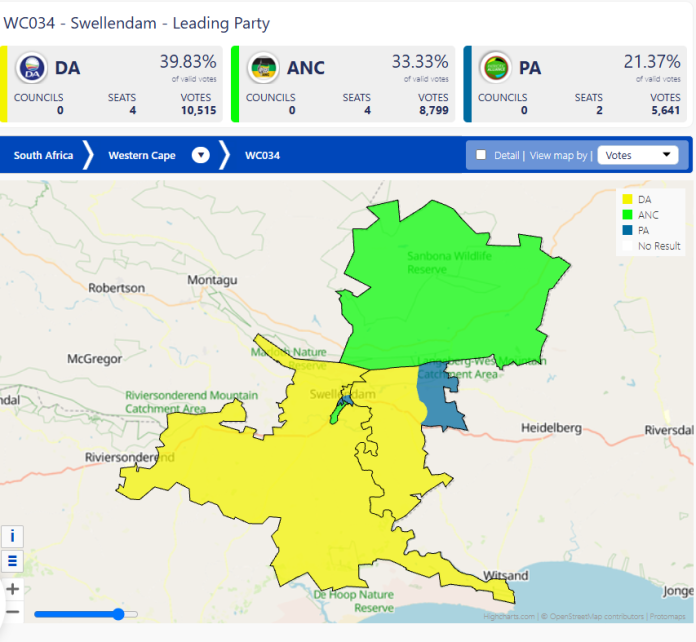
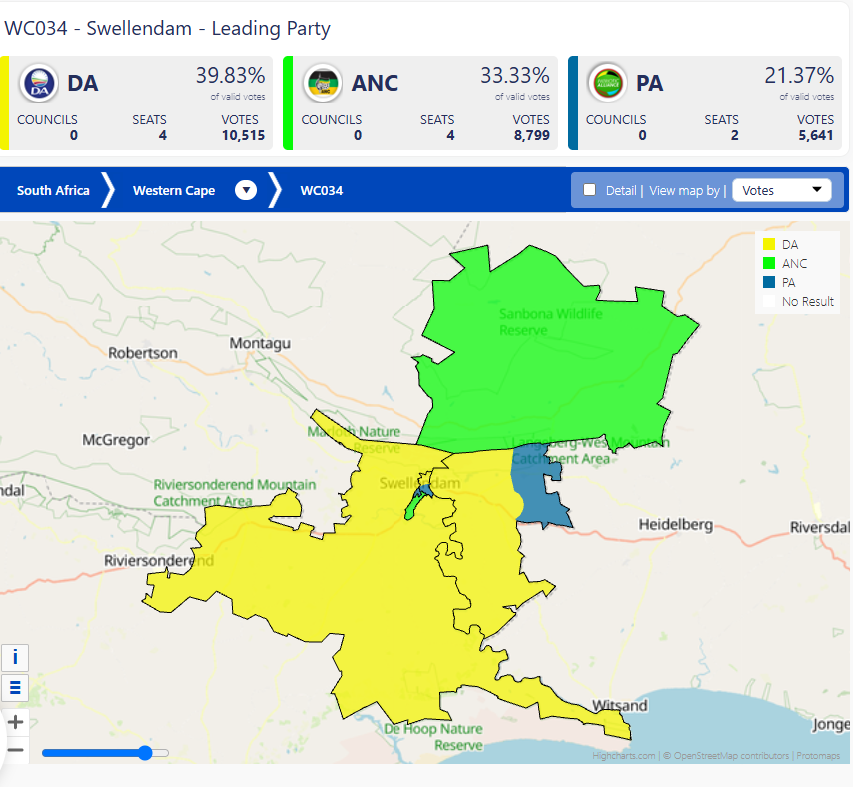
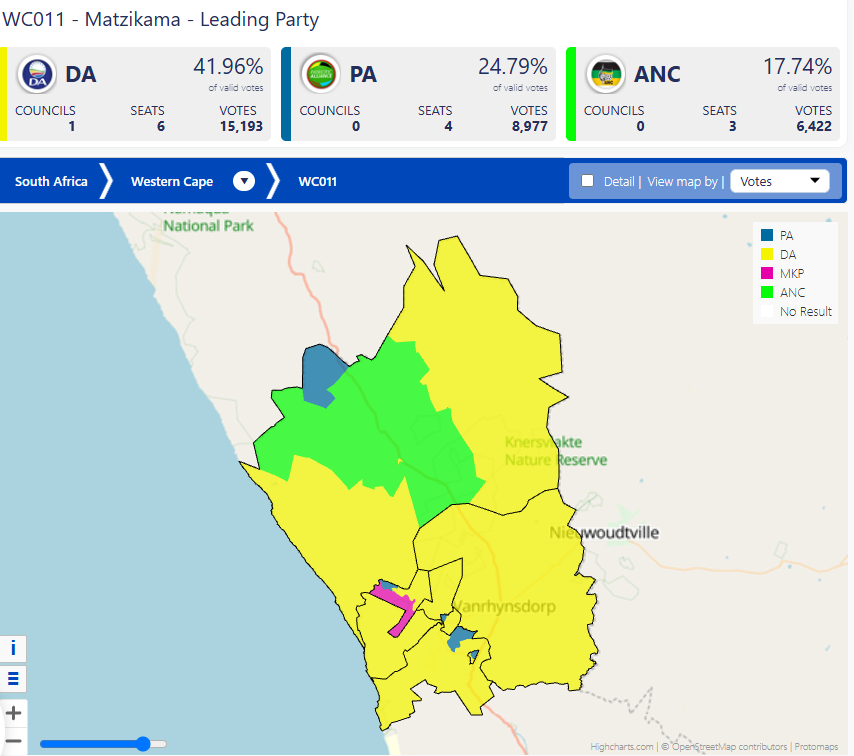
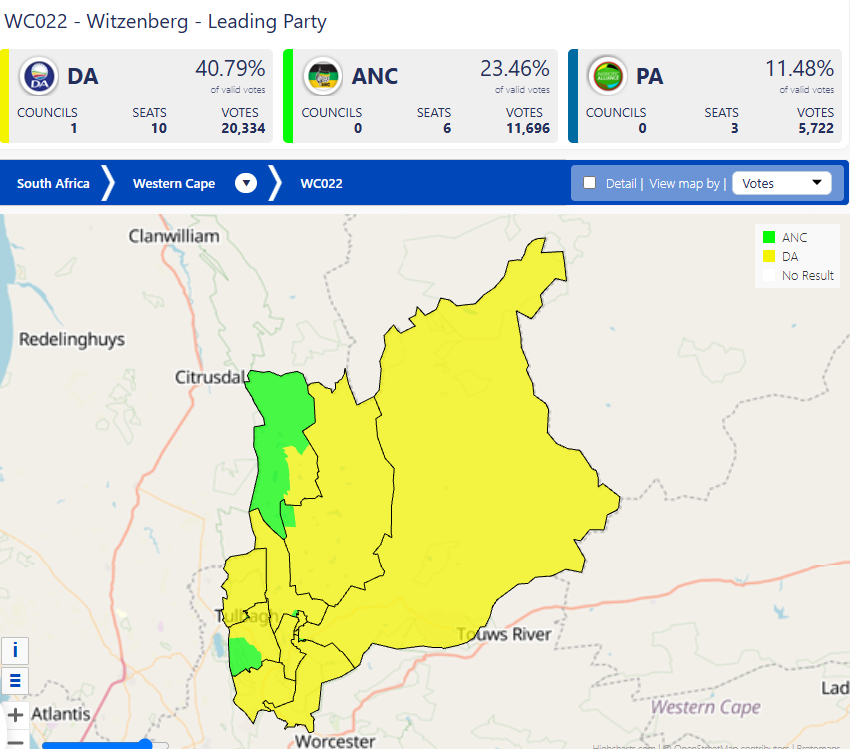
A snapshot of some of the hung councils:
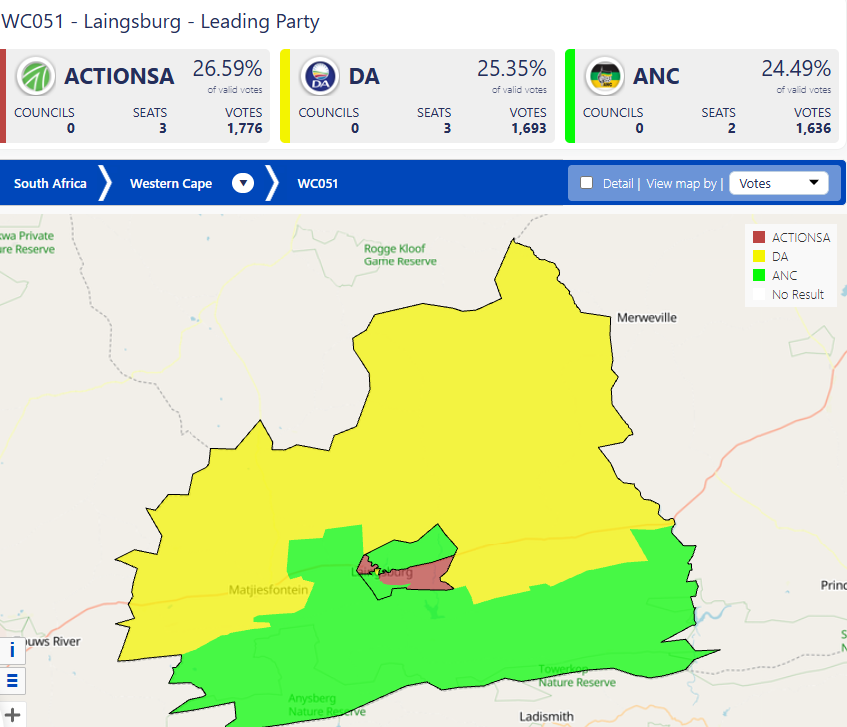
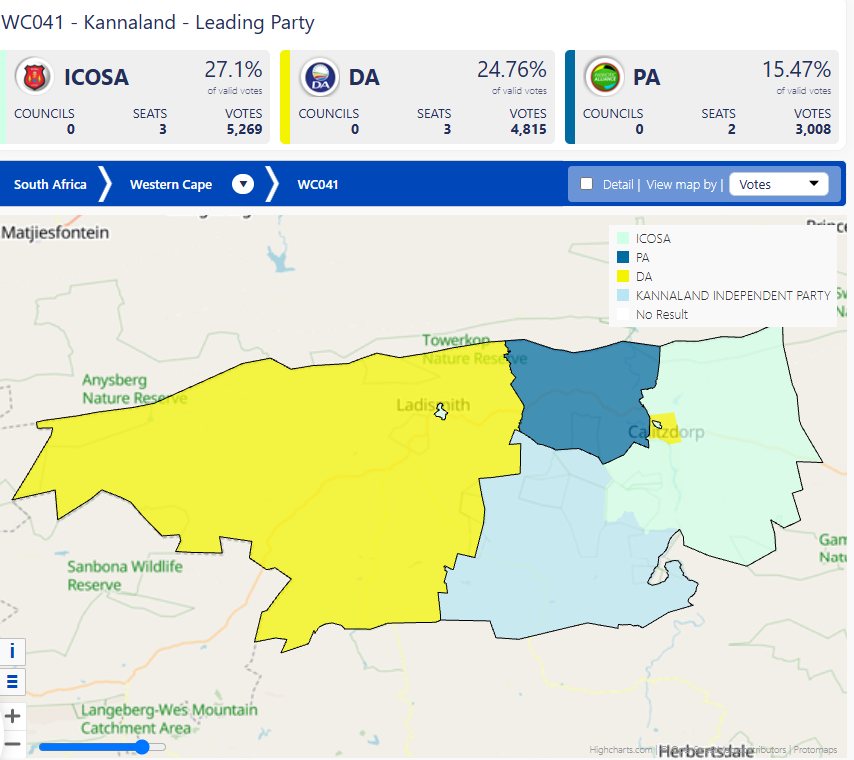
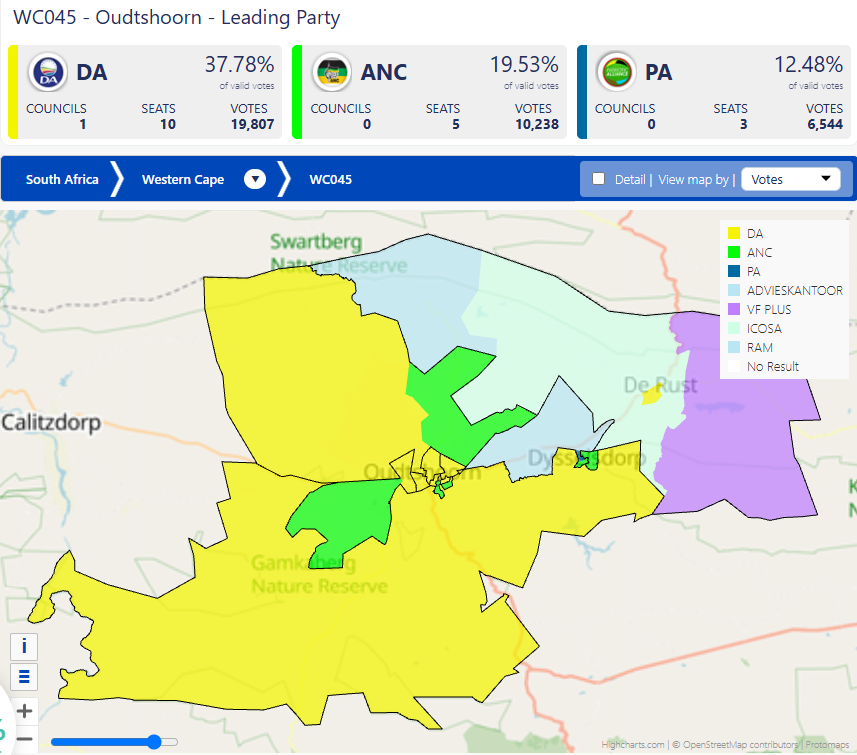
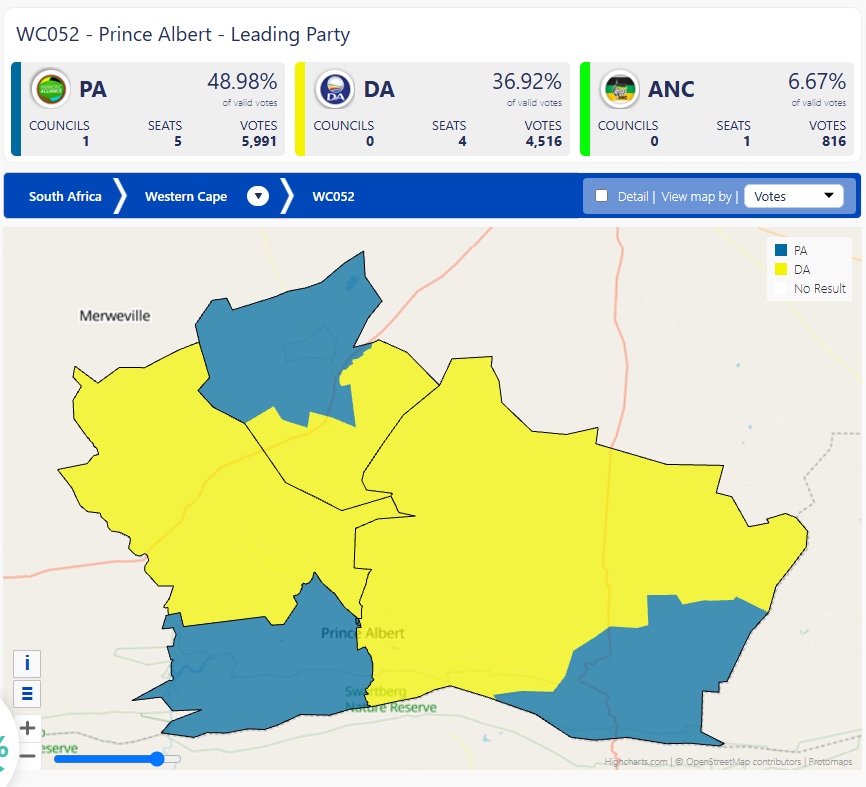
The nine councils which the DA will control outright are George, Mossel Bay, Hessequa, Bergrivier, Swartland, Overstrand, Drakenstein, Stellenbosch and the City of Cape Town.
*This article has been updated to reflect all 25 councils in the Western Cape.