16.3 C
Cape Town
Sunday, July 12, 2026
Home Blog Page 229

Cape Town Tourism launched an initiative to strengthen tourism marketing funding


Cape Town Tourism has launched an initiative to strengthen tourism marketing funding. The move is expected to drive visitor growth and deliver long-term economic benefits for Cape Town. The destination marketing body, CTT has partnered with Tourism Marketing South Africa (TOMSA) to launch a pilot programme. This is aimed at increasing participation in the tourism levy across the city’s visitor economy.


Cape Town Tourism launched an initiative to strengthen tourism marketing funding


The initiative is designed to unlock additional resources for destination marketing, helping Cape Town compete more effectively for global travellers. Broader levy participation aligns the city with international best practice, where collective industry contributions underpin sustained tourism promotion.


Increased funding is expected to benefit the entire tourism value chain — from accommodation providers and attractions to transport operators and small tourism businesses — while supporting jobs and economic growth across the metro and the wider Western Cape.


Stronger Tourism Funding a Win for Cape Town


The working session between Cape Town Tourism and TOMSA marks a decisive move from planning to implementation. The focus is on identifying, on-boarding, and retaining new levy contributors, particularly in sectors that have not historically participated in the system.

Rather than revisiting technical structures, the engagement signals a practical, hands-on approach to strengthening tourism funding and ensuring the levy model remains relevant in a changing tourism landscape.


Inclusive Model to Grow Cape Town’s Global Reach


Cape Town Tourism CEO Enver Duminy says the pilot is about building a more inclusive and sustainable funding model to support global marketing efforts.

“THIS IS ABOUT UNDERSTANDING HOW THE LEVY SYSTEM WORKS BEHIND THE SCENES, WHERE THE OPPORTUNITIES LIE, AND HOW DESTINATION ORGANISATIONS LIKE CAPE TOWN TOURISM CAN ADD VALUE TO STRENGTHEN OUR COLLECTIVE ABILITY TO MARKET SOUTH AFRICA AND CAPE TOWN GLOBALLY,” DUMINY SAYS.

He adds that wider participation will ensure the benefits of tourism growth are shared more broadly across the industry


Pilot Programme to Future-Proof Tourism Marketing


Under the proposed pilot, Cape Town Tourism will act as a regional partner to expand TOMSA participation through its membership network. This will safeguard governance integrity and industry trust.


“This is not about changing the system,” Duminy adds. “It’s about strengthening it.”

The focus will be on incorporating evolving tourism business models, ensuring the levy system continues to support tourism growth for years to come.


Positive Outlook for Cape Town’s Tourism Economy


Following the workshop, the partners will formalize a pilot framework outlining roles, scope, and performance measures. Implementation is expected in the coming months.

The initiative reinforces Cape Town Tourism’s industry-led approach and signals positive momentum for the city’s tourism economy. This positions Cape Town for increased visibility, stronger visitor numbers, and sustainable growth.

Ryan’s School Run: De Kuilen Primary

In the 3rd edition of Ryan’s School Run we visited De Kuilen Primary. Over 1200 learners attend school there. It is quite a decorated school – 17 learners have received provincial colours in sport; 3 coaches have coached at provincial level; and the school won at the ATKV debating championships.

Mixed reactions as SANDF to be deployed to gang-plagued areas

prosper


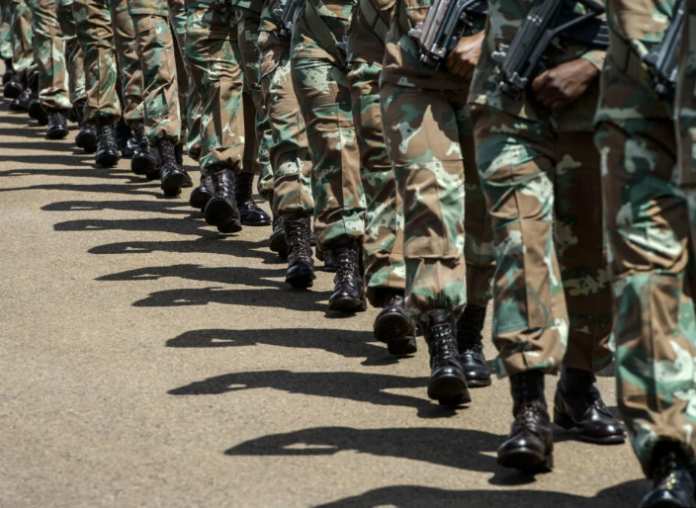
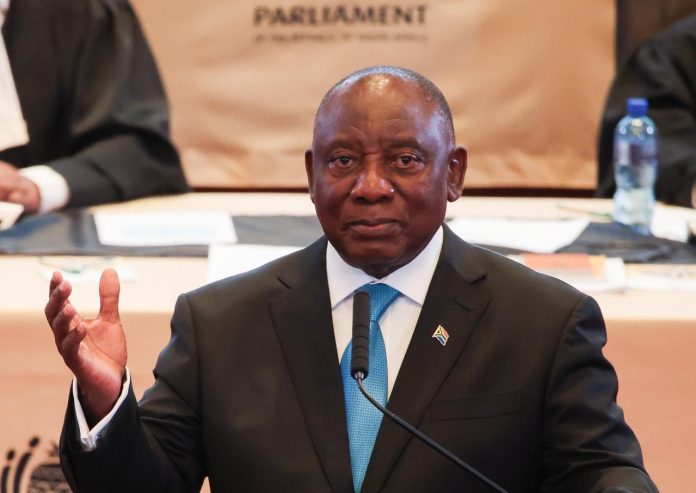
There have been mixed reactions to President Cyril Ramaphosa’s announcement during his State of the Nation Address on Thursday night that the SANDF will be deployed to gang-infested areas of the Western Cape soon.


Ramaphosa said a tactical plan is being finalised, and Parliament will be informed of the scale and the duration of the deployment. Further details will be shared with the public in due course. Community crime fighters have long called for the deployment of the army.


The Western Cape Provincial Community Police Board has welcomed the announcement, saying the SANDF must serve as a short-term force multiplier to stabilise high-risk areas, enhance visible security, and create space for broader state interventions.


The Board has, however, emphasised that military deployment is not a substitute for effective, professional policing.


“Lasting reductions in crime will depend on measurable investment in strengthening SAPS’ investigative capacity, crime intelligence, anti-corruption efforts, and community-oriented policing, as mandated by the Constitution.”


Western Cape community police board spokesperson Rafique Foflonker has called for a clearly defined operational plan, transparent oversight mechanisms, and a time-bound strategy, alongside a parallel commitment to institutional capacitation and coordinated socio-economic interventions.


Mayor Geordin Hill-Lewis has also welcomed the short-term deployment of the army, but challenged the President to act urgently on real solutions for upping gang crime convictions by devolving powers for City police to help SAPS investigate gang, gun, and drug crime.


“Any short-term relief for families in gang-impacted communities is most welcome, and our City police will be on hand to support SAPS and the SANDF, as will our safety technology. But Mr President, while we welcome the army, it is only short-term. We urge you to also act now on real solutions to up gang crime convictions by devolving more powers to City police.”


The MMC for Safety and Security, JP Smith, says stabilisation is not enough; we need convictions.


“As with previous deployments, I know that stabilisation alone is not sufficient if criminals continue to roam freely and case dockets go missing. I demand that the criminals terrorising communities in the Western Cape be arrested and successfully prosecuted. It cannot be that case-dockets go missing, cases are withdrawn, or investigations go cold, resulting in criminals never seeing their day in court. I call on the President to think not only in the short term, but also in the long term. It is time for the expansion of Metro Police’s policing powers to include investigations, intelligence-gathering and forensic powers so that we can begin bringing criminals to book and keep our communities safe in the long run.”


MP Ian Cameron, who is the chair of Parliament’s Portfolio Committee on Police, agreed that while this intervention is justified, given the high levels of gang violence, stabilisation is not a strategy.


He says the SANDF cannot replace the investigative and intelligence functions of the South African Police Service or the Directorate for Priority Crime Investigation.


“Soldiers can assist with visibility and area control. They cannot dismantle drug networks, build racketeering cases or secure sustainable convictions. What we need instead is structural reform.”


Cameron says the City of Cape Town’s Metro Police has demonstrated operational capacity, and agreed with Smith and Hill-Lewis that the City should be granted enhanced forensic authority, particularly ballistic analysis powers in gang-related gun violence.


“Where municipal capability exists and can measurably improve safety outcomes, it should be enabled within a coordinated national framework. If reform enhances safety, it should not be resisted.”


SONA 2026: Ramaphosa sets out crime crackdown, economic reforms and local government overhaul


President Cyril Ramaphosa has outlined an ambitious programme to tackle organised crime, accelerate economic growth and overhaul struggling municipalities, declaring that South Africa has “turned a corner” and is entering a new phase of reform and recovery.


Delivering his State of the Nation Address (SONA) at Cape Town City Hall on 12 February 2026, Ramaphosa said the government’s priorities under the Government of National Unity (GNU) are to drive inclusive growth and job creation, reduce poverty and the cost of living, and build a capable, ethical and developmental state.


He acknowledged progress in stabilising the economy but warned that unemployment, violent crime and failing local government remain pressing concerns.


Fight against crime and organised syndicates


Ramaphosa described organised crime as “the most immediate threat to our democracy, our society and our economic development”, saying the government’s primary focus this year will be to step up the fight against criminal syndicates.


He announced that the South African National Defence Force (SANDF) will be deployed to support police in the Western Cape and Gauteng to combat gang violence and illegal mining. A tactical deployment plan will be finalised in the coming days, with Parliament to be informed as required by the Constitution.


The government will also consolidate intelligence at the national level and deploy multidisciplinary intervention teams to dismantle priority syndicates. A new criminal justice reform initiative, modelled on Operation Vulindlela, will be housed in the Presidency to drive implementation across the system.


Other measures include:


  • Recruiting 5,500 additional police officers this year.
  • Re-vetting senior SAPS and metro police management, including lifestyle audits.
  • Establishing a national illicit economy disruption programme targeting sectors such as tobacco, fuel and counterfeit goods, using data analytics and AI.
  • Strengthening the Hawks, the National Prosecuting Authority and the Special Investigating Unit.
  • Introducing a Whistle-Blower Protection Bill to criminalise retaliation and provide support to whistle-blowers.
  • Reforming procurement systems and finalising Public Procurement Act regulations by mid-2026.


“We cannot fight organised criminals by treading softly,” Ramaphosa said. “There will be no impunity for acts of corruption and criminality.”


Water crisis and local government reform


The President said water shortages are now “the single most important issue” for many communities, citing recent protests in parts of Gauteng.


To address immediate and long-term challenges, he announced the establishment of a National Water Crisis Committee, which he will chair. More than R156 billion has been committed over the next three years for water and sanitation infrastructure, including major dam projects.


The government has already laid criminal charges against 56 municipalities for failing to meet their obligations under the National Water Act and plans to hold municipal managers personally accountable where necessary.


Ramaphosa also confirmed that a revised White Paper on Local Government will be finalised in the coming months to overhaul a system he described as too complex and fragmented.


Proposed reforms include differentiated powers for municipalities based on capacity, professionalising senior appointments and strengthening the national government’s ability to intervene where municipalities fail.


Economic growth gathering pace


On the economy, Ramaphosa said South Africa is stronger than a year ago, citing four consecutive quarters of GDP growth, two primary budget surpluses, improved credit ratings and inflation at its lowest level in two decades.


“We have turned a corner,” he said, while cautioning that growth must accelerate to address unemployment and inequality.


Government has committed more than R1 trillion in public infrastructure investment over three years, the largest allocation of its kind in the country’s history. Through Operation Vulindlela, reforms in energy, logistics and telecommunications are being accelerated.


Ramaphosa says load shedding has ended, and more than 40% of electricity generation is expected to come from renewable sources by 2030. Eskom’s restructuring is underway, with a dedicated task team to oversee the establishment of an independent transmission entity.


In transport, private rail operators have been granted access to the network, public-private partnerships are planned for ports and rail corridors, and a partnership has been concluded for the Durban Pier 2 Container Terminal. Preparations are also underway for high-speed rail corridors linking major cities.


Industrial policy, mining and green growth


Ramaphosa said South Africa is positioning itself as a global supplier of critical minerals and green products, with ore reserves valued at more than R40 trillion.


Government is investing in geological exploration and beneficiation, while introducing a 150% tax deduction for investment in new energy vehicles from March. International pledges under the Just Energy Transition Investment Plan now total approximately R250 billion.


The President also highlighted growth in agriculture and tourism. South Africa is now the second-largest exporter of citrus globally, and 10.5 million tourists visited the country last year.


To combat a severe foot-and-mouth disease outbreak, the government will vaccinate the national herd of 14 million cattle and has classified the outbreak as a national disaster.


Supporting small businesses and youth employment


To stimulate job creation, government aims to raise R2 trillion in new investment commitments over the next five years. More than R600 billion of the R1.5 trillion pledged at previous investment conferences has already flowed into projects.


This year, over R2.5 billion will be allocated to support 180,000 small and medium enterprises, alongside R1 billion in guarantees. Regulations under the National Credit Act will be amended to improve access to affordable credit.


Public and social employment programmes, including the Presidential Employment Stimulus and Expanded Public Works Programme, will be expanded and better coordinated. Regulatory changes are planned to make it easier for businesses to participate in the Youth Employment Service.


Education, health and social protection


Ramaphosa emphasised early childhood development, making Grade R compulsory and expanding subsidies for ECD facilities. The matric class of 2025 achieved a record 88% pass rate.


Government is overhauling the skills development system, reducing the number of Sector Education and Training Authorities and strengthening workplace-based training. Plans are also underway to expand higher education capacity and address student accommodation shortages.


On health, preparations for National Health Insurance are continuing, with major investments planned in hospital infrastructure. A national rollout of Lenacapavir, a six-monthly HIV prevention injection, will begin, alongside efforts to eliminate cervical cancer.


The Social Relief of Distress grant will be continued and redesigned to better support livelihoods and skills development.


Foreign policy and sovereignty


Ramaphosa reaffirmed South Africa’s commitment to multilateralism, sovereignty and equality in international relations, saying the country “will not be bullied by any other country”.


South Africa will continue to support African integration and the African Continental Free Trade Area, while seeking to expandthe  beneficiation of critical minerals.


A “turning point” for South Africa


Closing his address, Ramaphosa called 2026 a year of transformative change, echoing the start of his speech during which he invoked the legacy of the women of 1956, the youth of 1976 and the adoption of the Constitution in 1996.


“We must fix local government. We must fight crime and corruption. We must create jobs and livelihoods for every South African. And we must build a state that works for the people,” he said.


“We have indeed turned a corner. Now we must look ahead and move with speed.”

Ramaphosa announces planned SANDF deployment to tackle gang violence in Western Cape

gang


President Cyril Ramaphosa has announced that the South African National Defence Force (SANDF) will be deployed to support the South African Police Service (SAPS) in gang-ridden areas of the Western Cape.

The announcement was made during his State of the Nation Address on 12 February, where he said he had directed the Minister of Police and the SANDF to develop a technical plan for the deployment in the province. More details on the scope and timing of the intervention will be released in due course.

Ramaphosa said the move forms part of the government’s efforts to address persistent and escalating gang violence, particularly in parts of Cape Town.

Chairperson of Parliament’s Portfolio Committee on Police, Ian Cameron, has welcomed decisive intervention but cautioned that military deployment alone cannot resolve the root causes of organised crime.

“Given the sustained and escalating levels of gang violence, decisive intervention is justified,” Cameron said. “A properly mandated and time-bound SANDF deployment can help stabilise hotspots and create operational space for law enforcement.”

However, he stressed that “stabilisation is not a strategy”.

Cameron warned that while soldiers can assist with visibility and area control, they cannot replace the investigative and intelligence functions of SAPS or the Directorate for Priority Crime Investigation.

“They cannot dismantle drug networks, build racketeering cases or secure sustainable convictions,” he said.

Instead, Cameron called for structural reform within law enforcement, including intelligence-led policing based on credible crime intelligence, prosecutor-guided investigations into organised crime syndicates, and financial disruption through asset forfeiture targeting syndicate leadership.

He also urged the expansion of policing powers to capable metropolitan governments.
Cameron pointed to the City of Cape Town Metro Police as an example of operational capacity that could be strengthened. Granting enhanced forensic authority, particularly ballistic analysis powers in gang-related gun violence, could act as a “major force multiplier”, he said.

“Rapid local ballistic tracing integrated with national systems would link shootings faster, identify repeat firearms, strengthen case dockets and improve conviction rates.”

He added that where municipal capability exists and can measurably improve safety outcomes, it should be enabled within a coordinated national framework.

Ramaphosa also announced that all SAPS and Metro Police members will undergo re-vetting. Cameron said this step is necessary, citing concerns about organised crime infiltration within law enforcement ranks.

But he warned that vetting must be accompanied by consequence management.
“If disciplinary outcomes are overturned at the senior level, accountability becomes selective,” he said.

Cameron concluded that while short-term stabilisation may calm violence in hotspots, long-term safety will require empowered and competent institutions, integrity within the system, and measurable accountability.

“The core question remains: are we prioritising political positioning, or the safety of our people?” he asked.

error: Content is protected !!