14.4 C
Cape Town
Wednesday, July 8, 2026
Home Blog Page 155

Fuel price shock: Tried and tested fuel saving tips

fuel
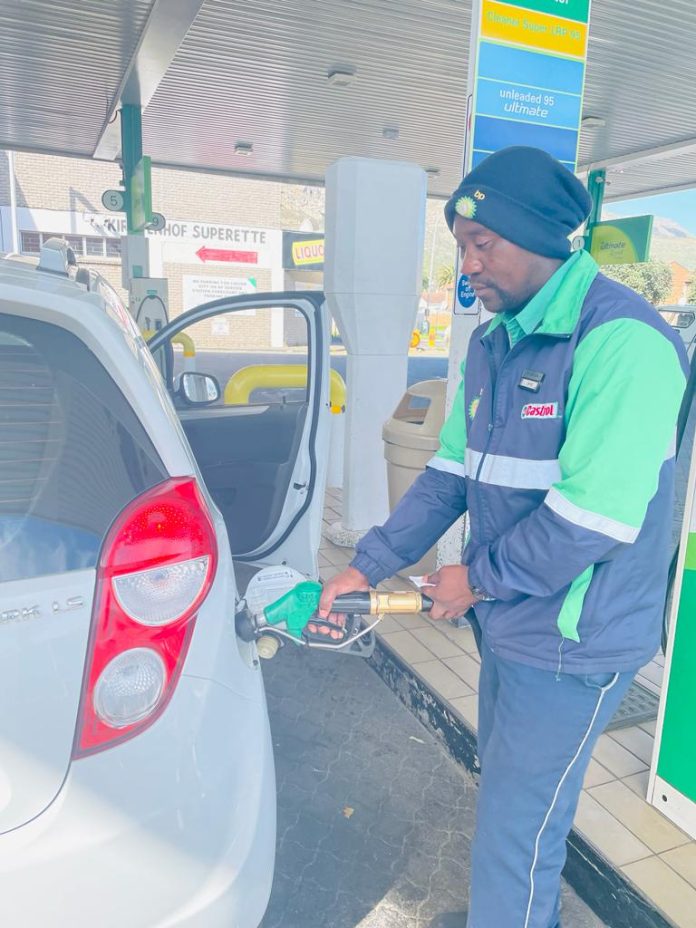
Image by Lizell Persens


While South Africans have been assured that fuel supply in the country remains stable in the immediate term, a massive fuel price hike for April is unavoidable, as global oil prices spike due to the escalating conflict in the Middle East.


These potentially record-setting fuel price increases for April will have a knock-on effect across the economy, pushing up the cost of transport, food and other essential goods, and placing already strained consumers under further financial pressure.


Consumer Financial Education Specialist at Momentum Group Foundation, Salem Nyati, says consumers need to stress-test their budgets now to avoid financial traps, like additional credit, later.


He shares some practical guidance for consumers:


Rethink affordability

“Consumers must distinguish between bank affordability and real-life affordability. Banks assess based on current income and expenses. But real affordability asks: what happens if fuel, food, or interest rates move against me? If your budget has no breathing room, you’re already overcommitted – even if you’ve been approved. This is not the time to take on new debt to maintain your lifestyle. That includes store accounts, personal loans, or vehicle upgrades. Using credit to absorb rising living costs only creates a delayed, yet deeper crisis.”


Build a ‘shock buffer’ into your budget


“Consumers should actively create margin – even if small. Cut discretionary spend now and redirect that into a buffer. Fuel shocks don’t happen once; they typically come in waves.”


Actively reduce transport costs where possible


“Fuel is now a controllable risk area. Carpooling, consolidating trips, working from home where possible, or even rethinking school and work logistics can make a meaningful difference over a month.”


Stress-test your finances


“A simple exercise: ask yourself: if fuel rises another R2 and food increases 10%, what breaks in my budget? If the answer is ‘I’d need credit,’ you need to adjust now, not later.”


Nyati concludes that this is one of those moments where small financial decisions over the next 2-3 months will determine whether households stay stable or start sliding into debt.


The Executive Head for Personal Lines at Miway Insurance Limited, Sherry Sibeko, has also shared some tips that drivers can take to reduce the impact on their monthly budgets.


“Many people assume that saving fuel requires major lifestyle changes, but small adjustments to everyday driving habits can make a meaningful difference over time.”


Here are her top fuel-saving tips:


  • Drive smoothly: avoid rapid acceleration and harsh braking – gentle driving uses less fuel.

  • Keep a steady speed: maintain consistent speeds where possible to improve efficiency.

  • Don’t idle unnecessarily: switch off your engine if you’re stopped for more than a short time.

  • Ease into traffic: anticipate stops and slowdowns to reduce constant braking and speeding up.

  • Use cruise control on highways: it helps maintain a constant speed and lowers fuel use.

  • Lighten your load: remove unnecessary items and unused roof racks to reduce drag and weight.

  • Plan your trips: avoid peak traffic and heavy congestion where possible.

  • Carpool when you can: share trips with colleagues or family to cut overall fuel costs.

  • Combine errands: group trips together to avoid multiple short drives.

Early warning for “Day Zero” as Cape Town dam levels drop below 50%

cape town dam
Steenbras dam


Water levels in Cape Town have fallen below the halfway mark, as the City of Cape Town calls on residents to curb usage as soon as possible. 


The Mayoral Committee Member for Water and Sanitation, Zahid Badroodien, advised on Friday that dam levels dropped to 49,2% over the past week, prompting an “early warning phase”. 


ALSO READ: Western Cape dam levels drop sharply as drought concerns grow – Smile 90.4FM


Badroodien said the dipping water levels raise concerns as the South African Weather Service has forecast that the rainy season would start later than usual, and the volume of rain would also be less than usual.  


“Cape Town is not in a drought, and not heading to ‘Day Zero’. However, as we are in the early warning phase, the window to avoid water restrictions before November is narrowing,” read the City of Cape Town’s 27 March statement.  


Over the past week, water consumption declined slightly to 1,022 million litres per day (MLD), down from 1,058 MLD, but this remains above the target by 47 MLD.  


Badroodien said collective efforts to conserve water would be critical in the coming weeks, especially before the last day of May. 


“… so that we have more water stored ahead of the winter rains, which is predicted to be less than average.” 


Because of the unpredictable rainfall, Badroodien added that current reserves may need to last far longer than usual. 


“The 49,2% water that we have in our dams will need to last Cape Town with supply through both this winter and possibly into next summer and 2027, depending on how much rainfall we get this year.” 


However, if current water usage trends remain, water levels may drop to 40% by May. 


“If demand remains high, the City’s options narrow and the likelihood of restrictions being introduced earlier than November, increases.” 


Residents are urged to lower usage as best they can, “whether it’s closing the tap while you are brushing your teeth, fixing the nagging cistern of your toilet, taking short-stop showers, or watering your garden early in the morning or in the evening”.  


“Team Cape Town, please keep hydrated and cool, but remember to use water wisely and responsibly in and around our homes, businesses and industries, and for essential purposes only,” Badroodien.  


ALSO READ: Save Water – City of Cape Town 

Man arrested for allegedly drugging, raping wife and sharing footage online

hawks arrest human trafficking suspects


Warning: This story contains explicit content that may be disturbing to sensitive readers


In a case bearing similarities to the Gisèle Pelicot case in France, a husband, who drugged and raped his wife and distributed pornographic videos without her consent for several years, has been arrested in Boksburg.


A second suspect, who is known to the husband, was also arrested.


The SAPS says its Serial and Electronic Crime Investigations (SECI) unit received information from the UK’s National Crime Agency, via the British High Commission in Cape Town, regarding a South African target who was involved in drug-facilitated sexual assault; Somnophilia or “sleep fetish.”


In a statement, the Police’s Lt. Col. Amanda van Wyk says the 34-year-old husband drugged, raped his wife, and distributed pornographic material of him performing sexual acts on her without consent on an exclusive social media channel over a period of five years.


The victim appeared sedated and in a state of unconsciousness when these serious sexual offences were committed.


“Innovative investigative techniques and analysis led a multi-disciplinary team to the location of the suspect, who was arrested in Boksburg on Thursday, 26 March 2026.”


The team comprised investigators from the national and provincial SECI teams in Gauteng, supported by the Department of Homeland Security Investigations (HSI) and the US Embassy.

“Forensic experts at the scene uncovered multiple images and videos relating to drug-facilitated sexual assault as well as child sexual abuse material, which were found on the suspect’s electronic devices.”


She says on the same day, further investigation led the team to another suspect in Germiston with a similar modus operandi. She confirmed the two suspects are known to each other.


Police also seized the 48-year-old suspect’s electronic devices and two unlicensed firearms found in his possession.


Both suspects are expected to appear before the Boksburg Magistrates’ Court today on charges that include sexual assault, possession of an unlicensed firearm, possession, distribution and manufacturing of child sexual abuse material, as well as contravention of Section 16 of the Cyber Crimes Act.


Investigations and forensic analysis of the suspects’ devices are ongoing.

Surge in EV searches as diesel car enquiries drop

EV


As motorists with diesel cars face a nearly R10 fuel hike come 1 April, new data suggests South Africans are looking for electric and hybrid alternatives.


READ: Some fuel retailers hiking diesel prices pre-emptively as demand spikes


According to AutoTrader, one of the country’s largest vehicle search platforms, enquiries for diesel-powered passenger vehicles have declined by 18% over the past four weeks.


CEO George Mienie says this is a notable change in a country where diesel has long been a preferred option for motorists focused on fuel efficiency and long-distance driving.


At the same time, interest in alternative technologies is rising sharply.


Searches for battery electric vehicles are up 45% over the same period, while hybrid searches are up 16%.


Together, Mienie says, these shifts suggest that rising fuel costs are pushing many South Africans to reconsider their reliance on traditional fossil fuels.


He says the shift is not just contained to search behaviour, but consumers are engaging with alternative options more seriously as running costs come under pressure.


But he says the growing demand for battery electric vehicles is not yet being matched by stock availability.


“BEV listings are down -3% even as demand has risen sharply, pointing to a market where supply may already be tightening. That could reflect existing stock being bought up more quickly, while some current owners choose to hold onto their BEVs as fuel prices climb.”


In contrast, diesel, petrol and hybrid stock supply have all edged higher.


“That suggests supply in the traditional market remains available, even as buyer attention begins to move elsewhere. It is that disconnect between shopper behaviour and available stock that makes this moment worth watching.”


While this doesn’t mean diesel is disappearing overnight, Mienie argues a -18% change in diesel enquiries over four weeks is a meaningful signal, especially when it is happening alongside stronger interest in electric and hybrid alternatives.


“If these trends continue, rising fuel costs may do more than squeeze household budgets. They may also have the unintended consequence of quietly accelerating South Africa’s shift towards full battery electric vehicles.”


The EV market in South Africa received a massive boost with Chinese car manufacturer BYD announcing it would invest billions of rands to expand its South African presence this year, focusing on rapid dealership growth and installing charging stations.


While not currently manufacturing locally, the BYD Dolphin Surf has officially become South Africa’s cheapest electric vehicle, starting at approximately R339,900 to R341,900.


Investigations expected following Hout Bay helicopter crash


The Department of Forestry, Fisheries and the Environment (DFFE) has expressed concern following a helicopter incident involving Kishugu Aviation during wildfire suppression efforts in Hout Bay.


According to the department, the incident occurred on Wednesday, when a helicopter operated by the service provider was involved in an accident while conducting firefighting operations in the area. The pilot survived the incident and received medical attention.


DFFE clarified that although it has a five-year contract with the Kishugu Joint Venture to implement its Working on Fire Programme, the aircraft involved in the incident was not operating under this agreement at the time. Instead, the helicopter had been deployed under a separate contractual arrangement.


“The aircraft was operating under a contract with South African National Parks (SANParks).” added the DFFE in a statement.


The department confirmed that the helicopter was operating under a contract with South African National Parks (SANParks) and was engaged in wildfire suppression efforts within the Hout Bay area.


Further details from the service provider indicate that the pilot was able to exit the aircraft without assistance, reach safety, and was subsequently transported to the hospital for medical evaluation.


SANParks also confirmed the incident, stating that a helicopter operating on the slopes of Hout Bay in Table Mountain National Park at the time of the accident. The agency noted that the pilot is safe but said investigations are still underway to determine the cause of the incident.


“DFFE wishes the pilot a speedy recovery and commends all firefighting and emergency personnel involved in the wildfire suppression efforts.”


Authorities, including aviation and law enforcement bodies, are expected to investigate the circumstances surrounding the incident. Members of the public have been urged to avoid affected areas to allow emergency services to continue their work without disruption.


READ MORE: WSAR rescues elderly couple on hiking route near Porterville

error: Content is protected !!