

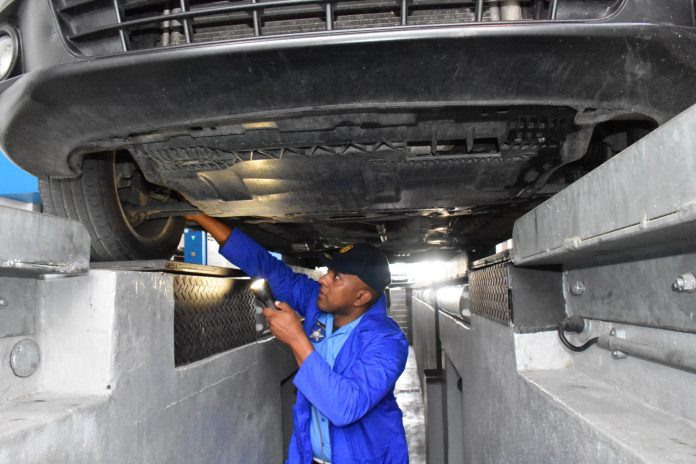
The National Consumer Commission (NCC) has issued a series of vehicle safety recalls over the past few months, spanning multiple major brands and affecting thousands of vehicles sold across South Africa.
The recalls, which saw an uptick since July 2025, have covered a wide range of defects, including airbag explosions, seat belt failures, brake faults, and fuel leaks, all posing serious safety risks.
October 2025: Ford, BMW, Opel and Nissan Join Expanding Recall List
On 30 October, the NCC announced a recall of Ford Mustang models (2015–2019) due to a fault that can cause the rear-view camera display to freeze or go blank when reversing. The malfunction could increase the risk of an accident.
A day earlier, on 29 October, the Commission confirmed two more recalls, BMW 1 and 2 Series, X1 and X2 vehicles (sold in 2025) for faulty seat belts, and Opel Astra models (2004–2015) for potentially explosive airbag inflators.
Also this month, on 27 October, 1,665 Nissan Qashqai SUVs (2021–2024) were recalled due to a fuel pipe defect that could lead to leaks and fires. Earlier in October, Stellantis recalled Peugeot Landtrek bakkies (2021–2025) for wiring faults that could trigger unexpected airbag deployment.
On 6 October, BMW issued one of the year’s largest recalls, 12,491 vehicles, including the 3 Series, 5 Series, X3, and Z4, after discovering that water intrusion in the starter motor could cause short-circuits or fires, even when parked.
September 2025: Volkswagen, Mercedes-Benz and Chrysler Models Flagged
In September, recalls widened to include several major German and American brands.
On 30 September, the NCC reported that Chrysler 300C (2006–2010) and Audi A3 vehicles were affected by defective Takata airbags that could rupture on deployment, sending metal fragments into the cabin.
Earlier that month, Mercedes-Benz recalled EQE-295 and GLC-254 models (2022–2025) for a steering bolt defect that could cause a loss of control, while Volkswagen recalled 374 Amarok bakkies for a failure of the braking assistance system.
August 2025: Ford, Nissan and Citroën Affected
On 20 August, Ford announced recalls for multiple vehicles, including the Mustang, Everest, Ranger, EcoSport, and Transit Custom (2019–2025), due to infotainment and transmission faults. Nissan also recalled Qashqai models (2021–2024) for an electrical harness issue, and Stellantis withdrew Citroën C4, DS4, and DS5 (2009–2016) vehicles for airbag inflator defects.
Earlier that month, on 1 August, Lexus recalled 34 LX600 SUVs (2022) over a manufacturing defect that could cause engine failure.
July 2025: The Wave Begins
The recall trend began intensifying in July 2025, starting with multiple high-end and mass-market models.
On 8 July, the NCC announced recalls of Volkswagen Golf 8 GTI and R, Volvo XC90 plug-in hybrids, and Toyota Hino 500 trucks, citing seat belt, braking, and tooling defects.
Just days later, on 11 July, the Range Rover Evoque and Mercedes-Benz SL, EQS, GLC, and S-Class models were recalled for airbag and electrical faults.
Then, on 22 July, Volkswagen Polo Sedans were added to the list due to faulty rear seat belts, followed by Jaguar E-Pace (24 July) and Ford Ranger, Everest, Puma and EcoSport (25 July) — the latter affecting thousands of vehicles due to engine and transmission defects.
Growing Concern and Consumer Warning
The NCC says it has been monitoring the surge in recalls closely since July, working with manufacturers to ensure that repairs are completed and that vehicles on South African roads remain safe.
“Consumers must take these recalls seriously and act swiftly,” said Acting Commissioner Hardin Ratshisusu. “Repairs are free, but ignoring a recall could put lives at risk.”