


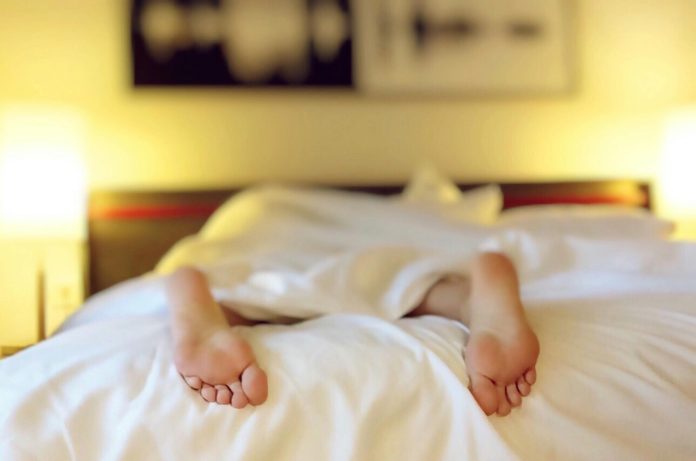
As March marks World Sleep Awareness Month and to mark World Sleep Day on 13 March, new national research is raising an important question: Why are so many South Africans waking up tired even after a full night’s sleep?
According to the 2025 Sloom National Sleep Census, the country is facing what experts are calling a “sleep paradox” – people are getting the recommended hours of sleep, but their bodies and minds are not fully recovering overnight.
The hours are there, but the rest isn’t
The census, which surveyed 5,602 adults across all nine provinces, introduced the country’s first South Africa Sleep Quality Score (SSQS) – a national benchmark designed to measure how restorative our sleep actually is.
South Africa’s overall score sits at 54 out of 100, suggesting that while people are spending enough time in bed, true rest remains elusive.
More than 57% of South Africans report sleeping the recommended seven to nine hours a night, yet only 15% say they wake up feeling truly rested. Alarmingly, one in six people say they wake up feeling exhausted.
Physical discomfort: the biggest sleep thief
Contrary to the common belief that technology or late-night screen time is the main sleep disruptor, the census found that physical discomfort is the leading cause of poor sleep.
More than 55% of respondents said discomfort is their biggest sleep barrier, while a striking 84.6% reported that pain affects their sleep, either occasionally or regularly.
This suggests that something as simple as poor physical support during the night could be playing a major role in the country’s sleep struggles.
Your mattress might be sabotaging your sleep
The survey also revealed a surprisingly strong link between mattress age and sleep quality.
People sleeping on a mattress less than one year old scored an average of 60.5 on the sleep quality scale. But those on mattresses 20 years or older scored just 48.1 — a difference of 12.4 points.
In short, older mattresses may be quietly costing people quality rest.
When asked what matters most when buying a mattress, respondents ranked:
- Comfort – 86.7%
- Price – 59.7%
- Warranty or trial period – 37.6%
Comfort clearly remains the non-negotiable factor for better sleep.
Stress is keeping half the country awake
Beyond physical discomfort, stress is another major sleep disruptor.
Almost half of respondents (49.8%) say stress keeps them awake at night, highlighting how financial pressure, work demands and daily responsibilities are impacting rest.
Interestingly, the poorest sleep scores weren’t among young adults but middle-aged South Africans, particularly those aged 46 to 55, who recorded the lowest average score of 52.4.
People facing economic hardship also struggled more with sleep. Unemployed respondents had the lowest average sleep score overall at 49.6, reinforcing the link between stress, financial pressure and disrupted sleep.
Small lifestyle habits make a big difference
Despite the worrying trends, the census also found encouraging signs that sleep quality can improve with simple lifestyle changes.
People who actively prioritise sleep scored an average of 15.7 points higher than those who do not.
Regular exercise also made a noticeable difference. Respondents who exercise frequently scored 8.5 points higher on the sleep scale, making it one of the strongest lifestyle predictors of better sleep.
A shift from sleep quantity to sleep quality
The newly introduced Sleep Score Index measures restorative sleep using five key factors:
- Sleep duration
- Night-time awakenings
- Morning restedness
- Mattress comfort
- Consistency of routine
With the national score sitting at 54 out of 100, the data suggests South Africa needs to shift the conversation from simply getting enough sleep to getting better sleep.
Sloom founder and CEO Rudo Kemp says the goal of the research is to spark awareness about the quality of the country’s rest.
“While more than half of adults sleep enough hours, only 15% wake up truly rested,” Kemp explains. “The issue isn’t just sleep duration, it’s discomfort, disruption and a lack of true restoration.”
The big question: Are we truly recovering?
As World Sleep Day approaches, the findings offer a simple but important reminder.
Sleep is not just about how long we stay in bed, but how well our bodies recover while we’re there.
For many South Africans, the answer to that question may be the difference between just getting through the night and truly waking up refreshed.