16.6 C
Cape Town
Saturday, July 4, 2026
Home Blog Page 90

Green books, cards, and now digital IDs coming to SA

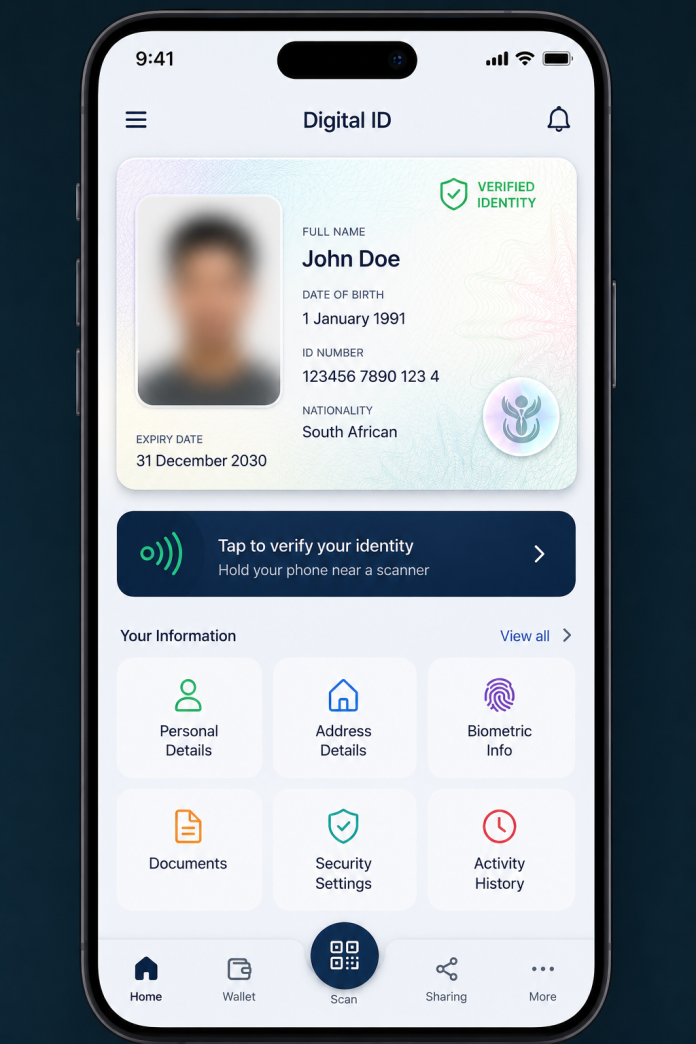
This image is for illustrative purposes only and was created using AI tools.


Processes are underway to introduce digital IDs in South Africa.  


The Home Affairs Minister, Leon Schreiber, earlier this week gazetted draft amended regulations which seek to allow residents to use their cell phones to store and access identity documents, birth and marriage certificates, as well as any other Home Affairs-related material.  


The Department of Home Affairs said the proposed amendments are aimed at creating the regulatory framework needed for a new digital identity system in South Africa. 


The system would also introduce remote identity verification through biometric technology. 


The draft amendments further seek to clarify the legal status of digital identity credentials, alongside the continued use of physical copies.  


Government also intends to strengthen safeguards around the sharing of identity information with accredited institutions, under laws including the Identification Act, the Promotion of Access to Information Act and the Protection of Personal Information Act. 


The department added that the digital identity system will be optional and used alongside the existing ID cards. 


“The draft regulations propose the creation of a world-class Digital Identity system as the ultimate expression of our vision to leverage digital transformation to deliver Home Affairs @ home. This system can greatly enhance our ability to combat identity theft, financial crimes, corruption and illegal immigration, while delivering efficient services to citizens in the comfort of their own homes and improving privacy protections and data management,” said Schreiber.  


Schreiber noted that technical work is already underway with other government departments, including the Presidency. 


The public can comment on the draft amendments to the Identification Act until 6 June. 


Submissions should be addressed to the Chief Director: Legal Services and be forwarded to the Department in any of the following ways: 

  • By hand to the Department on the 10th Floor, Hallmark Building, 230 Johannes Ramokhoase Street, Pretoria, 0001; 
  • By post to the Department at Private Bag X114, Pretoria, 0001; or 
  • By e-mail to Moses.Malakate@dha.gov.za 
Hantavirus: Contact tracing underway in the Western Cape and Gauteng

hantavirus


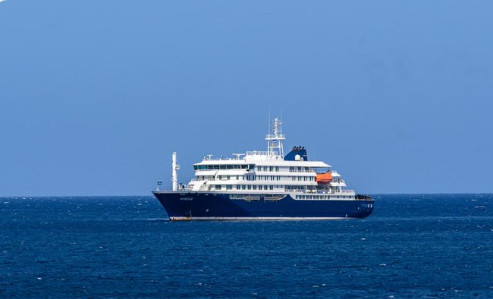
The Health Department is monitoring four people from the Western Cape, linked to the international response surrounding the MV Hondius hantavirus outbreak.


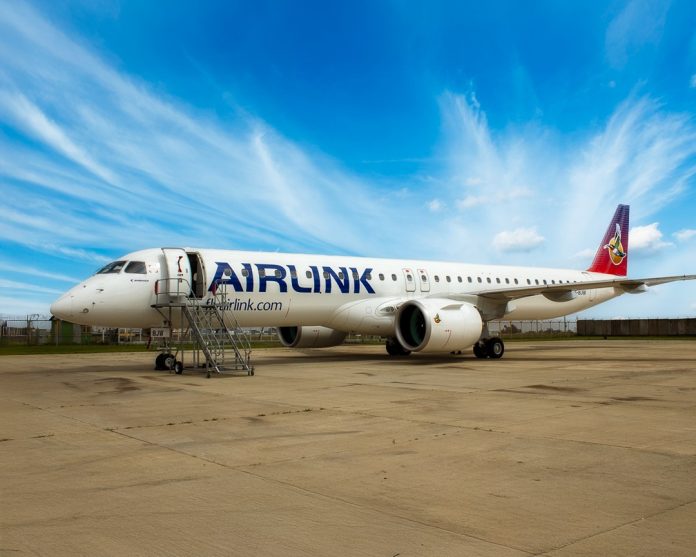
Health Department spokesperson Foster Mohale confirmed to Smile FM that the four individuals were passengers on the same Airlink flight from Saint Helena to Johannesburg (on 25 April) as the Dutch woman who later died from hantavirus-related complications.


READ: A timeline of the MV Hondius hantavirus outbreak


The Dutch woman reportedly collapsed at OR Tambo International Airport. She was due to take a connecting KLM flight back to the Netherlands, but was deemed too ill to continue with her travel.


Mohale said one of the four people from the Western Cape who were on the flight is experiencing symptoms and has been sent for laboratory testing, while contact tracing is underway. Authorities are still awaiting the test results.


Mohale said a total of 14 people on the flight are South African. The other 10 are from Gauteng. One person from Gauteng is also symptomatic, with test results also still being awaited.


In a customer notice on 6 May, Airlink confirmed that there were 82 passengers and 6 crew onboard flight 4Z 132 from St Helena to Johannesburg on 25 April.


At the time, Airlink was unaware that any of the passengers were unwell.


The airline says it was only notified on Sunday, 3 May, that the passenger from the ship had passed away after she arrived in Johannesburg and that her death was thought to be attributable to the rare Hantavirus.


Airlink says it immediately provided the Department of Health with the names, contact details and seating allocation of the passengers and crew who had been on the flight. This was to enable the health authorities to commence contact tracing.


Airlink is also contacting passengers who were on that flight and advising them to contact South Africa’s Department of Health, either by phone on +27 (0) 76 273 41 55 or by email: Pheoc@health.gov.za


During a Cabinet briefing yesterday, Minister in the Presidency Khumbudzo Ntshavheni said they had made contact with at least 50 of the passengers and that all passengers will be monitored for symptoms.


The incubation period for hantavirus is six weeks.


Airlink has reassured customers, stressing its fleet of Embraer aircraft is equipped with High Efficiency Particulate Air (HEPA) filters, which continually “scrub” clean the cabin air, which is constantly renewed throughout a flight.

A timeline of the MV Hondius hantavirus outbreak

hantavirus


The World Health Organisation has allayed fears that the current hantavirus situation could spiral out of control.


During a briefing yesterday, leaders assured that the hantavirus has been around for a long time, and that it does not spread in the same way as coronaviruses.


The WHO says to date, eight cases linked to the passenger ship MV Hondius have been reported, including three deaths. Five of the eight cases have been confirmed as hantavirus infections, while the remaining three are suspected.


Meanwhile, the Health Department’s Foster Mohale says they are monitoring four people from the Western Cape, linked to the international response surrounding the MV Hondius hantavirus outbreak.


Mohale confirmed to Smile FM that the four individuals were passengers on the same flight from Saint Helena to Johannesburg as the Dutch woman who later died from hantavirus-related complications. Mohale said one of the four people is experiencing symptoms and has been sent for laboratory testing, while contact tracing is underway.


Authorities are still awaiting the test results.


The WHO’s Dr Maria Van Kerkhove stressed that this particular strain, the Andes hantavirus, is found in Latin America and is the only species known to be capable of very limited human-to-human transmission. But she says the matter is under control.


Below is a timeline of the developing situation, including details that may shed light on how the hantavirus may have been acquired early on in the trip:


1 April 2026

  • The expedition cruise ship MV Hondius departs from Ushuaia.
  • The voyage includes Antarctica and remote South Atlantic islands.

Before the voyage

  • A Dutch couple later linked to the outbreak travel through Argentina, Chile and Uruguay on a bird-watching trip.
  • WHO later says they visited areas inhabited by rodents known to carry the Andes virus.

6 April 2026

  • The first known patient, a Dutch man onboard the ship, develops symptoms.
  • Hantavirus is not initially suspected because symptoms resemble other respiratory illnesses.

11 April 2026

  • The Dutch man dies onboard while the ship is near Saint Helena.
  • No samples are taken before his death.

24 April 2026

  • Another male passenger reports symptoms to the ship’s doctor.
  • About 29 passengers disembark at Saint Helena.
  • The first victim’s wife, already symptomatic, also leaves the ship.

25 April 2026

  • The Dutch woman boards Airlink Flight 4Z132 en route to the Netherlands.
  • During the flight to Johannesburg, her condition deteriorates.

26 April 2026

  • The Dutch woman collapses at OR Tambo International Airport.
  • She is taken to a medical facility in Kempton Park and later dies.
  • Samples are collected and later tested by the National Institute for Communicable Diseases.

27 April 2026

  • The symptomatic male passenger is medically evacuated from Ascension Island to South Africa.
  • He is admitted to intensive care, where he remains.

28 April 2026

  • A female passenger onboard develops symptoms.

2 May 2026

  • The symptomatic female passenger dies onboard the MV Hondius.
  • WHO is formally notified of the outbreak by the United Kingdom under International Health Regulations (IHR).
  • WHO begins coordinating the multinational response.
  • The ship continues toward Cabo Verde.

3 May 2026

  • South African authorities inform Airlink that the Dutch woman’s death is suspected to be linked to hantavirus.
  • Contact tracing begins for passengers and crew on Flight 4Z132.

4 May 2026

  • The first confirmed hantavirus case onboard is identified.
  • Oceanwide Expeditions says all former passengers are contacted.
  • WHO and national health authorities intensify tracing efforts.

Early May 2026

  • Doctors from Cabo Verde board the ship to assist three symptomatic passengers.
  • WHO coordinates the evacuation of three patients to the Netherlands.
  • Two remain stable in hospital.
  • One asymptomatic patient later travels to Germany.

6 May 2026

  • A man who had disembarked in Saint Helena reports symptoms in Zürich.
  • He tests positive for hantavirus.
  • Geneva University Hospitals sequences the virus and confirms it as Andes virus.

7 May 2026

  • WHO Director-General Tedros Adhanom Ghebreyesus briefs the media.
  • WHO confirms:
    • Eight total cases
    • Three deaths
    • Five laboratory-confirmed hantavirus infections
    • Three suspected cases
  • WHO says the public health risk remains “low”.

7 May 2026 – Containment measures onboard

  • All passengers are instructed to remain in cabins.
  • Cabins are disinfected regularly.
  • Symptomatic passengers are isolated immediately.
  • WHO deploys an expert onboard in Cabo Verde.
  • The expert is joined by:
    • Two Dutch doctors
    • One specialist from the European Centre for Disease Prevention and Control

7 May 2026 – International coordination

  • WHO confirms no remaining passengers or crew are currently symptomatic.
  • WHO informs 12 countries whose nationals disembarked in Saint Helena:
    • Canada
    • Denmark
    • Germany
    • Netherlands
    • New Zealand
    • Saint Kitts and Nevis
    • Singapore
    • Sweden
    • Switzerland
    • Türkiye
    • United Kingdom
    • United States
  • WHO assists South Africa with contact tracing linked to the St Helena–Johannesburg flight.
  • The Health Department’s Foster Mohale confirms that four people in the Western Cape are being monitored for hantavirus.
  • The individuals were passengers on the same Airlink Flight 4Z132 as the Dutch woman who later died.
  • One of the four develops symptoms and is sent for laboratory testing.

7 May 2026 – Diplomatic response

  • Tedros says he personally requested Spanish Prime Minister Pedro Sánchez to allow the ship to dock in the Canary Islands.
  • Spain agrees to receive the vessel.
  • Tedros also thanks Cabo Verde Prime Minister Ulisses Correia e Silva for facilitating medical evacuations.

7 May 2026 – WHO operational response

  • WHO ships 2,500 diagnostic kits from Argentina to laboratories in five countries.
  • WHO develops operational guidance for safe disembarkation and onward travel procedures.

7 May 2026 – WHO reassurance

  • WHO officials stress that Andes virus spreads very differently from COVID-19.
  • Human-to-human transmission is considered limited and usually linked to close, prolonged contact such as caregiving or intimate household exposure.

10 May 2026 (expected)

  • The MV Hondius is expected to arrive in the Canary Islands for screening, quarantine procedures and repatriation operations.

WATCH: 100 years of Sir David Attenborough

Sir David Attenborough
IMAGE: Brooklyn Beckham/WWF


Today, the world celebrates 100 years of Sir David Frederick Attenborough.


8 May 2026 marks the centennial birthday of the veteran environmentalist and broadcaster.


A special concert is being held at the Royal Albert Hall in London in his honour, amongst several public celebrations worldwide.


In a voice message, Attenborough shares how he thought he would celebrate his birthday “quietly”, thanking all those who have wished him well.


Attenborough is recognised for his role in making the natural world accessible to ordinary people through various documentaries.


While he has mentioned that he was not particularly an animal lover, his fascination with animals raised awareness about those under threat. This then led him to work on documentaries on environmental issues, by showing the beauty of the natural world.


29 Schools to Remain Closed After Severe Weather Hits Western Cape Regions

schools closed
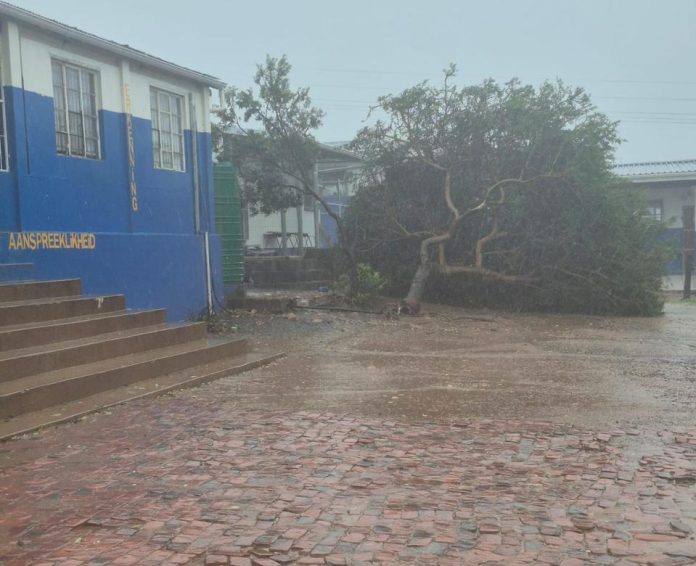
Image: Avontuur Primary School near Uniondale


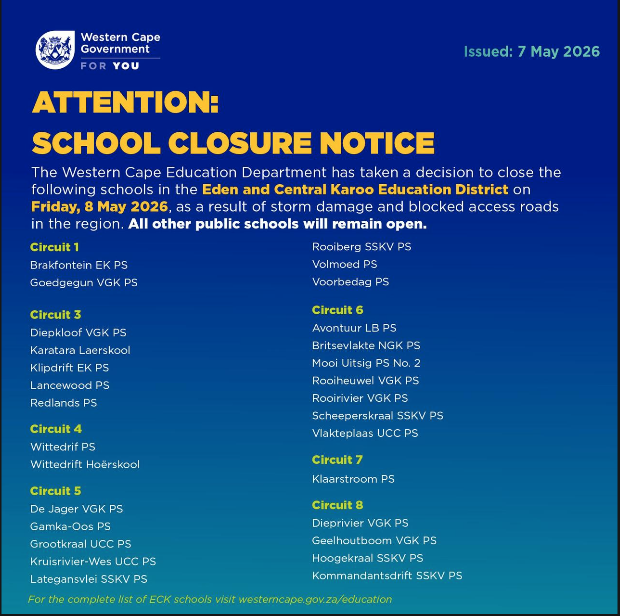
The Western Cape Education Department (WCED) has confirmed that 29 schools in the Eden and Central Karoo Education District will remain closed on Friday, 8 May 2026, as the adverse weather conditions continue to wreak havoc in the area.


Western Cape Education MEC David Maynier says the closures are necessary due to ongoing safety concerns and infrastructure challenges caused by severe weather.


“As a result of storm damage and blocked access roads, 29 schools in the Eden and Central Karoo Education District will remain closed on Friday, 8 May 2026. All other schools in the Eden and Central Karoo Education District will reopen on Friday, 8 May 2026,” Maynier said.


The department also noted that communication with families will continue at school level, particularly where disruptions remain.


“The affected schools will communicate with parents about the continued closure. Learner Transport Service routes at other schools may also be affected, and these schools will communicate with parents accordingly.”


Maynier added that recovery plans are already being put in place to ensure that teaching and learning continues with minimal disruption.


“Schools will now implement catch-up plans to ensure that teaching and learning returns to normal, and the schoolwork missed over the two days is covered. Our system is well-prepared for these events, and we will continue to monitor the weather conditions ahead,” he said.


Also read: Western Cape schools damaged due to adverse weather

error: Content is protected !!