


The World Health Organisation has allayed fears that the current hantavirus situation could spiral out of control.
During a briefing yesterday, leaders assured that the hantavirus has been around for a long time, and that it does not spread in the same way as coronaviruses.
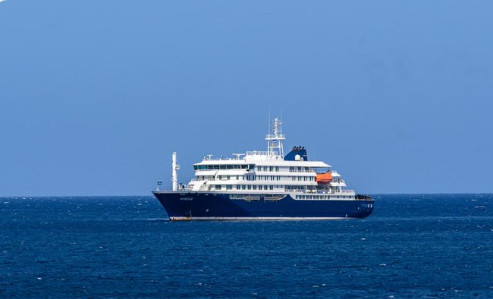
The WHO says to date, eight cases linked to the passenger ship MV Hondius have been reported, including three deaths. Five of the eight cases have been confirmed as hantavirus infections, while the remaining three are suspected.
Meanwhile, the Health Department’s Foster Mohale says they are monitoring four people from the Western Cape, linked to the international response surrounding the MV Hondius hantavirus outbreak.
Mohale confirmed to Smile FM that the four individuals were passengers on the same flight from Saint Helena to Johannesburg as the Dutch woman who later died from hantavirus-related complications. Mohale said one of the four people is experiencing symptoms and has been sent for laboratory testing, while contact tracing is underway.
Authorities are still awaiting the test results.
The WHO’s Dr Maria Van Kerkhove stressed that this particular strain, the Andes hantavirus, is found in Latin America and is the only species known to be capable of very limited human-to-human transmission. But she says the matter is under control.
Below is a timeline of the developing situation, including details that may shed light on how the hantavirus may have been acquired early on in the trip:
1 April 2026
- The expedition cruise ship MV Hondius departs from Ushuaia.
- The voyage includes Antarctica and remote South Atlantic islands.
Before the voyage
- A Dutch couple later linked to the outbreak travel through Argentina, Chile and Uruguay on a bird-watching trip.
- WHO later says they visited areas inhabited by rodents known to carry the Andes virus.
6 April 2026
- The first known patient, a Dutch man onboard the ship, develops symptoms.
- Hantavirus is not initially suspected because symptoms resemble other respiratory illnesses.
11 April 2026
- The Dutch man dies onboard while the ship is near Saint Helena.
- No samples are taken before his death.
24 April 2026
- Another male passenger reports symptoms to the ship’s doctor.
- About 29 passengers disembark at Saint Helena.
- The first victim’s wife, already symptomatic, also leaves the ship.
25 April 2026
- The Dutch woman boards Airlink Flight 4Z132 en route to the Netherlands.
- During the flight to Johannesburg, her condition deteriorates.
26 April 2026
- The Dutch woman collapses at OR Tambo International Airport.
- She is taken to a medical facility in Kempton Park and later dies.
- Samples are collected and later tested by the National Institute for Communicable Diseases.
27 April 2026
- The symptomatic male passenger is medically evacuated from Ascension Island to South Africa.
- He is admitted to intensive care, where he remains.
28 April 2026
- A female passenger onboard develops symptoms.
2 May 2026
- The symptomatic female passenger dies onboard the MV Hondius.
- WHO is formally notified of the outbreak by the United Kingdom under International Health Regulations (IHR).
- WHO begins coordinating the multinational response.
- The ship continues toward Cabo Verde.
3 May 2026
- South African authorities inform Airlink that the Dutch woman’s death is suspected to be linked to hantavirus.
- Contact tracing begins for passengers and crew on Flight 4Z132.
4 May 2026
- The first confirmed hantavirus case onboard is identified.
- Oceanwide Expeditions says all former passengers are contacted.
- WHO and national health authorities intensify tracing efforts.
Early May 2026
- Doctors from Cabo Verde board the ship to assist three symptomatic passengers.
- WHO coordinates the evacuation of three patients to the Netherlands.
- Two remain stable in hospital.
- One asymptomatic patient later travels to Germany.
6 May 2026
- A man who had disembarked in Saint Helena reports symptoms in Zürich.
- He tests positive for hantavirus.
- Geneva University Hospitals sequences the virus and confirms it as Andes virus.
7 May 2026
- WHO Director-General Tedros Adhanom Ghebreyesus briefs the media.
- WHO confirms:
- Eight total cases
- Three deaths
- Five laboratory-confirmed hantavirus infections
- Three suspected cases
- WHO says the public health risk remains “low”.
7 May 2026 – Containment measures onboard
- All passengers are instructed to remain in cabins.
- Cabins are disinfected regularly.
- Symptomatic passengers are isolated immediately.
- WHO deploys an expert onboard in Cabo Verde.
- The expert is joined by:
- Two Dutch doctors
- One specialist from the European Centre for Disease Prevention and Control
7 May 2026 – International coordination
- WHO confirms no remaining passengers or crew are currently symptomatic.
- WHO informs 12 countries whose nationals disembarked in Saint Helena:
- Canada
- Denmark
- Germany
- Netherlands
- New Zealand
- Saint Kitts and Nevis
- Singapore
- Sweden
- Switzerland
- Türkiye
- United Kingdom
- United States
- WHO assists South Africa with contact tracing linked to the St Helena–Johannesburg flight.
- The Health Department’s Foster Mohale confirms that four people in the Western Cape are being monitored for hantavirus.
- The individuals were passengers on the same Airlink Flight 4Z132 as the Dutch woman who later died.
- One of the four develops symptoms and is sent for laboratory testing.
7 May 2026 – Diplomatic response
- Tedros says he personally requested Spanish Prime Minister Pedro Sánchez to allow the ship to dock in the Canary Islands.
- Spain agrees to receive the vessel.
- Tedros also thanks Cabo Verde Prime Minister Ulisses Correia e Silva for facilitating medical evacuations.
7 May 2026 – WHO operational response
- WHO ships 2,500 diagnostic kits from Argentina to laboratories in five countries.
- WHO develops operational guidance for safe disembarkation and onward travel procedures.
7 May 2026 – WHO reassurance
- WHO officials stress that Andes virus spreads very differently from COVID-19.
- Human-to-human transmission is considered limited and usually linked to close, prolonged contact such as caregiving or intimate household exposure.
10 May 2026 (expected)
- The MV Hondius is expected to arrive in the Canary Islands for screening, quarantine procedures and repatriation operations.