15.8 C
Cape Town
Wednesday, July 1, 2026
Home Blog Page 48

CATA President in court; family members killed days prior

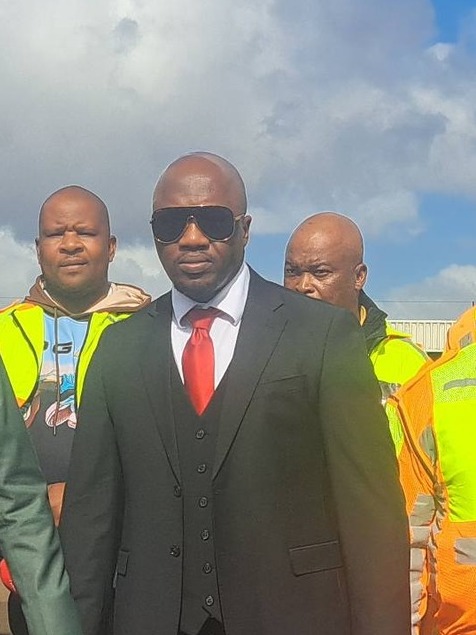
CATA president Siviwe Kiva at a media briefing in Nyanga in May, where a peace agreement between his and the CODETA association was signed. IMAGE: Codeta SA/Facebook


The president of the Cape Amalgamated Taxi Association, Siviwe Kiva, is set to appear in a court in Paarl on Monday.


While some reports suggest that it may be related to murder, by Sunday afternoon, the National Prosecuting Authority could not yet confirm the charge against him.


“CATA President is expected to appear at Paarl Magistrates Court tomorrow morning. I have not been able to confirm the charge but have learnt from trustworthy people that it’s related to a murder,” said NPA spokesperson, Eric Ntabazalila.


According to reports, Kiva was arrested in the Eastern Cape sometime last month. News24 reports that he’s due to appear in the Wynberg Magistrates Court on charges of murder and conspiracy to commit murder.


READ MORE: News24 – CATA president arrested on murder, conspiracy charges days after historic taxi peace deal


The arrest follows the unrelated murders of the CATA president’s family members, who were shot and killed in their home in eNgcobo in the Eastern Cape on 20 May. 


Mmatshikhidi Rebecca Phala of the South African National Taxi Council (SANTACO) confirmed in a statement on Friday the murders of his mother, 65-year-old Mama Nosecond Kiva, and 19-year-old Musawenkosi Nomna.


“According to reports, unknown assailants allegedly accosted the young man while he was studying and forced him to lead them to the elderly woman before fatally shooting both victims in a horrific act of violence,” said Phala.


SANTACO condemned the attack. Phala further advised that they were laid to rest on Saturday.

UPDATE: Teen arrested after learner protest over foreign nationals in Kraaifontein

high school learners protest


The Western Cape SAPS has confirmed that an 18-year-old was arrested following the protest action by high school learners in Kraaifontein last week.  


“A case of public violence and malicious damage to property was registered for investigation. A 18-year-old male was arrested on Wednesday, 2026-05-27 and he appeared in the Kuilsrivier Magistrates court on Friday, 2026-05-29,”  said provincial police spokesperson, Captain F.C Van Wyk.


He added that officers and law enforcement agencies would continue to monitor the area, despite the relative calm there at the moment.


“Currently there is no protest in the area. Everything is quiet. SAPS and other law enforcement agencies will remain in the affected area to monitor the situation and to response to any eventuality that may arise.”


On Wednesday morning, the Kraaifontein Police Station Commander says they received a telephone call from a member of the public regarding a group of learners from two high schools that are protesting.


About 700 learners in uniform from two schools were reportedly protesting regarding foreign nationals, who they want out of their schools and out of the country. According to police, the learners were marching towards another high school in Wallacedene to join them.


According to police Van Wyk, at one of the schools, protesting learners were throwing stones at passing vehicles, and at the other high school, learners were throwing stones at the personnel’s vehicles.


“Some of the learners were walking to SAPS Kraaifontein and while walking they were looting the fruit stalls next to the road and shops.” added Cpt Van Wyk


Public Order Police Services were informed and deployed to the area, and upon arrival at Botfontein Road, they engaged with the protesting learners, and the members escorted the learners back to their respective schools.


“SAPS and other law enforcement agencies will remain in the affected area to monitor the situation and to response to any eventuality that may arise.”


Meanwhile, the Western Cape Education Department (WCED) has confirmed that the incidents appear to have originated at the Masibambane Secondary School and subsequently spread to neighbouring schools.


According to department spokesperson, Bronagh Hammond, it is alleged that an external group may have initiated disruptions by locking the school gates. However, this allegation is being investigated.


Hammond added that the affected schools did not close and teaching and learning did continue, although some learners left the school premises during the disruptions.


“Schools will follow due process and institute disciplinary proceedings where learners are identified as having been involved.”


The department added that definitive reports on the causes and intentions, as well as the damages and individuals involved, are still being finalised.


*This article has been updated to include the arrest made in connection with the protest action. 

SA cannot end TB while tobacco and nicotine addiction go unchecked

TB
Professor Lekan Ayo-Yusuf heads the School of Health Systems and Public Health at the University of Pretoria and is Director of the Africa Centre for Tobacco Industry Monitoring and Policy Research. (Photo: Supplied)


If South Africa is serious about ending TB, protecting people living with HIV, and safeguarding the next generation from nicotine addiction, Parliament must finally pass the Tobacco Products and Electronic Delivery Systems Control Bill, argues Professor Lekan Ayo-Yusuf, as we mark World No Tobacco Day on May 31.


South Africa has made enormous progress in helping people living with HIV survive and live longer lives. But with that success comes the new challenge of preventing and managing chronic diseases that continue to shorten lives unnecessarily. One of the biggest, and most overlooked, threats is tobacco and nicotine addiction.


This matters not only because smoking causes cancer, heart disease and stroke. Smoking also increases the risk of developing tuberculosis (TB), worsens treatment outcomes, and increases the risk of death from TB.


A seminal report from the World Health Organization and many other studies, including work involving South African researchers, have shown that tobacco smoke and nicotine weaken the immune responses needed to fight TB infection. Emerging evidence suggests that nicotine exposure from e-cigarettes and vaping products may have similar harmful effects on the body’s ability to respond to infections.


This is particularly worrying in South Africa, where TB and HIV remain deeply intertwined public health crises. In fact, a recent simulation study suggests that among virologically suppressed people with HIV in South Africa, tobacco smoking decreases life expectancy more than HIV.


SA sees a boom in nicotine products


Yet instead of urgent action to reduce nicotine addiction, South Africa has witnessed an explosion of vape shops, social media marketing, flavoured disposable vapes laced with high levels of highly addictive nicotine salt, and products designed to appeal directly to young people.


The tobacco and vaping industries insist these products are about “harm reduction”. But we have to question what kind of harm reduction strategies recruit teenagers who never smoked in the first place?


Over the past 15 years, few would dispute that South Africa has effectively become a natural experiment in unregulated nicotine product expansion. The results are alarming. Data from South African surveys show rising cigarette and hubbly smoking and rising vaping among young adults, with many people now smoking cigarettes and vaping rather than switching completely away from cigarettes.


There is a strong case to be made that this directly undermines the claim that these products are reducing harm at a population level.


Importantly, the Tobacco Products and Electronic Delivery Systems Control Bill, which was tabled in the National Assembly in December 2022, does not ban vaping products or other nicotine devices. What it proposes is regulation – the same kind of regulation already implemented in many countries, including in Kenya where the industry have voluntarily implemented graphic warnings on packages of vapes and oral nicotine pouches, while a bill is being considered.


The Bill before the South African Parliament would introduce measures such as stronger smoke-free laws to protect non-smokers, regulation of packaging, restrictions on advertising and promotion aimed at reducing youth exposure to nicotine marketing. These are effective public health measures informed by local evidence and our socioeconomic context, not extreme policies or a foreign agenda.


A case of smoke and mirrors


Yet public discussion around the Bill has increasingly been distorted.


Instead of focusing on health, some opposing the Bill – often allies of the industry – have reduced the debate to claims about illicit trade, job losses and threats to personal freedom. These distorted views were reflected in the seemingly industry-biased report presented as the summary matrix of the public submissions on the Bill. This is deeply concerning.


It is important to note that the illicit cigarette trade in South Africa did not begin with tobacco control laws or the temporary COVID-19 cigarette sales ban. Research shows illicit trade was already increasing long before COVID-19, largely because of weak enforcement, under-declaration of production, and failure to implement effective track-and-trace systems. Evidence suggests that most illicit cigarettes consumed in South Africa originate from local manufacturers themselves. In other words, illicit trade is fundamentally a law enforcement and governance problem, not a reason to weaken public health protections.


The industry has also weaponised poverty and unemployment to resist regulation, creating the impression that protecting public health will destroy livelihoods. But this ignores the enormous economic burden caused by smoking-related disease, lost productivity, and premature deaths. Smoking-related diseases already cost South Africa tens of billions of rand annually while contributing to more than 30 000 deaths in 2023 alone.


And there is another uncomfortable question South Africans should ask. If multinational tobacco companies comply with similar regulations in countries such as Uganda, the United Kingdom and elsewhere, why should South Africans deserve weaker protections?


Why are policies considered acceptable in other low- and middle-income countries like ours suddenly portrayed as unreasonable when proposed here?


The path ahead


South Africa stands at a critical crossroads. We can continue allowing industry interests to shape the conversation while nicotine addiction spreads among young people, or we can act decisively to protect future generations.


Passing the Tobacco Products and Electronic Delivery Systems Control Bill will not solve every public health challenge overnight. But it is one of the clearest and most urgently needed interventions available to reduce future burdens of TB, cancer, heart disease and nicotine addiction.


The delay has already gone on too long considering that the Bill was first published back in 2018.


If South Africa is serious about ending TB, protecting people living with HIV and safeguarding the next generation from addiction, Parliament must stop listening to industry noise and finally pass the Bill.


*Professor Ayo-Yusuf heads the School of Health Systems and Public Health at the University of Pretoria and is the Director of the Africa Centre for Tobacco Industry Monitoring and Policy Research.

*This piece was published by Spotlight – health journalism in the public interest. Sign up to the Spotlight newsletter.

From Title Glory to Sacked: Inside Liverpool’s Brutal Arne Slot Decision

A poor second season sees Arne Slot get the axe as Liverpool manager.

From Title Glory to Sacked: Inside Liverpool’s Brutal Arne Slot Decision


Just last weekend, we bawled at Salah and Robbo leaving, now another bombshell almost a week after!


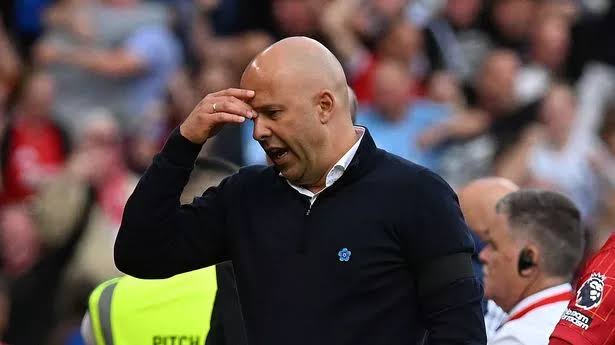
Liverpool have sacked head coach Arne Slot after just two seasons. It’s a rapid fall from grace for the 47-year-old Dutchman. Just a year ago, he could do no wrong, guiding the Reds to their historic 20th league title and seamlessly replacing Jurgen Klopp. But football is a cruel business—a grueling second season saw the team crumble to a fifth-place finish.


Why did FSG make the move?


Despite a mind-boggling £415m summer shopping spree—including mega-deals for Alexander Isak (£125m) and Florian Wirtz (£116m)—the spark was gone. Mohamed Salah even publicly called for a return to the “heavy metal attacking team that opponents fear.”


It wasn’t just about results, though. Slot also had to lead the club through tragedy after Diogo Jota’s heartbreaking death in a car crash last July. FSG praised Slot’s incredible “compassion and humanity” during that dark time, ensuring his title-winning legacy won’t be forgotten. Ultimately, FSG bosses Michael Edwards and Richard Hughes decided a change was mandatory to bring back aggressive, front-foot football.


Who is next for Liverpool?


According to online chatter, the Reds have already approached former Bournemouth boss Andoni Iraola. The 43-year-old Spaniard is highly rated in Europe for his hyper-aggressive style. Will he be the man to lift Liverpool back to the top?


Police probing possible motives after two bomb explosions at Woolworths stores

woolworths


The South African Police Service (SAPS) says it is exploring all possible motives behind two explosions at Woolworths stores in Gauteng and the Free State, but has cautioned that it is too early to classify the incidents as acts of terrorism.


Acting National Commissioner Lieutenant General Puleng Dimpane has deployed a National Forensic Task Team and Crime Intelligence experts to investigate the blasts, which occurred at Woolworths stores in Pretoria and Bloemfontein within 24 hours of each other.


“Investigations are currently at a very early stage, and all possible motives are being explored by investigators,” SAPS said in a statement on Friday.


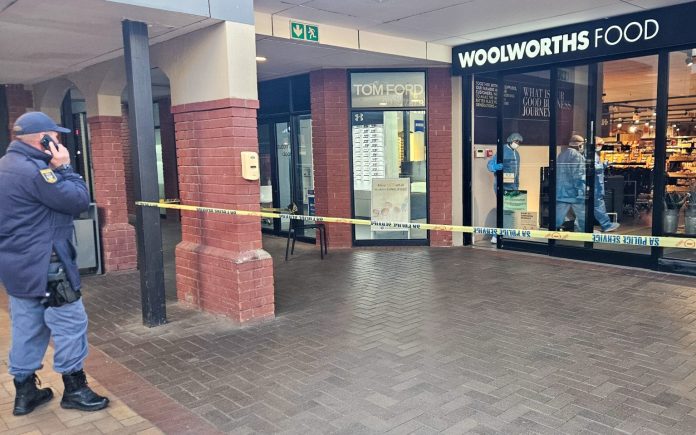
The retailer confirmed that improvised explosive devices (IED’s) were detonated at its Menlyn Park store in Pretoria in the early hours of Thursday morning and at its Preller Square branch in Bloemfontein on Friday.


Both explosions occurred between 1 am and 2 am while the stores were closed, and no injuries were reported. During the Menlyn blast, five packers were working nearby.


Woolworths said the Menlyn Park store has since reopened, while the Bloemfontein branch remains closed as authorities continue their investigation.


The company notified police immediately after both incidents, with the Hawks appointed to investigate. Woolworths says it is fully cooperating with law enforcement agencies and has increased security measures across its stores nationwide.


At this stage, neither the police nor the retailer has disclosed details about the nature of the devices or a possible motive, adding to the mystery surrounding the attacks.


Incoming Woolworths Group CEO Sam Ngumeni described the incidents as an attack on the company’s values and the millions of customers it serves, while reaffirming that the retailer would continue operating.


With no arrests announced and no group claiming responsibility, investigators are working to determine who was behind the explosions and why Woolworths was targeted.

error: Content is protected !!