14.4 C
Cape Town
Friday, July 17, 2026

Banner

Home Blog Page 293

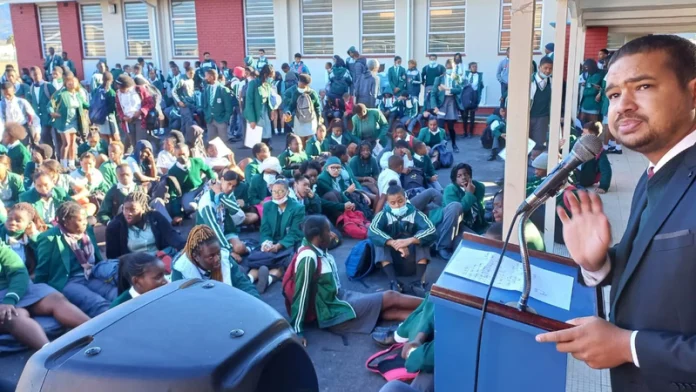
Labour Court Reinstates Former Heathfield Principal Over Covid-Era Dispute

Principal Wesley Neumann
Image: Supplied


The Labour Court has reinstated former Heathfield High School principal Wesley Neumann, overturning his dismissal for refusing to reopen the school during the first wave of the Covid-19 pandemic in 2020. The court replaced the firing with a final written warning, ruling that the original dismissal was disproportionate.


Neumann had cited safety concerns when he chose not to reopen the school, a decision that led the Western Cape Education Department (WCED) to terminate his employment. Acting Judge Coen de Kock said the disciplinary action taken against him was too severe under the circumstances.


Political leaders have used the judgment to highlight what they see as broader issues in how the WCED handled dissent during the health crisis.


Brett Herron, secretary-general of GOOD, called the case a “damning indictment” of the department.


“Millions of rands in public money were wasted on legal fees and the appointment of replacement principals, all in pursuit of a case that the courts have now rejected. This constitutes fruitless and wasteful expenditure that the people of the Western Cape will ultimately have to pay for.”


Meanwhile the African National Congress (ANC) leader in the Western Cape Khalid Sayed says the ruling reinforces the importance of fairness and justice in workplace decisions.


“Beyond the financial implications, the prolonged removal of Mr Neumann had a deeply negative impact on Heathfield High School. Stability, leadership continuity, and morale were undermined for years, to the detriment of learners and staff alike. We are hopeful that his reinstatement will mark the beginning of healing, restoration, and renewed progress at the school.”


The WCED spokesperson Bronagh Hammond says its legal council is studying the judgment and will decide at a later date whether to appeal.


“The WCED remains committed to ensuring that disciplinary processes are applied fairly, consistently, and in the best interests of learners, educators, and the public education system.”


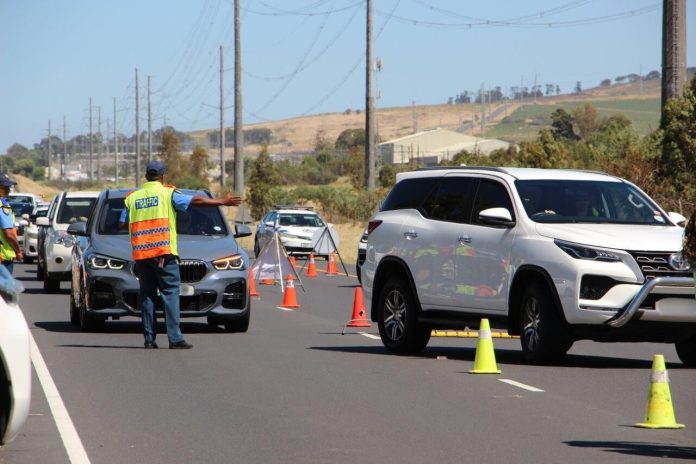
Fatal Week on Western Cape Roads: 25 Lives Lost

Image: WC department of mobility


The Western Cape Mobility Department has expressed concern after 25 people lost their lives in crashes, collisions, and accidents on provincial roads between 29 December and 4 January.


Chief Director for Traffic Management, Maxine Bezuidenhout says pedestrians, motorcyclists, and cyclists remain the most vulnerable. Of the fatalities recorded, 12 were pedestrians and six were motorcyclists, making up the bulk of deaths during the period.


“We urge pedestrians to remain visible, cross at safe points, and stay alert at all times. Motorcyclists and pedal cyclists should wear protective gear, stay visible, and ride defensively, especially in high-traffic conditions. Our teams will continue to maintain a strong presence across the province, but safer roads require cooperation from every road user.”


MEC for Mobility, Isaad Sileku says that every road fatality is one too many.


“While our enforcement teams work tirelessly, road safety ultimately depends on the choices each road user makes. Speeding, drinking and driving, and ignoring traffic rules put not only your life, but the lives of innocent road users at risk. We remain hopeful that with patience, vigilance, and mutual respect, further tragedies on Western Cape roads can be prevented.”


During the same period, law enforcement made 88 arrests for traffic-related offences, including 65 were motorists allegedly driving under the influence of alcohol.


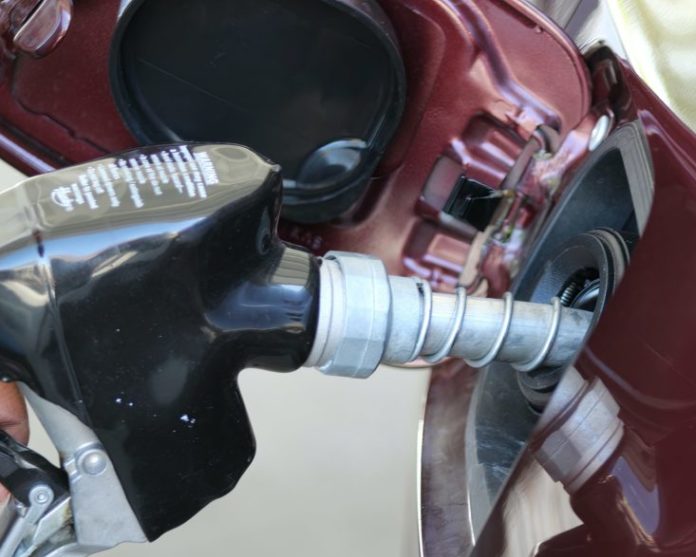
Big fuel price drop for January

fuel


Motorists can breathe a sigh of relief as huge fuel price drops have been confirmed for January 2026.


The Minister of Mineral and Petroleum Resources on Sunday announced the adjustment of fuel prices, which will take effect from Wednesday, 7 January 2026.


Wednesday’s price decrease will be the first time that petrol drops below R21 since early 2022.


Big drop for petrol, even bigger decrease for diesel


There are across-the-board decreases in fuel prices, except for LPG, which sees a slight increase:


  • Petrol 93 (ULP & LRP): Sixty-two cents per litre (62.00 c/l) decrease.
  • Petrol 95 (ULP &LRP): Sixty-six cents per litre (66.00 c/l) decrease.
  • Diesel (0.05% sulphur): One hundred and thirty-seven cents per litre (137.00
    c/l) decrease.
  • Diesel (0.005% sulphur): One hundred and fifty cents per litre (150.00 c/l)
    decrease.
  • Illuminating Paraffin (wholesale): One hundred and ten cents per litre (110.00
    c/l) decrease.
  • SMNRP for IP: One hundred and forty-eight cents per litre (148.00 c/l)
    decrease.
  • Maximum Retail Price of LPGas: Twenty-one cents per kilogram (21.00 c/kg)
    increase and a twenty-three cents per kilogram (23.00 c/kg) increase in the
    Western Cape.


South Africa’s fuel prices are adjusted monthly, informed by international and local factors.


International factors include the fact that South Africa imports both crude oil and finished products at a price set at the international level, including importation costs, like shipping.


One of the reasons for January’s fuel price adjustments is crude oil prices for the period under review. This is because there is currently an oversupply of oil in the market due to increased production by OPEC+ and non-OPEC producers.


In addition, the average international product prices of petrol followed the decreasing trend
of crude oil.


Another big factor is the Rand/US Dollar exchange rate. The Rand appreciated on average, against the US Dollar (from 17.22 to 16.85 Rand per USD) during the period under review when compared to the previous one.


This led to lower contributions to the Basic Fuel Prices of petrol, diesel and Illuminating Paraffin by 20,80 c/l, 22.31 c/l and 22.54 c/l, respectively.


Lawmakers, experts challenge legality of US action in Venezuela


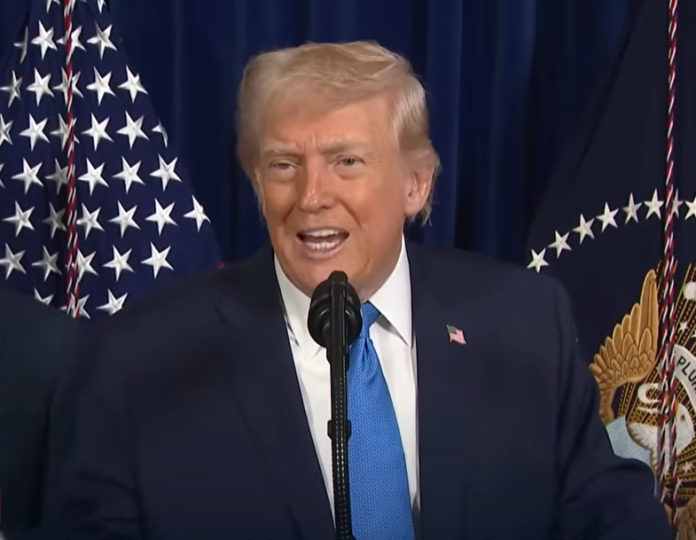
Secretary of State Marco Rubio faced mounting scrutiny on Sunday as the Trump administration struggled to justify its unilateral military operation against Venezuela, an operation President Donald Trump has openly described as a bid to seize control of the country’s oil and “run” it indefinitely.


Appearing on ABC’s This Week and NBC’s Meet the Press, Rubio repeatedly deflected questions about the legal authority under which the United States intends to govern Venezuela, at times contradicting Trump’s own statements.


Rubio argued that the US had not invaded or occupied Venezuela and therefore did not require congressional authorisation, describing the strikes and seizure of President Nicolás Maduro as a law enforcement action.


“People are fixating on that,” Rubio said when asked whether he or other US officials would be running Venezuela. “Here’s the bottom line: we expect to see changes in Venezuela.”


The explanation did little to quiet criticism. Historian Kevin Kruse remarked that Americans were “fixating on a Cabinet Secretary being given a sovereign country to run because the president waged war without congressional approval and kidnapped the old leader.”


Rubio’s claims also clashed directly with Trump’s own words. On Saturday, the president declared that the US would take over Venezuela’s oil industry, oversee a political transition, and “run the country” until Washington deemed it stable, language Rubio conspicuously avoided on Sunday.


If the operation was merely law enforcement, critics noted, the administration has yet to explain how it resulted in mass casualties. By Sunday afternoon, the New York Times reported that at least 80 civilians and members of Venezuela’s security forces had been killed in the strikes.


Congress Cut Out


Lawmakers from both chambers said the administration failed to meet its legal obligations to inform Congress before or after the strikes. Members of the so-called Gang of Eight, the top bipartisan congressional and intelligence leaders, said they received no advance warning.


Representative Jim Himes (D-CT), the ranking Democrat on the House Intelligence Committee, said neither he nor House Minority Leader Hakeem Jeffries had been briefed. Senate Minority Leader Chuck Schumer said the administration had deliberately misled Congress in classified briefings prior to the operation.


“They’ve kept everyone in total dark,” Schumer said.


Representative Ted Lieu (D-CA) was blunt: “The US attack on Venezuela is illegal. Congress never authorised this use of military force. This is insane.”


Public opinion appears firmly against the intervention. Polling conducted in late 2025 showed strong majorities opposing US military action in Venezuela, including sending troops or launching strikes. Analysts note that Trump entered the operation having already lost public support.


The Caracas Raid


The controversy stems from the early-morning raid on Saturday, January 3, when US forces struck targets in Caracas and seized President Nicolás Maduro and his wife, Cilia Flores. Both were flown to New York City to face newly announced federal drug trafficking charges.


The administration alleges Maduro collaborated with the Venezuelan gang Tren de Aragua to traffic narcotics into the United States. Officials initially suggested illicit fentanyl was involved, though Congress had previously been told intercepted shipments were cocaine: the substance named in Maduro’s indictment.


Trump publicly detailed the raid during a call-in appearance on Fox & Friends, praising its speed and violence. “I watched it literally like I was watching a television show,” he said, calling it an “amazing job.”


Later that day, Trump abandoned the law enforcement framing entirely. In a rambling press conference, he described the attack as “one of the most stunning, effective and powerful displays of American military might” and announced plans for US oversight of Venezuela’s government and oil sector.


Oil, Regime Change, and a New Worldview


Trump repeatedly returned to Venezuela’s oil, calling its industry “a total bust” and promising to deploy major US oil companies to rebuild infrastructure and extract petroleum.


He claimed Venezuela had “stolen” American oil assets during past nationalisations, despite international law clearly establishing national ownership of natural resources.


The president also unveiled what he called the “Donroe Document,” explicitly replacing the Monroe Doctrine with a doctrine of American dominance in the Western Hemisphere. Critics say the move represents a rejection of the post–World War II international order and an embrace of spheres-of-influence politics similar to those advanced by Russian President Vladimir Putin.


The New York Times editorial board warned that the action risks legitimising authoritarian aggression worldwide. Trump appeared to welcome the comparison, issuing threats toward Colombia, Cuba, Mexico, and Greenland.


Greenland Drawn In


In interviews following the Venezuela operation, Trump reiterated his interest in asserting US control over Greenland, telling The Atlantic that “we do need Greenland, absolutely. We need it for defence,” despite Greenland already being covered by NATO’s collective security framework.


The remarks triggered a swift and unusually blunt rebuke from Danish Prime Minister Mette Frederiksen, whose government retains sovereignty over Greenland as part of the Kingdom of Denmark.


“I must say this very clearly to the United States,” Frederiksen said in a statement. “It makes absolutely no sense to speak of any necessity for the United States to take over Greenland. The United States has no legal basis to annex one of the three countries of the Kingdom of Denmark.”


She noted that Denmark and Greenland are NATO members and already maintain a defence agreement with Washington, granting the US broad access to Greenland.


“I therefore strongly urge the United States to cease its threats against a historically close ally, and against another country and another people who have stated very clearly that they are not for sale,” Frederiksen said.


Resistance and Uncertainty


In Venezuela, Trump’s claims of cooperation from the post-Maduro government quickly unravelled.


Vice President Delcy Rodríguez, whom Trump initially suggested had been sworn in and was willing to work with Washington, denied any such agreement in a televised address, demanding Maduro’s release and condemning the US for “unprecedented military aggression.”


Meanwhile, reporting by Politico and The Wall Street Journal suggests the administration has no coherent plan for governing or rebuilding Venezuela. Oil companies are reportedly wary of investing billions amid political chaos and uncertainty over who will ultimately control the country.


Trump acknowledged the improvisation, telling reporters the administration was still “designating various people” to run Venezuela.


A Familiar Arc


Democratic lawmakers warn the situation mirrors past US interventions that began with military success and ended in prolonged instability.


“We’re in the euphoria phase,” Himes said, comparing the moment to Iraq, Afghanistan, and Libya. “It’s a lot easier to break a country than it is to run it.”


As Rubio struggled Sunday to reconcile the administration’s shifting explanations, the scope of Trump’s ambitions, from Caracas to Greenland, came into sharper focus.


Critics warn the United States has embarked on one of its most consequential foreign interventions in decades, without congressional approval, international legitimacy, or a clear plan for what comes next.

 

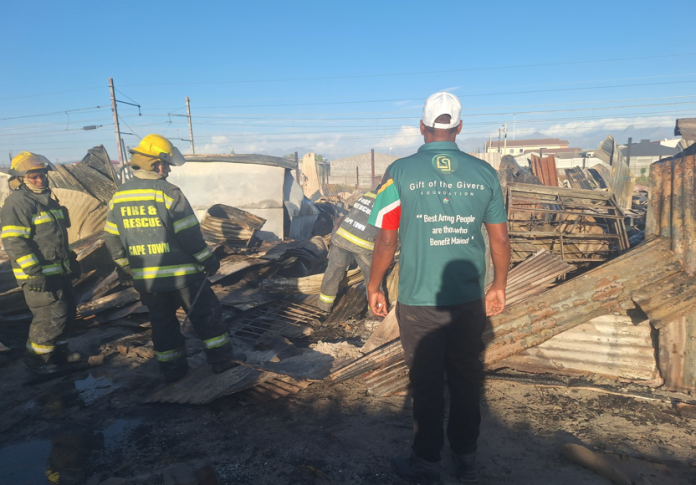
Over 500 People Affected After Tsepe Tsepe Informal Settlement Fire

Gift of the Givers attending to Tsepe Tsepe informal settlement fire


The City of Cape Town is conducting mop-up operations in the Tsepe Tsepe informal settlement in Khayelitsha, after a fire destroyed several homes, leaving more than 500 people destitute yesterday.


The City’s Disaster Risk Management (DRM) spokesperson, Charlotte Powell, confirmed that 180 structures and 552 people have been affected.


“Gift of the Givers is currently providing humanitarian relief. DRM has also reached out to other non-governmental organisations (NGOs) and the South African Social Security Agency (SASSA) for additional assistance. DRM officials are working with local community leaders and religious organisations to arrange emergency shelter.”


Powell added that DRM has activated Informal Settlement Management and National Human Settlements to coordinate efforts to help affected residents rebuild their homes.


Aid Organisation, Gift of the Givers spokesperson, Ali Sably, says they will remain on the ground to assist all affected.


“We have activated an immediate response and will distribute essential relief items over the next few days. The exact number of people affected is still being assessed at this early stage, as disaster management teams and the community are in the process of registering those impacted.”


error: Content is protected !!