
13 C
Cape Town
Thursday, July 16, 2026

Banner

Home Blog Page 270

World leaders gather in Davos as pushback against Trump mounts

trump
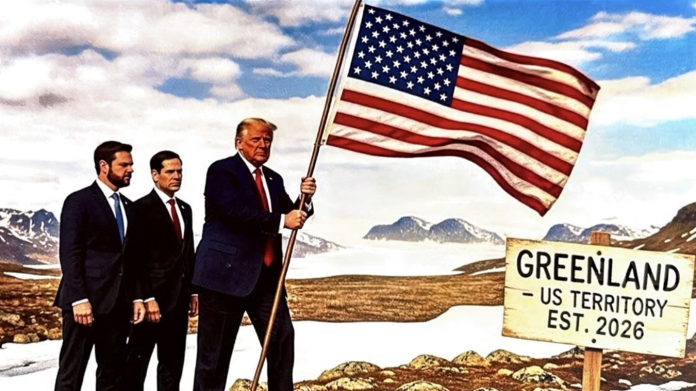
Trump shared an AI generated image showing America annexing Greenland


World leaders are meeting in Davos, Switzerland, this week for the annual World Economic Forum, running from January 19 to 23, against a backdrop of mounting geopolitical tension and economic uncertainty caused by the Trump administration.


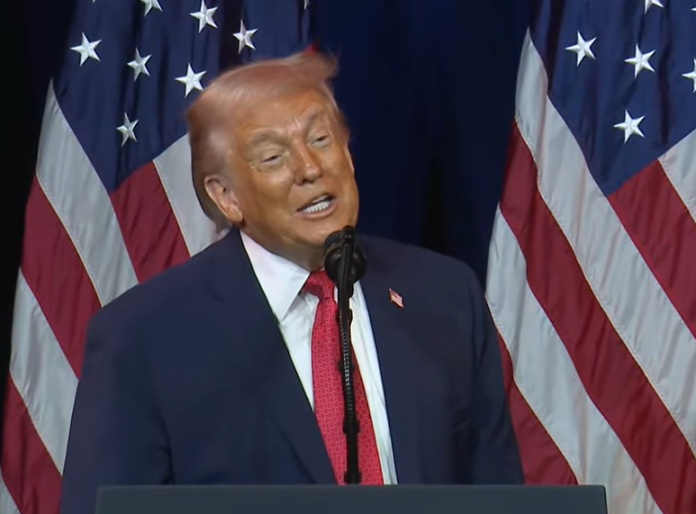
While US President Donald Trump is scheduled to attend the forum in person for the first time since 2020, much of the attention on Tuesday focused on a flurry of provocative social media posts issued while he remained in the United States.


Just after midnight, Trump’s account claimed he had held “a very good telephone call” with NATO Secretary General Mark Rutte, centred on Greenland. The post asserted that Trump had agreed to a meeting of “the various parties” in Davos and declared that “Greenland is imperative for National and World Security,” adding: “There can be no going back.”


Shortly thereafter, the account shared an AI-generated image depicting world leaders seated before Trump’s desk in the Oval Office, backed by a map of North America entirely covered in the US flag, including Canada and Greenland, as well as Venezuela. Another image followed, showing Trump standing on an Arctic landscape with Vice President J.D. Vance and Secretary of State Marco Rubio, holding a U.S. flag next to a sign reading: “GREENLAND — US TERRITORY EST. 2026.”


As the posts continued, the account published what it claimed were private text messages from Rutte and French President Emmanuel Macron, mocking diplomatic overtures, and reposted inflammatory content attacking NATO, the United Nations, and Islam. Trump also claimed that NATO would no longer exist without him, writing that the alliance would have been “in the ash heap of History” had he not intervened.


Beyond foreign policy, the posts suggested growing concern within Trump’s camp about his domestic standing. The account launched attacks on Federal Reserve Board member Lisa Cook, alleging mortgage fraud, while simultaneously claiming Trump was responsible for lowering mortgage rates. Other posts conflated unrelated issues, including a video captioned “I AM STANDING UP FOR AMERICAN AUTOWORKERS” that in fact showed Trump threatening to cut federal funding to sanctuary cities.


The rhetoric escalated further with claims that people protesting Immigration and Customs Enforcement actions in Minnesota were “agitators and insurrectionists,” whom Trump described as “highly trained” and deserving of imprisonment or deportation. He singled out Democratic Governor Tim Walz, Representative Ilhan Omar, and, later, California Governor Gavin Newsom, labelling them corrupt.


On the sidelines of Davis, Newsom urged European leaders to stand up firmly against Trump.


The account also urged DHS and ICE to publicise the names and faces of alleged violent criminals, claiming — without evidence — that thousands of “vicious animals” were responsible for crime, even as it asserted that national crime statistics were at record lows.


It then pivoted to reposting long-debunked allegations of fraud in the 2020 U.S. presidential election, including false claims involving Nevada, Dominion Voting Systems, and China.


In Washington, Trump appeared before reporters in a rambling speech billed as a review of his administration’s accomplishments. Holding a thick bundle of papers clipped together and labelled “ACCOMPLISHMENTS,” he quickly abandoned the document, eventually throwing it to the floor. Instead, he denied widely reported ICE abuses, including the recent detention of U.S. citizen ChongLy “Scott” Thao in Minnesota, insisting that agents were only arresting “bad people.”


Trump attempted to bolster his claims by displaying photos labelled “WORST OF WORST,” repeatedly referring to “many murderers.” Commenting on the spectacle, journalist Aaron Rupar wrote that the president’s behaviour suggested “the president is not well.”


Trump also returned to familiar grievances, including renewed attacks on former President Joe Biden, Special Counsel Jack Smith, whom he insulted in crude terms, and renewed claims that he deserved multiple Nobel Peace Prizes. He again accused Norway of manipulating the Nobel process.


Markets reacted sharply to Trump’s threats against Greenland and his warning that the U.S. would impose heavy tariffs on Europe if governments there failed to support his ambitions. On Tuesday, the Dow Jones Industrial Average fell 870.74 points (1.76%), while the S&P 500 dropped 2.06% and the Nasdaq Composite slid 2.39%, marking their worst day since October.


The market sell-off came as new reporting underscored the domestic cost of Trump’s previous tariff policies. According to the Wall Street Journal and research by the Kiel Institute for the World Economy, echoing findings from Yale and Harvard economists, U.S. consumers and importers have borne roughly 96% of the cost of Trump-era tariffs, contrary to his repeated claims.


Trump’s threats toward Europe carry even higher stakes. The European Union is the United States’ largest trading partner and investor, and EU leaders are now discussing possible retaliation through the bloc’s Anti-Coercion Instrument, informally known as “the Bazooka,” which could restrict trade and limit U.S. investment.


Amid the turmoil, broader concerns about the global order dominated discussions in Davos. Writing in The Atlantic, Robert Kagan warned that Americans are entering “the most dangerous world they have known since World War II,” arguing that decades of relative stability have left the public unprepared for a breakdown in the liberal international order.


Speaking in Davos, Canadian Prime Minister Mark Carney said the world is experiencing a profound “rupture,” as powerful nations increasingly weaponise economic integration to coerce others. Rejecting a future defined by rival “fortresses” and spheres of influence, Carney proposed a model of “variable geometry,” in which middle powers form flexible coalitions around shared interests and values.


Under this approach, countries would strengthen domestic resilience while building dense networks of cooperation across trade, investment, and diplomacy. “We know the old order is not coming back,” Carney said. “Nostalgia is not a strategy. But from the fracture, we can build something bigger, better, stronger, and more just.”


[LISTEN] Why Are Some People So Loud When They Sneeze? | The Joy Ride Debate

Loud sneezers get everyone going - someone can't help it but some should leave it for SA's Got Talent.


Angel Campey stirred a massive wasp’s nest on The Joy Ride, and the “pearl-clutchers” are out in full force. We’re talking about those legendary, window-shaking sneezers.


Honestly, at this point, if your sneeze can trigger a car alarm, it should probably be classified as a firearm.


We’re half-expecting the government to require a background check and a 10-day waiting period for anyone with a head cold.


Is it physiology, or are you just auditioning for an action movie? When a sneeze is so loud it makes DARPA take notes on acoustic weaponry, it might be time to admit your “reflex” is actually a public disturbance.


Couple attacked and robbed at Table Mountain National Park

couple - women hiking
This image has been used for illustrative purposes. IMAGE: Facebook/SANParks - Table Mountain National Park


Camps Bay police registered a robbery case for investigation following a robbery along a hiking trail on Sunday, in Upper Kloof Road, Camps Bay, in which a couple were robbed of their personal belongings.


According to police reports the victims were hiking on The Glen trail in Table Mountain National Park when they were approached by three suspects who robbed them.


Police Seargant Wesley Twigg says the male victim sustained a stab wound to his stomach and the female sustained injuries to her face and body.


“The victims were transported to a medical facility for treatment. The suspects fled the scene and are yet to be arrested.” added Twigg


South African National Parks (SANParks) says it was made aware of a robbery incident when the complainants reported the incident to rangers stationed in the area.


According to SANParks, the couple was confronted by armed suspects while hiking, assaulted, and robbed of personal belongings and the suspects fled the scene towards Kloofnek.


SANParks has condemned all acts of violence in the strongest terms and reassures the public that it remains fully committed to working with SAPS and other stakeholders to prevent criminal activity and enhance safety in Table Mountain National Park.


“Anyone with any information about this incident can contact Crime Stop on 08600 10111 or use the mobile application MySAPS anonymously.”

Gang Violence Leaves Young Child Injured in Atlantis

shooting - manenberg


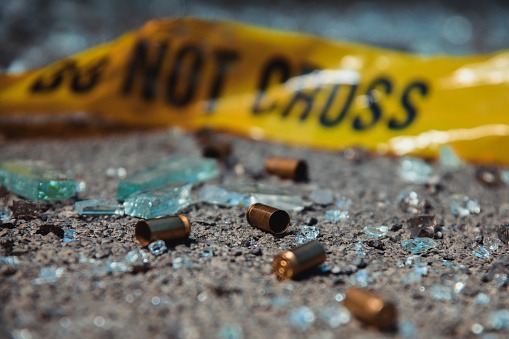
A three year old boy remains in hospital after sustaining head injuries while escaping an active shooting in Atlantis on Sunday.


Public relations officer for the Atlantis Community Police Forum (CPF) Noel Cloete, confirmed that the minor was not hit by a stray bullet, but was wounded while trying to flee the scene.


“An adult was running with the child while the shooting was going on and tripped and fell and the child sustained an open wound to the back of the head and was transferred to a hospital.”


Cloete says active policing has been increased in the area since the attack.


“Currently the situation is stable and under control. The South African Police Service (SAPS) have since increased visibility in the area. These shootings is believed to be gang related and it’s very disturbing for the community because they must live in these areas.”


SAPS says four cases of attempted murder is under investigation following a shooting incident at Eagles Nest, Dura.


Police spokesperson FC Van Wyk says the boy was injured in what is believed to be a gang related incident.


“According to reports the victims aged between 15 and 20, including the three year old were sitting at Eagles Nest when unidentified males approached them and randomly started shooting at them injuring the four victims in the process.”

A year on from his second inauguration, Trump 2.0 has one defining word: power

trump

Bruce Wolpe, University of Sydney


As Donald Trump celebrates the anniversary of his second inauguration as president of the United States and begins his sixth year in office, his greatest asset is power. He covets absolute power.


The greatest threat to how Trump completes his term is how he wields his power.


Indeed, in the most foolish act in foreign policy in Trump’s presidency, he has threatened punitive tariffs on Denmark and seven other NATO allies in Europe to force the sale of Greenland to the United States. They are outraged. This is a ridiculous ploy that will not deliver Greenland to Trump.


Trump’s escalation in Denmark has already strengthened Putin’s iron resolve to get as much of Ukraine as he can. Prospects for ending the war in Ukraine are now near zero.


On top of Trump’s pending tariffs on Europe, if Trump seizes Greenland, the consequences will shake the world – including Australia. NATO will be terminated. Australia will face an existential question of whether, under those circumstances, it must terminate its alliance with the US.


We can see in a raft of polls at this one-year mark of Trump’s second term that voters across the country are expressing growing disquiet about his management of the economy and the affordability of housing and groceries, the raids by ICE agents as they seize and deport migrants as we saw last week in Minneapolis, and uncertainty about Trump’s foreign adventurism in the Americas and with Iran.


Trump is exercising this power because he can. This will jolt Republicans in Congress to break with Trump on this issue – the first such rift between Trump and his party since his re-election.


Welcome to Trump’s year six.


Trumpism in his second term


Following his election victory in 2024, Trump has been faithful to three of four pillars of Trumpism that made his base a movement that has changed America:


  • nativism (favouring US-born citizens over immigrants)
  • protectionism and tariffs
  • America First nationalism (“Make America Great Again”).


To those ends, Trump is acting aggressively, with immigration agents arresting and deporting tens of thousands, and threats to deploy US troops in American cities to enforce these policies. Trump has imposed punitive tariffs against every trading partner – including Australia, which has a significant trade deficit with the United States. Trump demands foreign companies invest in the United States and build new factories.


But on the fourth Trumpism pillar – America-First isolationism as a driver of America’s foreign policy – Trump has redefined his foreign policy settings with grander ambitions.


Trump has rejected the history of the US waging wars to project American values: protecting Asia from communism in Korea and Vietnam; turning back brutal aggression in Kuwait; punishing the export of radical Islamic terrorism in Afghanistan and Iraq.


Trump has applied these lessons to Iran – so far. It is one thing to take out Iran’s nuclear capability. It is another to do regime change – a bridge too far back to the “forever wars” Trump despises.


Trump has buried America’s posture of globalism. He has withdrawn the US from virtually all the architecture, save the United Nations itself, erected after the Second World War to ensure global security, stability and prosperity. He has ordered the US out of global organisations and has cut billions in foreign aid.


The US attack on Venezuela was about much larger goals than arresting its leader. It was about power – controlling power over critical resources in the Americas, from Venezuela to Greenland and everything in between, from Mexico to Cuba to Canada.


Politics at home


Trump is paying a high price at home for his activism in wielding power abroad. Every day Trump spends projecting power outside the United States means he is not paying attention to the American people.


A recent poll shows 56% of US adults believe Trump has gone too far on Venezuela. 57% do not want the US to strike Iran. Even before Trump’s tariff announcement on Greenland, only 17% approved of Trump’s desire to acquire Greenland, and 71% rejected using military force to do it.


Trump’s overall polls are bad. His approval rating is 40% – nearly 10 points down since his inauguration – and disapproval is at 60%. AP-NORC also finds that “Trump hasn’t convinced the Americans that the economy is in good shape.”


CNN polling reports that 55% of those surveyed believe Trump’s policies “have hurt the economy” and that Trump is not doing enough to lower prices. Grocery prices are up sharply. The latest Wall Street Journal poll shows Trump is underwater by double digits on handling inflation and that he is not focusing enough on the economy.


On immigration, the unrest in Minneapolis and other cities from the harsh methods employed by ICE agents is also taking a toll, with Trump’s approval on that issue lagging below 40%.


But even with all these red flags and warnings from the field, Trump is undeterred. He believes that as president, he can do anything he wants to do. Guardrails that have for decades protected America’s democracy have been cast aside.


Trump has not been blocked – yet – by an ultra-conservative Supreme Court or the pliant Republican Congress for the tariffs he is imposing, the government agencies he has shut down, the monies appropriated by Congress he has terminated, the hundreds of thousands of government employees he has fired, the military strikes he has ordered without advising, much less getting approval from, Congress.


Trump is seeking more control over the economy by seeking to prosecute the chair of the Federal Reserve Bank, an independent agency that sets monetary policy, and to pack its board with loyalists to Trump’s demands that interest rates be lowered.


Since his inauguration, Trump has instructed the Justice Department to prosecute those who attempted to bring him to justice in courtrooms and impeachment proceedings in Congress.


Trump’s musings on power


As Trump consolidates his power, Trump’s musings become imperatives. After months of expressing a desire to own it, Trump is now acting aggressively to conquer Greenland.


At home, Trump is now also musing – twice so far this month – over whether the US midterm elections will be cancelled. Trump knows the likelihood of the Democrats taking back control of the House of Representatives is high. That is precisely what he suffered in the 2018 congressional elections in his first term.


Trump told Reuters last week, “We shouldn’t even have an election,” because of all his great successes.


In January, Trump told Republicans in the House, “I won’t say cancel the election, they should cancel the election, because the fake news would say, ‘He wants the elections cancelled. He’s a dictator.’ They always call me a dictator.” He told them that if the Democrats take the House back, they will “find a reason to impeach” him.


Any steps taken – such as declaring martial law to suspend the midterm elections – will be catastrophic. And that is an understatement.


Based on Trump’s restless mind and command of what he believes is absolute power, at stake this year are the future of democracy at home and alliances abroad.

The Conversation

Bruce Wolpe, Non-resident Senior Fellow, United States Study Centre, University of Sydney


This article is republished from The Conversation under a Creative Commons license. Read the original article.


error: Content is protected !!