The data shows modest improvement in the national labour market, with employment increasing by 44,000 people, bringing the total number of employed South Africans to 17,1 million.
At the same time, the number of unemployed people dropped by 172,000 to 7,8 million, contributing to the small decrease in the unemployment rate from 31,9% in the previous quarter.
The Western Cape recorded the strongest employment growth among all provinces during the period, adding 93,000 jobs between October and December 2025. Job gains were also recorded in Mpumalanga, North West and the Northern Cape, while Gauteng, KwaZulu-Natal and the Eastern Cape experienced employment losses.
Nationally, the biggest increases in employment were seen in the community and social services, construction, and finance sectors. However, job losses were recorded in trade, manufacturing and mining.
Industries that gained jobs (Q4 2025):
Community and social services (+46,000)
Construction (+35,000)
Finance (+32,000)
Industries that lost jobs:
Trade (-98,000)
Manufacturing (-61,000)
Mining (-5,000)
Despite the improvement in headline unemployment figures, challenges remain. The number of discouraged work-seekers, people who have stopped looking for work, increased significantly, pushing the potential labour force to 4,6 million people.
Youth unemployment also remains a major concern. While the number of unemployed young people declined slightly, fewer young people were employed overall, resulting in the youth unemployment rate rising marginally to 43,8%.
The Quarterly Labour Force Survey tracks labour market activity among South Africans aged 15 to 64 and remains the country’s official measure of employment and unemployment trends.
The Manenberg Community Policing Forum (CPF) has issued a stern warning to those spreading false information about the Manenberg Primary School being relocated.
CPF Deputy Chairperson Vanessa Adriaanse clarified that there was never any discussions about moving the school.
“We had engaged with key role players to find collaborative measures to bring an end to the ongoing violence in the area. Last year, we faced severe challenges, including gang violence and shootings near the school, raising serious concerns about the safety of the children. However, we have no idea where the rumors about the school being relocating stems from.”
Adriaanse added that the demonstration outside the school yesterday was not only disruptive to school operations but also created widespread confusion.
“As adults what example are we setting by instigating and intimating children, in telling them not to go to school. As a community we are already faced with several social ills, the last thing we can do is create an environment where our children are not attending school.”
Meanwhile the Western Cape Education Department (WCED) spokesperson Bronagh Hammond emphasised there are no plans to relocate the school.
“We can confirm that the school is not closing nor relocating and this was discussed with parents. We appeal to the public to refrain from sharing misinformation that continues to cause unnecessary panic and stress.”
Aimee Barrett-Theron is set to reach a major career milestone, becoming only the second woman in the world, after England’s Sara Cox, to referee 50 international Test matches.
SA Rugby has congratulated three South African women referees who have earned prestigious appointments in upcoming Women’s Six Nations competitions.
SA Rugby President Mark Alexander praised Aimee Barrett-Theron, Zoe Naude and Giana Viljoen for their achievements, saying their selections highlight the success of efforts to develop and support women match officials in South Africa.
Barrett-Theron is set to reach a major career milestone, becoming only the second woman in the world, after England’s Sara Cox, to referee 50 international Test matches. She will officiate in the Women’s Six Nations, starting with France’s opening clash against Italy in Grenoble on 11 April.
She will then travel to Kansas City in the United States to referee the Pacific Four Series match between Canada and New Zealand on 17 April, before taking charge of the Six Nations encounter between Scotland and France in Edinburgh on 9 May.
Barrett-Theron will also become just the fourth South African match official to referee 50 Tests, joining Jonathan Kaplan, Craig Joubert and Jaco Peyper.
Alexander praised her achievement, saying she has established herself as one of the world’s leading referees.
“The work done by our Referees Department to uplift and upskill our women’s match officials has been amazing,” he said.
“Over the years, Aimee has cemented her name as one of the top referees in the world, and reaching 50 Tests is a well-deserved accolade.”
Zoe Naude has also received a Women’s Six Nations appointment and will referee the match between Scotland and England in Edinburgh on 18 April. Naude refereed her first Test in September 2024 when the Springbok Women faced Spain at DHL Stadium in Cape Town.
Meanwhile, Giana Viljoen has been selected as part of the officiating panel for the inaugural Under-21 Women’s Six Nations series, which runs from 18 April to 10 May. Viljoen, a member of World Rugby’s Talent Identification programme, will referee France versus Scotland in Tarbes on 2 May, and Wales against Ireland in Caerphilly on 10 May.
Alexander said Naude and Viljoen are following in Barrett-Theron’s footsteps and that their appointments reflect years of hard work and dedication.
“We are very proud of them and would like to wish them all the best on the missions ahead,” he said.
Is there a boring budget on its way? That’s what Chief Economist at PSG Financial Services, Johann Els seems to think. Not only does he think so, but he thinks a Boring Budget is Good News. Els has written an article where he shared this thoughts and opinions on the upcoming Budget, at the end of the month.
Is there a boring budget on its way?
There are years when markets brace for drama. This is unlikely to be one of them. My central view is that Budget 2026 will be relatively boring, and that’s exactly why it could be good news. Unlike 2025, when negotiations within the GNU led to multiple budget versions and visible uncertainty, this year should be much smoother. One budget. One framework. One adoption. That alone is progress.
More importantly, the 2025/26 outcome is likely to be materially better than the original targets, driven mainly by revenue over-performance rather than spending cuts. That reduces the need for unpleasant surprises. No major tax hikes. No emergency measures. Probably just the usual fuel levy and sin taxes.
In this environment, boring is constructive
There should also be some solid improvement in the actual numbers. I expect the consolidated budget deficit to narrow to -4.2% in 2025/26 and -3.4% next year, compared to targets of -4.8% and -3.8%. The primary surplus should come in around +1.0% this year (vs +0.7% target) and +2.0% next year (vs +1.6%). If that materializes, markets will take comfort that the debt ratio can start edging lower over the next few years. That changes the tone quite a bit. In this environment, boring is constructive.
Revenue: The Upside Story
The improvement starts with tax revenue. Three areas stand out.
Mining taxes:
Higher precious metals prices – especially gold and PGMs – have boosted profitability meaningfully. Corporate income tax from mining is likely tracking well ahead of February projections. Given how important precious metals are in our mining base, that matters. Global safe-haven demand is effectively feeding into domestic fiscal support.
VAT:
VAT has held up better than weak real GDP would suggest. Consumer spending and formal sector turnover have been firmer than expected, and compliance has improved as well.
Personal income tax:
The labour market has stabilized at the margin, wage growth remains firm, and there’s been little bracket relief. That combination has supported collections.
Put together, this points to a meaningful revenue overrun. Importantly, some of it looks structural, with revenues not only benefiting in the current year, but the benefit will spread over the next few years as well.
Image: Top Auto – How much money a petrol station makes in South Africa
Treasury is unlikely to account for all of the expected overrun in the budget though, allowing for more positive surprises going forward. Stronger SARS enforcement will also lift the effective tax take without raising headline rates. That reduces pressure for new tax measures. Treasury doesn’t need to shock anyone this year — and I doubt they will.
From Symbolic to Real Primary Surpluses
The strategy has always been to run a primary surplus. The real debate is about size.
A small surplus slows debt growth. A bigger one stabilizes the ratio. A sustained one eventually reduces it.
If revenue continues to surprise on the upside, Treasury should be able to lift the primary surplus meaningfully above earlier projections. That lowers borrowing needs and brings debt stabilization forward.
The math isn’t complicated: with moderate nominal growth and high interest costs, the primary balance does the heavy lifting. Revenue out-performance makes this achievable without politically difficult spending cuts.
The structural pressure points remain — especially compensation and baseline spending commitments — but the revenue surprise buys Treasury some breathing room.
Not dramatic. Just constructive.
Fiscal Targets and GNU Stability
Another improvement is procedural stability.
Last year’s budget process was messy. This year looks more predictable. A single, coordinated framework suggests improving policy coherence within the GNU.
If the primary surplus path is entrenched in legislation rather than negotiated annually, fiscal consolidation becomes policy architecture rather than political bargaining.
Execution still matters. Revenue overruns must go to deficit reduction, not quietly absorbed into new baseline spending. If Treasury uses this window wisely, credibility improves meaningfully.
Markets don’t need excitement. They need consistency.
Debt, Guarantees and Growth
For the first time in years, credible debt stabilization feels within reach. South Africa can’t control global rates, but it can control its primary balance.
If the surplus strengthens as expected, debt could stabilize earlier and at a lower peak than previously projected. Importantly, stabilization also requires restraint on new guarantees and contingent liabilities — that discipline will be key.
But consolidation alone isn’t growth policy. It buys time.
The bigger prize is higher potential growth through deeper private sector participation. Energy reform has shown what’s possible. The same approach needs to extend to logistics, infrastructure and regulation. South Africa doesn’t lack capital; it lacks confidence.
Even gradually lifting potential growth toward 3% would materially improve the debt trajectory over time.
Ratings and the Bigger Picture
Ratings agencies are focused on sustained primary surpluses and credible debt stabilization. A budget that beats its own targets, avoids new taxes and passes smoothly through the GNU reinforces the view that fiscal deterioration has been arrested. Further ratings upgrades are likely this year. SA could potentially be back in investment grade – by at least one agency – within two to three years.
No fireworks. No instant upgrades. But steady momentum — and that counts.
Bottom Line
Budget 2026 is unlikely to be exciting. No sweeping reforms. No tax shocks. Just incremental adjustments — and importantly, one adopted budget rather than three.
But beneath that calm surface, the numbers should look better.
Stronger mining, VAT and personal income tax collections create room to lift the primary surplus and stabilize debt earlier than expected.
In South Africa’s fiscal context, a boring Budget that beats its targets is very good news.
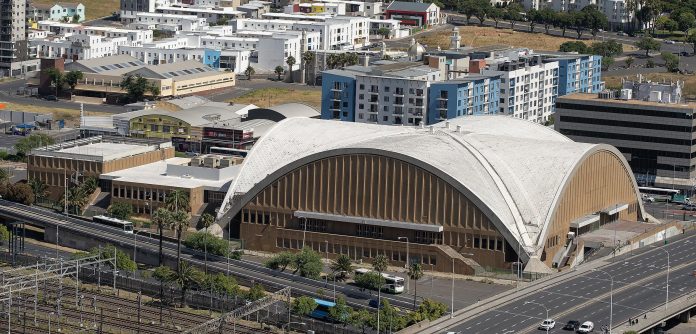
The upcoming auction includes dozens of other City-owned properties across the metro, which is aimed at unlocking economic, social, and spatial value for the city, ultimately, the City says, for the benefit of residents.
The Mayoral Committee Member for Economic Growth, James Vos, says releasing the iconic Good Hope Centre precinct for redevelopment is a strategic move.
“By releasing this site for revitalisation and redevelopment, we are giving the private sector the opportunity to develop a vibrant mixed-use precinct. Heritage elements, including the dome, are preserved through the conditions of sale, while the surrounding land can be transformed into multiple uses, unlocking significant economic and spatial value for the inner city.”
Together with the Good Hope Centre, approximately 50 other properties will be auctioned off on Thursday, 26 February. This includes:
Residential sites in Kraaifontein, Westridge, Atlantis, Durbanville, Goodwood, Eerste River, Coniston Park, Bridgetown, Athlone, Maitland and Vredehoek
Commercial sites on the Foreshore, City Centre, Mitchells Plain, Montague Gardens, Parow, Blue Downs, Century City, Bellville, Belhar and Goodwood; and
Industrial sites in Atlantis, Epping, Khayelitsha and Kuils River
In total, about 282 000m² of land, deemed by the City as not required for municipal purposes, will be released.
The revenue generated from the sale or lease of these properties will be reinvested directly into service delivery across Cape Town.
City-appointed service provider, Claremart Group, will oversee the auction process. To register for the auction or for more details, visit their website.










 Bottom Line