Transport Minister Barbara Creecy, and Deputy Minister, Mkhuleko Hlengwa, have instructed the South African National Roads Agency (SANRAL) to find a road engineering solution to the spike in road crashes on the same road curve just after Makhado, Limpopo, involving buses and trucks.
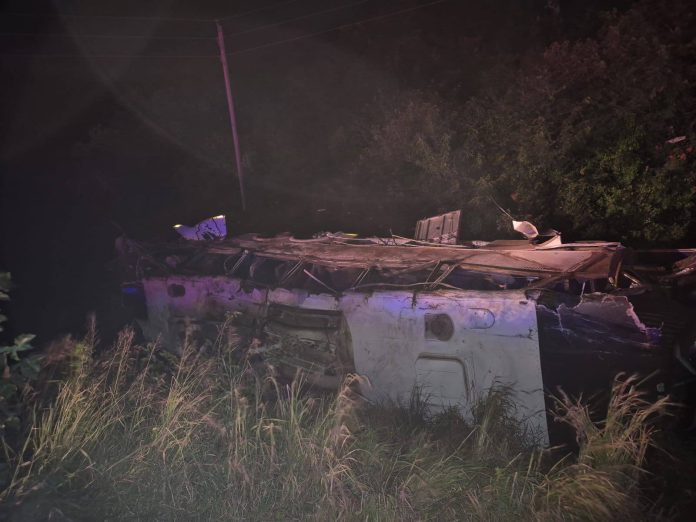
This comes after five people died and dozens of others were left injured in a bus crash on the same N1 road curve, northbound, between Makhado and Musina in the early hours of Thursday morning.
According to reports, the bus carrying 30 passengers was travelling from Gauteng to Zimbabwe, veered off the N1 and plunged into a ditch near Ingwe Lodge outside Makhado.
“It has been confirmed by emergency services that five lives were lost and those injured were taken to nearby hospitals,” said the Transport Department in a statement
According to the department, Creecy and Hlengwa have also directed the Road Traffic Management Corporation (RTMC) to provide an update report on the directive issued last October to intensify roadworthy inspections of buses crossing the Beit Bridge border.
“Both the RTMC and SANRAL are expected to provide reports as a matter of priority.”
In a statement, Creecy and Hlengwa have extended their heartfelt condolences to the bereaved families who lost their loved ones and a speedy recovery for those who were admitted to hospitals.
The RTMC is investigating the cause of the crash. The preliminary investigation report is expected in 48 hours once the RTMC begins its investigation.
The South African Police Service (SAPS) spokesperson, Ndakhe Gwala, says the trio were arrested earlier today and are due to appear in the Wynberg Magistrate’s Court tomorrow.
While the identity of the deceased has not been confirmed, speculation has emerged that the body may belong to a 17-year-old who disappeared on Valentine’s Day.
DNA testing is currently underway to determine if the remains are those of the missing teen.
Candice van der Rheede, founder and director of the Western Cape Missing Persons Unit cautioned that DNA investigations can take time.
“I am not sure how long it will take for the results to be released. It depends on whether testing is done privately or through the government. Private takes a few days, while government can take months.”
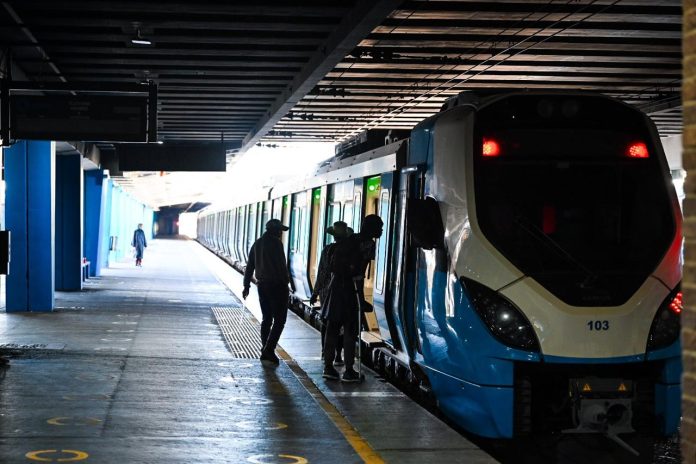
The Passenger Rail Agency of South Africa (PRASA) has confirmed that rail services will return to Mitchell’s Plain next week after a six-year suspension due to ongoing vandalism and infrastructure damage.
The agency says the Kapteinsklip Line will officially be open to commuters on Monday, restoring an affordable and reliable rail connection for thousands of daily commuters.
“This reopening marks the final phase in the full restoration of the Central Line, a critical public transport artery serving communities across the Western Cape. It is also expected to ease the congestion that has become an everyday experience across the broader public transport network.”
PRASA stressed that the limited service will connect four key stations only, which included Philippi, Lentegeur, Mitchell’s Plain, and Kapteinsklip.
“A shuttle will operate between Kapteinsklip and Philippi, with passengers travelling to or from Mitchell’s Plain transferring at Philippi in both directions.”
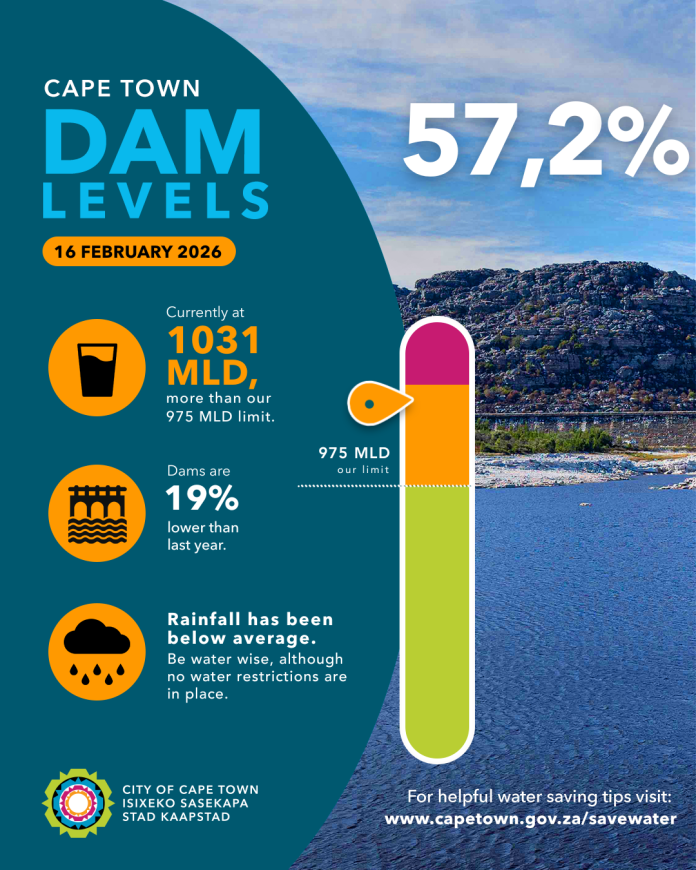
Cape Town’s dam storage levels currently stand at 57,2%. According to a media statement, this will need to last until the next seasonal rainfall cycle.
“With dam levels being 19% lower compared to last year, and unpredictable rainfall, we have to use water responsibly and be water wise at all times, especially this summer,” MMC Badroodien added.
Cape Town’s dam storage levels currently stand at 57,2%
The Mayoral Committee Member for Water and Sanitation, Zahid Badroodien, says over the past week, water usage has dropped to 1 031 million litres of water a day (MLD). This is a decrease from 1 052 MLD last week. He added that this is 56 MLD over the usage target.
Badroodien says, “While there is no immediate cause for concern about water security in Cape Town, all of us use water, so we all have to save where we can.”
The MMC reiterated that residents shouldn’t take their water supply for granted and has encouraged everyone to work together, towards reducing water usage. He says it has been way over the target of 975 MLD that has been set to help collectively manage the supply until the winter months arrive.
Help the city manage dam levels
Badroodien says while the Mother City will experience hot weather this week, and people need to keep them hydrated and cool, they shouldn’t lose sight of using water wisely in and around their homes, businesses and industries. He says water use should be for essential purposes only.
If dripping taps, leaking toilets and faulty plumbing go undetected and ignored for a long time, a lot of water is wasted.
· Monitor your own usage and make the effort to save water.
About 70% of all water used in the city is used in homes, which is why saving water at home is so critical. Only water the garden at night to prevent evaporation and avoid topping up swimming pools or pool inflatables unnecessarily.
· Switch to treated effluent re-use for industrial irrigation or construction purposes.
The City promotes and supplies treated effluent to large water users such as industry, sports clubs, golf clubs, large new developments and schools.
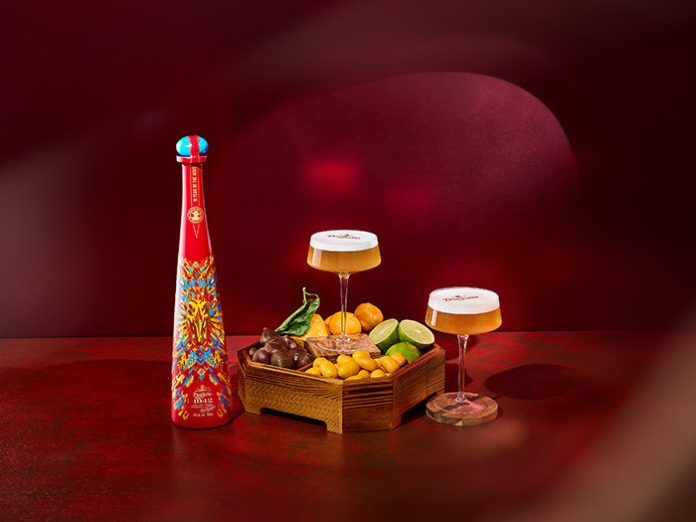
2026 is the Year of the Horse, and our brands are marking it with limited-edition releases and cultural collaborations across our premium spirits portfolio, from tequila to Scotch whisky.
The spirits company, Diageo calls for a pause in spirits tax increases. Government tax on spirits is expected to pass the significant R100 per 750ml bottle mark, should the Minister of Finance, Enoch Godongwana, apply the usual 6%-plus annual increase in excise during the Budget Speech next week.
Diageo calls for a pause in spirits tax increases
750ml is the main unit size offering to the market for all subcategories of spirits – brandy, gin, vodka, whisky and rum.
“At R100 per bottle, government tax becomes the biggest component of the cost to the consumer, ranging between 55-65% of the retail selling price of mainstream spirits products. We believe there is no room for consumers to absorb further increases in the statutory component of the price,” said Sibani Mngadi, Corporate Relations Director at Diageo South Africa.
Tax on spirits have practically doubled from R52 per bottle in 2016 to most likely over R100 with the presentation of the 2026 Budget Statement.
The spotlight is on possible spirits tax increases
Tax-evading illicit traders turn this large tax burden to the benefit of their own criminal networks, offering smuggled and counterfeited spirits at less than 50% of market prices. The large tax increases on spirits over many years have directly facilitated the exponential growth of illicit trade, which now stands at 18% of the alcohol market.
Image: Diageo website
Spirits is, by far, the most smuggled and counterfeited category of alcohol. Illicit trade in spirits causes an R11 billion loss in tax revenue for the government every single year, according to a 2025 Euromonitor study.
Calling for a freeze on excise tax increases for spirits products
Diageo South Africa, the country’s leading spirits company, has called for a freeze on excise tax increases for spirits products, while the excise tax policy is still under review. In its policy review document on the Taxation of Alcoholic Beverages, Treasury itself acknowledges that spirits is taxed much more heavily than other categories. The Treasury review document concluded:
“For now, no further adjustments [of excise tax] are proposed for consideration for the spirit category.”
Mngadi argued that: “If the excise tax is intended to moderate the overall volume consumption of alcohol in the population, a similar rate per litre of absolute alcohol should apply, irrespective of whether that alcohol is from a distilled or fermented alcoholic beverage.”
Curb illicit trade and protecting government revenue
Diageo South Africa is committed to engagement with government and industry partners to develop a fair, evidence‑based excise regime that supports responsible consumption while curbing illicit trade and protecting government revenue.
Image: Diageo website
According to Mauritz Venter from Resolve Communications, Diageo South Africa is the country’s leading spirits company. It supports thousands of jobs directly and indirectly through local production of most of its SA volumes, as well as the nationwide distribution and sales of its iconic brands.
Excise Tax rates currently applicable for alcohol as per 2025/2026 Budget Statement are:
Spirits = R292,91 per Litre of Absolute Alcohol
Beer/Cider = R145.07 per Litre of Absolute Alcohol
Wine = R5,95 per Litre of finished product (irrespective of ABV level)
Diageo is known for its international brands such as Smirnoff, Gordon’s, Tanqueray, Captain Morgan, Johnnie Walker and a variety of other blended and single malt whiskies.
2026 is the Year of the Horse, and our brands are marking it with limited-edition releases and cultural collaborations across our premium spirits portfolio, from tequila to Scotch whisky.