

Cape Town Mayor Geordin Hill-Lewis has hit back at claims made by President Cyril Ramaphosa over the state of service delivery in the metro, after the President used a parliamentary session to highlight shortcomings in access to basic services across the city’s poorer areas.
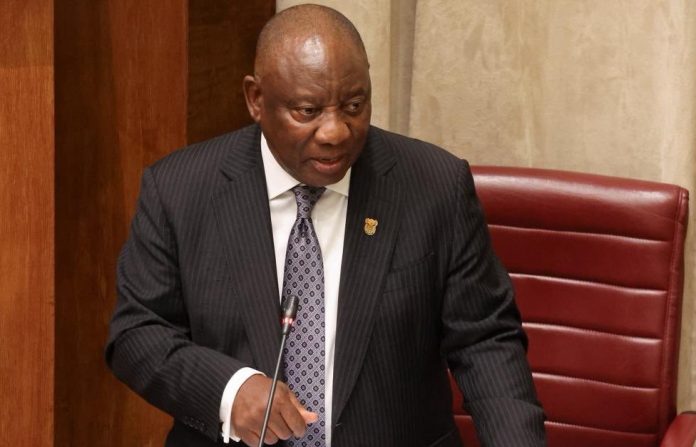
Responding to a question in the National Council of Provinces (NCOP) on Tuesday, President Ramaphosa said that while Cape Town generally performs well on financial governance, it “has not demonstrated significant progress in reducing levels of inequality within the metro.”
Citing Census 2022 data, Ramaphosa said that between 2011 and 2022, Cape Town performed “worse than the average of all metros” in expanding access to refuse removal, piped water, electricity, and flush toilets.
He also suggested that per capita investment in infrastructure remains “significantly lower” in townships and informal settlements compared with affluent areas, adding that the national government continues to work with municipalities, including Cape Town, to improve service delivery and reduce inequality through grants, technical assistance, and capacity-building programmes.
However, Mayor Geordin Hill-Lewis has accused the President of “damage control” after previously praising Cape Town’s governance record.
“The President is still trying to do damage control after he dared to speak the truth when he said Cape Town and other DA-run towns are examples to follow,” said Hill-Lewis.
“Where his party governs, there is only decay, corruption, and collapsed services. Despite the enormous challenges of poverty and unemployment, Cape Town is steadily moving forward while every other city in the country is moving backwards.”
Hill-Lewis said Cape Town has an SA-record R40 billion infrastructure budget over three years, 75% of which directly benefits lower-income households. He added that the city “spends far more on pro-poor infrastructure alone than the total capital budget of any other metro.”
According to the mayor, Cape Town leads on multiple independent indicators of service performance, including Ratings Afrika’s financial sustainability ranking and Stats SA’s latest household survey, which found that the city offers the widest access to free basic services.
Hill-Lewis said the city will invest R3.4 billion in informal settlement upgrades over the next three years, including water, sanitation, electricity, and housing projects.
“The conclusion is undeniable,” he said. “No city invests more in pro-poor infrastructure than Cape Town.”