


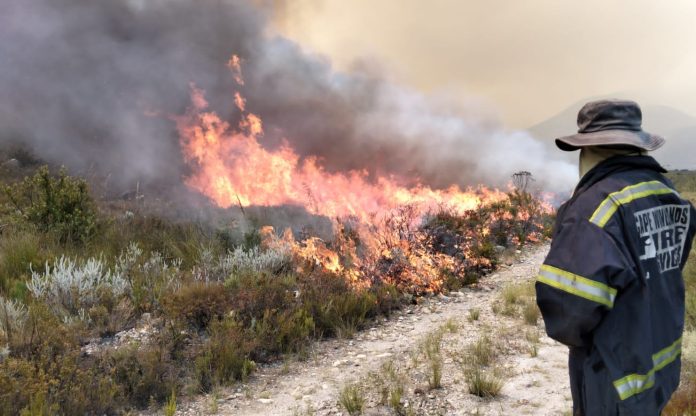
The Western Cape Government is urging residents, municipalities, farmers and the tourism sector to prepare now for a summer expected to bring extreme heat, increased wildfire risk and growing pressure on water resources.
This comes amid lower-than-normal rainfall this winter, brought on by climate change and a strong El Niño weather system.
During a digicon at the Provincial Disaster Management Centre on Thursday, Premier Alan Winde said the province cannot afford to lose lives or livelihoods because of extreme heat, warning that the devastating conditions experienced in parts of the Northern Hemisphere should serve as a wake-up call.
More than 13 000 people died from excessive heat in the Northern Hemisphere this summer, according to Winde, who says the Western Cape must ask whether it is sufficiently prepared to protect vulnerable residents.
He says particular attention must be given to elderly and bedridden people, as well as residents living in informal settlements, who could be at greater risk during periods of extreme heat.
The province is also preparing for an extended wildfire season, which could also arrive earlier than usual. But he says preparedness cannot rest solely with emergency services.
“Where you live matters,” Winde said, calling on residents to take steps to protect their homes and communities before summer arrives.
Farmers are being urged to clear firebreaks and remove alien vegetation, while homeowners in fire-prone areas are encouraged to manage vegetation around their properties and put appropriate water-management systems in place.
The province is also warning residents about the dangers of swimming in dams and rivers during hot weather.
Winde says people cannot risk drowning because they are trying to escape the heat, while municipalities must ensure that water resources are properly managed and that restrictions are implemented when necessary.
Triple threat of heat, fires and water insecurity
Western Cape Local Government, Environmental Affairs and Development Planning MEC Anton Bredell says the province knows it is heading towards a hotter summer and a potentially prolonged fire season.
He says water security remains one of the province’s biggest concerns, despite current dam levels appearing healthy.
“If we have a hot summer and then another dry winter, we are in trouble,” Bredell warned.
He says funding has been allocated to municipalities to support them with water security, while additional funding has been allocated to assist municipalities during the upcoming fire season.
Bredell says both the quantity and quality of water must be protected, and residents need to start saving water now.
“Time to save water is now,” he said.
ALSO READ: Department of water and sanitation hopeful for more rain as dam levels decline
Western Cape Government Head of Department Graham Paulse says the province is developing a comprehensive summer readiness plan covering water security, extreme heat and wildfires.
The plan will identify areas at greatest risk and help government strategically position resources such as aircraft, water tankers and engineering teams.
Paulse says the province is conducting regular water-security analyses to identify towns that could come under pressure as river flows decline during the summer months.
This will inform targeted awareness campaigns and, where necessary, the early implementation or escalation of water restrictions.
The province also plans to return the summer readiness plan to Cabinet in September for endorsement.
Climate change and strong El Niño adding to the risk
Western Cape Department of Environmental Affairs and Development Planning Director Karen Shippey says detailed modelling conducted with the University of Cape Town indicates that climate change is expected to bring higher temperatures across all seasons, more drought conditions, reduced rainfall and stronger winds.
She says the province must also consider the impact of El Niño, a natural climate pattern linked to changes in ocean temperatures in the Pacific that can influence weather patterns around the world.
El Niño events typically last between nine and 18 months, and the province is monitoring the possibility of warmer and drier conditions between October and December. According to reports, this particular El Niño is on track to be the strongest on record.
Shippey says climate resilience requires both mitigation and adaptation, with better planning and infrastructure helping communities become less vulnerable to climate-related risks.
She says water conservation must go hand in hand with reducing water losses, including leaks.
Rapid response to wildfires
Western Cape disaster management officials are preparing for what is expected to be a longer wildfire season.
Head of Disaster Management Colin Deiner says the province’s operational approach is built around four priorities: communicate, prepare, coordinate and respond.
Other strategic pillars include risk intelligence and early warning systems, community awareness and behaviour change, protecting vulnerable people, strengthening infrastructure and municipal services, water security and demand management, wildfire management, and strong partnerships between government and communities.
He says volunteer networks will play an important role in responding to fires.
Once a fire is reported, emergency teams aim to launch a rapid attack and bring it under control within an hour where possible.
Officials are also appealing to communities to support firefighters by reporting fires quickly and avoiding behaviour that could trigger veld fires.
Deiner specifically raised concern about children deliberately starting fires to see firefighting aircraft during the school holidays.
Winde says firefighters and emergency officials need to engage with schools and children about the consequences of these actions.
The Southern Cape and Overberg are among the areas of concern, along with parts of the West Coast and other areas that have historically experienced fewer fires but could face increased risk.
Call for residents to act now
Winde says extensive planning has already gone into the province’s summer readiness preparations, but government cannot manage the risks alone.
He is calling on residents, farmers, businesses, municipalities and the tourism industry to understand the risks and take action before extreme conditions arrive.
For residents, that means preparing homes for potential wildfires, clearing combustible vegetation, saving water and ensuring vulnerable family members are protected during heatwaves.
For farmers, it means maintaining firebreaks and clearing alien vegetation.
For municipalities, it means preparing water resources, implementing restrictions, reducing losses and ensuring emergency services are ready.
And for the tourism sector, Winde says visitors must be informed about the risks and encouraged to play their part in protecting the province.
He says the lessons from the Northern Hemisphere and the Western Cape’s own devastating fires at the beginning of the year should not be ignored.
“A little bit of work now” could help the province reduce the impact of the extreme conditions it knows are coming.