


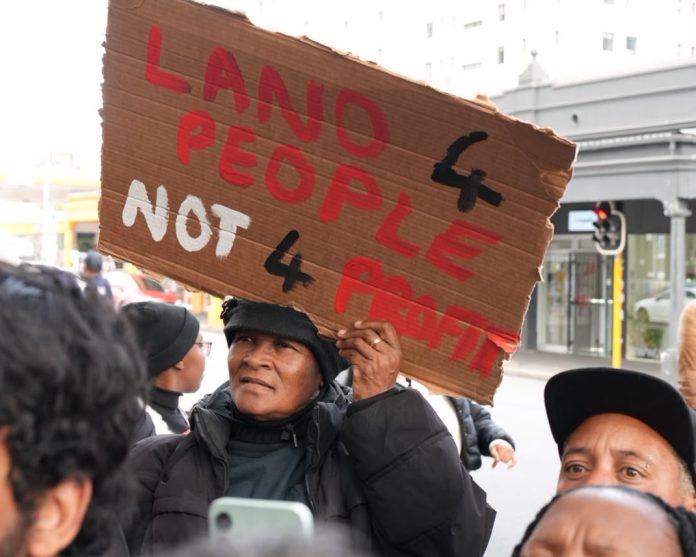
The Constitutional Court has dealt a significant setback to the Western Cape Government and the City of Cape Town, ruling against their handling of the long-running Tafelberg affordable housing dispute and ordering both spheres of government to account for their efforts to address spatial inequality.
In a judgment handed down on Thursday, the country’s highest court found that the province and city fell short of their constitutional obligations in relation to affordable housing on well-located land, particularly in Cape Town’s inner city and surrounding areas.
The court ruled that housing delivery cannot be measured only by the number of units built, but must also consider location and whether developments help reverse apartheid-era spatial planning.
It further ordered the Western Cape Government and City of Cape Town to submit updated reports detailing their affordable housing plans and progress since the litigation began nearly a decade ago.
The case centres on the former Tafelberg School site in Sea Point, which housing activists argued should have been used for affordable housing rather than being privately sold.
Western Cape Infrastructure MEC Tertuis Simmers said the province respects the judgment and will study its implications while complying with the court’s orders.
Simmers said the ruling reinforces the principle that affordable housing should be located near jobs, transport, schools and healthcare facilities. He pointed to developments including Conradie Park, Founders Garden, Prestwich and Leeuloop as examples of the province’s efforts to promote mixed-income communities.
The provincial government had announced in 2025, before this ruling, that the sale of the Tafelberg site would be reversed and used for affordable housing and social services.
The City of Cape Town also welcomed the opportunity to update the court on affordable housing projects undertaken since the case was first launched.
Mayoral Committee Member for Human Settlements Carl Pophaim said around 4,000 affordable housing units are entering construction in the inner city this year and that the city’s broader pipeline now stands at approximately 12,000 units in well-located areas.
The city said completed projects include more than 200 social rental units at Maitland Mews, over 1,000 units at Goodwood Station and more than 400 units at Bothasig Gardens. It also highlighted difficulties in accessing national social housing grant funding.
Opposition parties and housing activists hailed the judgment as a landmark victory.
GOOD Secretary-General and Cape Town mayoral candidate Brett Herron described the ruling as a dismantling of a key pillar of what he called the DA’s approach to spatial planning, arguing that the court had rejected the notion that the high value of public land should prevent it from being used for affordable housing.
Herron said the judgment affirmed that government has a constitutional duty not only to provide housing, but also to actively address spatial injustice created by apartheid planning.
ActionSA Cape Town mayoral candidate Dereleen James also welcomed the ruling, saying it confirmed that affordable housing must be developed close to jobs, transport links and economic opportunities if Cape Town is to undo decades of spatial segregation.
The judgment is likely to have far-reaching implications for future housing developments and the use of public land in Cape Town, while placing renewed pressure on both the province and the city to demonstrate tangible progress in delivering affordable housing in well-located areas.