

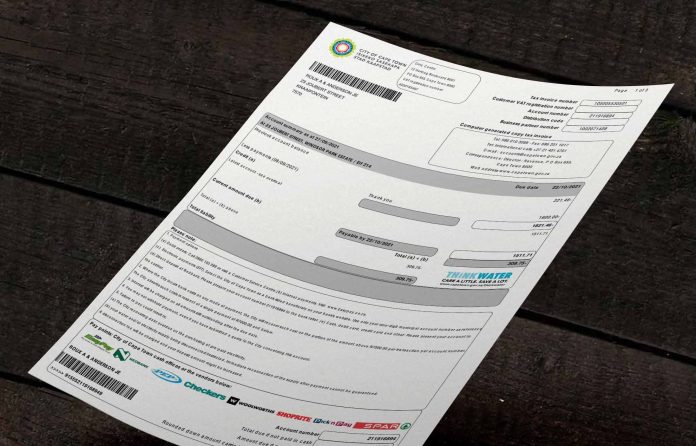
A legal battle is brewing over the City of Cape Town’s new municipal tariffs, with both the South African Property Owners Association (SAPOA) and a major coalition of ratepayer associations challenging their legality.
SAPOA, which represents commercial and industrial property owners, filed papers in the Western Cape High Court in mid-July, asking for three of the City’s newly introduced charges to be reviewed and set aside.
The application targets:
- The city-wide cleaning levy,
- A basic fixed sanitation charge linked to property values,
- An amended fixed water charge, also tied to property value.
The City adopted its 2025/26 Budget on 26 June 2025, despite months of critical public feedback and multiple written submissions from SAPOA since the budget’s draft release in March.
Following two rounds of engagement, the City agreed to delay implementation of the charges for commercial and business properties until 1 July 2026. However, the tariffs already apply to residential and vacant properties.
In a press statement, SAPOA said it appreciates the City’s willingness to engage but remains of the firm view that the charges are unlawful, as they violate legislation governing municipal finances. The organisation argues that, once implemented, such charges will be difficult to reverse and could set a dangerous precedent for other municipalities if not challenged now.
CTCRA Throws Its Support Behind SAPOA
The Cape Town Collective Ratepayers’ Association (CTCRA), which represents 57 local ratepayer groups, has now publicly backed SAPOA’s legal challenge. The association argues that Cape Town Mayor Geordin Hill-Lewis is mischaracterising the opposition to the tariffs as coming from the wealthy elite.
“It is not the rich, as Cape Town Mayor Geordin Hill-Lewis alleges, who are opposing the cleaning levy and linking fixed charges to property value in the city’s budget, but the middle class,” CTCRA said.
The group accuses the Democratic Alliance (DA), which governs Cape Town, of applying double standards: fighting for the rule of law in other municipalities, while pushing ahead with what it believes are unlawful charges in the City it governs.
SAPOA’s court application prompted a strongly worded rebuttal from Hill-Lewis, who framed the litigation as “an attempt” by commercial property owners to stop Cape Town’s pro-poor budget to protect their own vested interests and put their profits ahead of the people of Cape Town.
SAPOA, however, contends that most of its members are not corporate giants, but smaller property owners with only a few assets each — including residential and industrial holdings. The association insists its challenge is grounded in legality, not opposition to the budget’s aims.
CTCRA: Tariffs Have No Legal Foundation
CTCRA agrees with SAPOA’s legal argument that the cleaning levy and fixed service charges are, in effect, disguised taxes with no proper legislative foundation.
“These are not charges for a direct service rendered to a property,” the association stated. “They are general municipal costs, no different to road maintenance or emergency services, and should be funded through general property rates, not by levying additional charges based on property value.”
CTCRA is in talks with SAPOA about possibly joining the case as a friend of the court (amicus curiae), noting that the matter impacts both residential and commercial property owners.
“If the City is allowed to proceed unchallenged, there’s a realistic chance that other municipalities across South Africa could follow suit,” CTCRA warned. “This is about protecting the rule of law and ensuring municipal finances remain accountable and fair, not just in Cape Town, but nationally.”
Middle-Class Suburbs Feeling the Pinch
CTCRA also strongly rejected Hill-Lewis’s claim that the budget primarily affects wealthier households. “The people objecting to these tariffs live in suburbs like Rondebosch East, Mowbray, Goodwood, Diep River, Monte Vista and dozens of other middle-class areas,” it said.
“These are not wealthy people. They include pensioners, single parents, and families who may live in a R4 million home but struggle to meet their monthly bills. Property value does not equal wealth.”
The mayor has argued that those who can afford more should contribute more, but CTCRA says it is not up to the City to decide who qualifies.
“No amount of exemptions or discounts can fix a charge that is fundamentally unlawful,” the group said, referring to revisions the City made to the budget in late June. “You cannot mitigate a tax that should never have been raised in the first place.”
The association claims it has proposed alternatives, including increasing municipal efficiency and introducing a tourist overnight tax. “But the City ignored our proposals and expects households to carry the burden instead.”
Awaiting a Court Date
SAPOA and the City have approached the Judge President of the Western Cape High Court for an expedited hearing, which is likely to take place in September 2025.
While the City is expected to oppose the case, SAPOA has reiterated its desire to maintain a constructive relationship with officials, saying the court action is not combative but a necessary step to resolve a legal disagreement.