


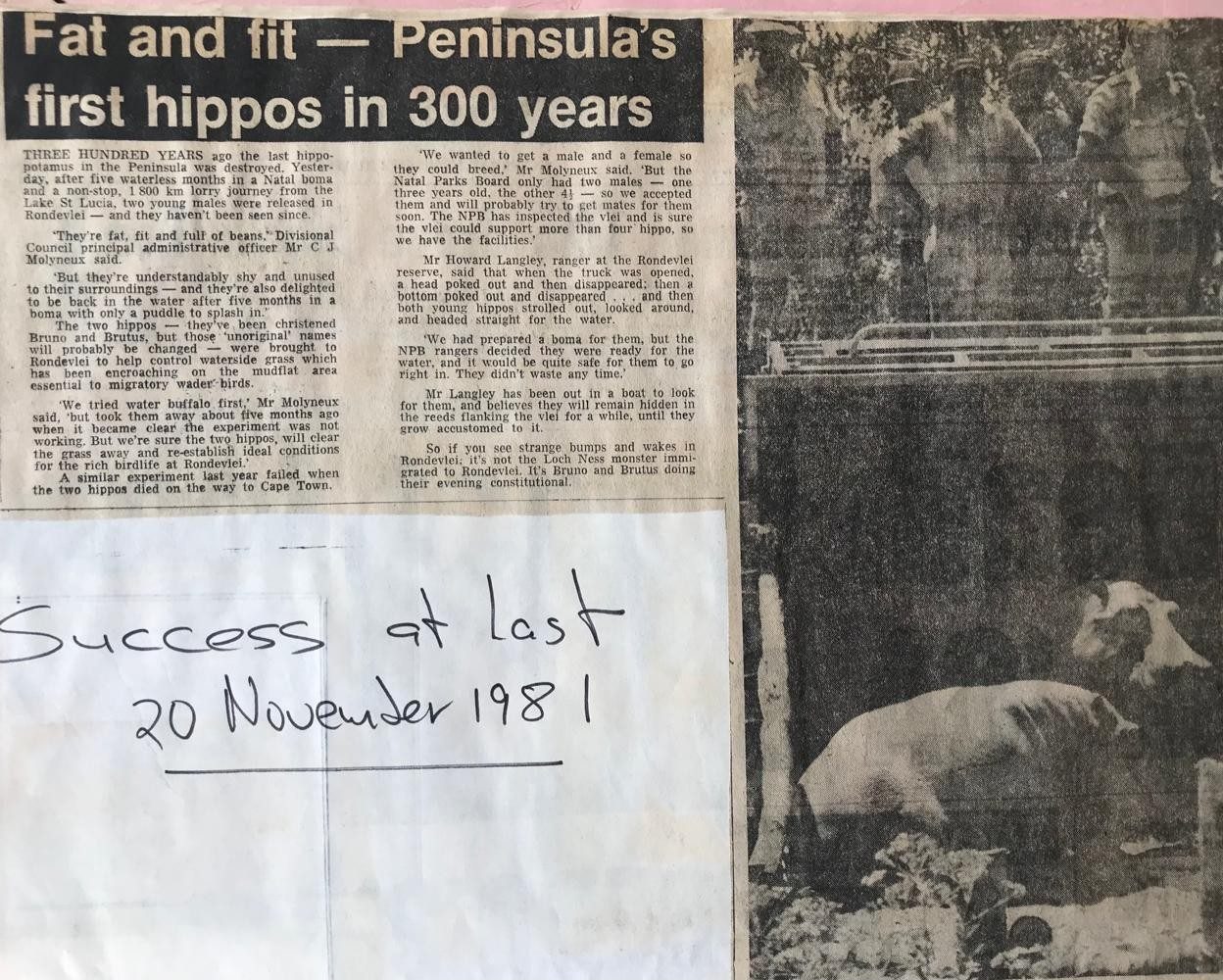
Rest In Peace, Hippo Brutus. Brutus was Rondevlei’s first and most famous hippo, who arrived there in November 1981. He passed away last week at the age of 47. Until recently, he was still producing offspring. Brutus was also the first hippo reintroduced to the Western Cape in 300 years.
MMC Andrews added, “Brutus was the long-standing dominant male that arrived at Rondevlei in November 1981, and we are sad about not having him around anymore.”
Rest In Peace, Hippo Brutus
His body was discovered on Thursday morning, 13 November 2025, by staff from the False Bay Nature Reserve. They were on routine patrol when they discovered the dead hippo bull in the Rondevlei section of the reserve.
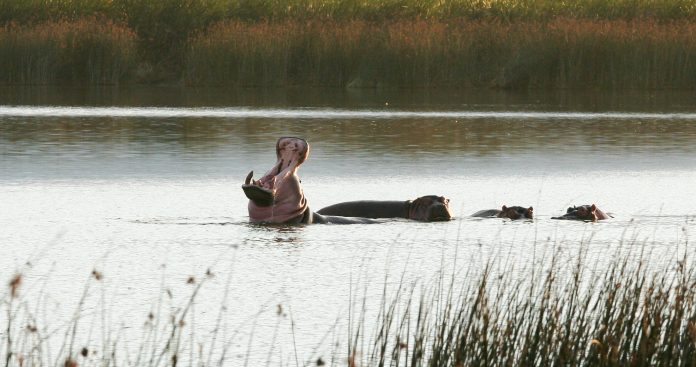
MMC Andrews added, “After Brutus’s passing, the hippo pod at Rondevlei now consists of five hippos, including one young bull.”
Brutus was an extraordinary 47-year-old
The City’s Deputy Mayor and Mayoral Committee Member for Spatial Planning and Environment, Alderman Eddie Andrews, says the bull was removed from the vlei and on Friday, 14 November, the Biodiversity Management Branch’s veterinarian conducted an autopsy. He says it was established that the dead hippo was Brutus, Rondevlei’s famous bull. According to him, the preliminary postmortem examination found no evidence of trauma, injury, or infectious disease. He says the hippo was in good condition for his age, and the initial findings indicate a natural, age-related cause of death. Andrews added that tissue samples have been sent away for further analysis.
“We will be looking at options to potentially bring in a new male.”
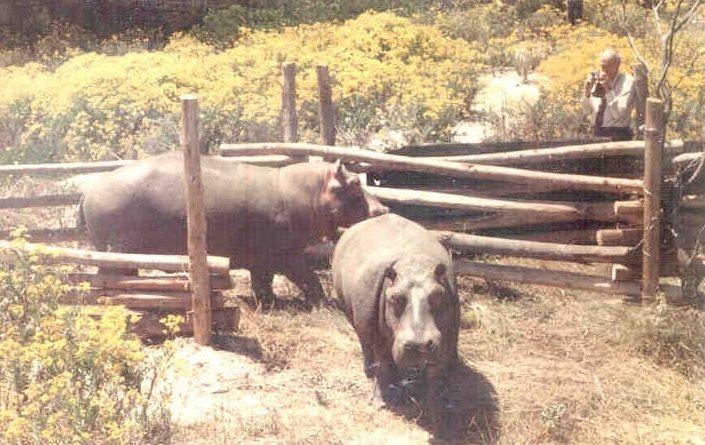
Brutus, Rondevlei’s first and famous hippo, passed away
The City says the hippos were reintroduced to Rondevlei originally with two males, and this was followed by the introduction of two females. MMC Andrews says the hippos were brought in to control Vleigras, an alien grass from South America. This was smothering the wetland. He says the mammals swiftly ate the Vleigras and opened up the reed beds, and because they are bulk herbivores, they are capable of eating up to 100 kg per day. Andrews says these days they feed on indigenous buffalo grass, Vleigras, and kukuyu.
He added, “The hippos play a vital role in maintaining biodiversity in the wetland system and are also important educational and tourism assets.”
A City spokesperson added that Brutus’s offspring have been moved to many reserves in the Western Cape. One of them was also moved to the Plettenberg Bay Game Reserve earlier this year.