


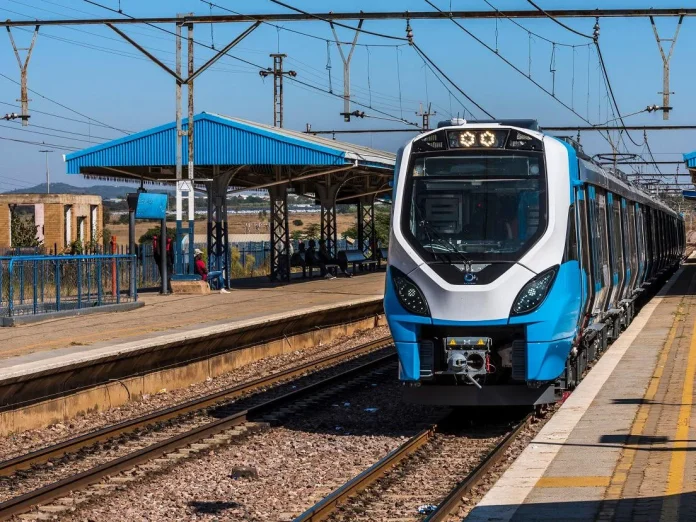
Following an increase in train-related incidents in recent days, the Passenger Rail Agency of South Africa (PRASA) says the safety of passengers, employees and members of the public remains a top priority.
The comment follows the latest incident in which an unidentified man was fatally struck by a train in Heideveld on Monday, 28 September 2026. The South African Police Service (SAPS) has since confirmed that an inquest has been opened.
A week ago, a security guard conducting routine foot patrols at the Mitchells Plain train station in Alpha Street, Eastridge, was fatally struck by a train.
Police confirmed that investigations into the matter remain ongoing.
“On Wednesday 2026-09-23 at 20:40 SAPS members received a complaint of someone being hit by a train at Mitchells Plain train station, Alpha Street, Eastridge, Mitchells Plain. On the scene members found a male lying next to the train. The train was traveling from Mitchells Plain towards Cape Town. The victim who is a security guard was conducting foot patrols with two colleagues next to the railway line when the side of the train hit him. The victim sustained injuries to the right side of his body. The victim was declared dead on the scene by paramedics.”
Several other people have lost their lives in similar incidents in recent months, including an eight-year-old in Stellenbosch, a 34-year-old woman who was struck by a train while attempting to cross the tracks at a railway station in Newlands, and a 19-year-old man who was struck by a train under the Spine Road bridge in August 2026.
PRASA Western Cape regional spokesperson Zino Mihi says the agency takes the safety of passengers, employees and members of the public seriously and continues to implement a range of measures to promote safe behaviour and strengthen security across the rail network.
“A key intervention is our regular rail safety awareness campaigns at stations, schools, level crossings, shopping malls, churches and other community spaces.”
According to Mihi, these campaigns use a multi-disciplinary approach and involve public transport partners, NGOs, government entities, state-owned enterprises and other stakeholders.
PRASA says it has also increased the deployment of security personnel on trains and across rail precincts, supported by greater police visibility.
“In addition, infrastructure and technology interventions are being implemented, including fencing and walling projects, while CCTV cameras have been installed at identified hotspot areas to improve monitoring and security.”
Mihi says safety is also an important part of PRASA’s internal operations.
“Through internal safety symposiums, events and awareness initiatives, we reinforce the importance of responsible and safe practices among employees.”
PRASA has since urged passengers and members of the public to remain vigilant and follow safety rules around railway infrastructure. The agency is also encouraging the public to report unsafe conditions and suspicious activity.
“Public reporting is an important part of keeping the rail environment safe. We encourage passengers and communities to promptly report unsafe conditions, suspicious activity, vandalism, trespassing or other safety concerns through the appropriate PRASA channels or to the relevant authorities.”
Mihi says early reporting can help authorities respond more quickly and could potentially prevent further incidents.
“Rail safety is a shared responsibility. By following the rules, staying alert and speaking up when something is unsafe, we can all contribute to preventing further incidents and creating a safer rail environment for everyone.”


