


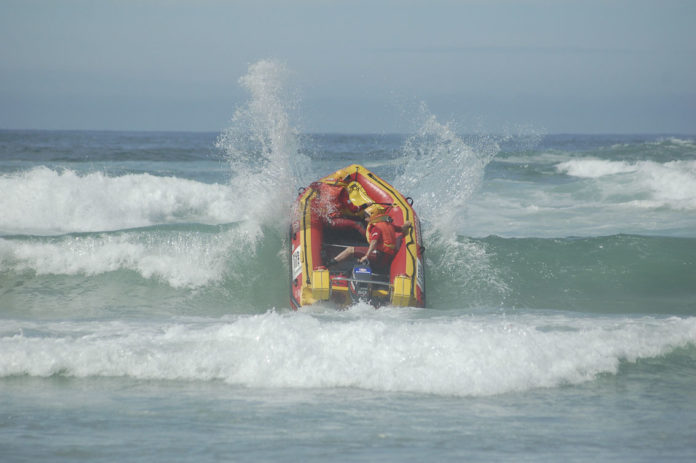
Spring tide coincides with school holidays and Heritage Day weekend. For this reason, the National Sea Rescue Institute is asking beachgoers, anglers and coastal hikers to take extra care this weekend when along the coast or in or near the ocean. A full moon spring tide is expected to peak over the weekend, just as the school holidays and the Heritage Day long weekend begin.
In an emergency: Call the NSRI Emergency Operations Centre on 087 094 9774, or 112 from a cellphone.
Spring tide coincides with school holidays and Heritage Day weekend
The NSRIs’ Communications Manager, Andrew Ingram, says that with families heading to the coast for the holidays, they’re asking everyone to plan their activities around the tides this week. Ingram says it’s important to check the tide times where you are. You must also swim at lifeguard-protected beaches only. He added that if you are fishing from rocks, to wear a life jacket and be sure to have a flotation device with you. Ingram added that if you see someone in trouble, call for help immediately.
What to expect during a spring tide
Higher high tides: water reaches further up the shore than usual.
Lower low tides: more of the seabed and rocks are exposed.
A bigger tidal range: the difference between high and low tide is at its greatest.
The hazards
Rip currents: stronger tidal flows make rip currents stronger, which puts swimmers at risk.
Strong tidal currents: flows through estuary mouths, harbour entrances and narrow inlets, such as the Knysna Heads, are much stronger than normal.
Coastal paths and hiking trails: some routes may be cut off or become dangerous at high tide.
Rock and shoreline fishing: at high tide, waves can reach beyond areas that are usually safe.
Safety advice
Beach and swimming
Swim only at lifeguard-protected beaches and between the lifeguards’ flags.
Take extra care on the outgoing tide, when rip currents are often at their strongest.
Check the South African Weather Service forecast and local tide tables before you go.
Coastal activities
Hiking: plan your route around local high tide times and avoid trails that may be cut off.
Fishing: keep a safe distance from the water’s edge. When fishing from rocks, wear a life jacket and carry something that floats and can be thrown to someone in the water, such as an empty 5-litre plastic bottle.
Boating and paddling: always wear a life jacket, carry essential safety equipment, and keep your cellphone charged in a waterproof pouch. The free NSRI SafeTrx app lets you log your trip and call for help quickly.
General water safety
Do not drink alcohol before swimming, boating or fishing.
Make sure a responsible adult is always watching children in and near the water.
Take care around rivers, dams and lakes, especially after rain, when water can run fast and deep.
Watch for strong winds and changing weather.
Be aware of the tide: beachgoers should take care as the tide goes out, and rock anglers as it comes in.