


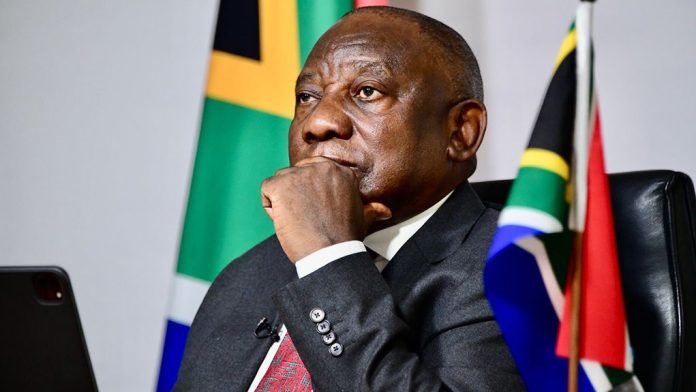
President Cyril Ramaphosa has set his sights on ending the country’s water crisis, “once and for all.”
The President, who chairs the National Water Crisis Committee (WATERCOM), released the National Water Action Plan (NWAP) last week, which sets out the government’s “determination to ensure that every community in the country has access to a reliable supply of drinking water, no matter where they live.”
According to Statistics South Africa’s General Household Survey of 2024, while 71,8% of urban residents have access to safely managed water, only 36,7% of rural populations do, and nearly all those relying on limited, unimproved, or even surface water live in rural areas.
In his weekly newsletter released on Monday, Ramaphosa says he is determined to change that.
“For too many South Africans, turning on a tap has become an act of uncertainty. In too many cities, towns and rural areas, water disruptions have become a fact of life. Families cannot cook or clean. Children cannot wash. Shops and businesses have to close.”
The immediate challenge, the President says, is the proper management, maintenance and financing of municipal water systems.
“In too many municipalities, revenue collected from the sale of water is used to fund other municipal functions. This leaves too little money to repair pipes, replace pumps or employ qualified engineers and technicians.”
Ramaphosa says as a result, close to half of all the water pumped never reaches paying customers.
“It leaks out of broken pipes, is stolen or is simply never billed for. That is water that has been treated at great cost and then lost, along with the revenue that should have paid for maintenance.”
He says the National Water Action Plan will address the root cause of this crisis by changing the way that water services are delivered.
Ramaphosa says the Water Services Amendment Bill currently before Parliament will establish a clearer separation between the municipality’s role as the authority responsible for water and the role of the operator that actually delivers it, so that both can be held to account.
“Water service providers will be required to obtain operating licences based on their technical, managerial and financial capability. Municipalities will only be able to appoint providers that meet the required standards and can demonstrate that they are capable of delivering reliable water and sanitation services.”
“Where a municipality is failing, unwilling or unable to provide an acceptable service, government will intervene in accordance with the Constitution and the law to provide the required services to our people. Where necessary, another capable water utility will be appointed to run the service in the municipality’s place.”
The plan will also reform the way municipal water services are financed, by ring-fencing water revenue.
“Through the Metropolitan Trading Services Reform Programme, the country’s eight metropolitan municipalities are being supported and incentivised to ring-fence their water revenue. This means that money collected for water and sanitation must remain within the water utility and be reinvested in infrastructure, maintenance and improved operations.”
The President says municipalities will also receive more technical support, while additional funding may be sought by partnering with private investors and lenders, and by paying contractors according to results delivered.
“Mobilising private finance and expertise does not mean surrendering public responsibility for water. Water will remain a public good and the state will continue to protect public ownership, affordability and universal access. The purpose of these partnerships is to bring additional resources and expertise into a sector where the investment need is far greater than government grants alone can meet.”
“We will act firmly against the corruption and criminal networks that are benefiting from irregular water contracts and damage to infrastructure.”
He says WATERCOM will meet regularly to oversee the implementation of the Plan and to hold the responsible departments and agencies accountable for delivery.
“Just a few years ago, we faced a similar national crisis in electricity. By acting boldly to implement reforms, improve Eskom’s performance and enable massive investment in new generation capacity, we brought an end to load shedding. We are now applying that same approach to water.”