


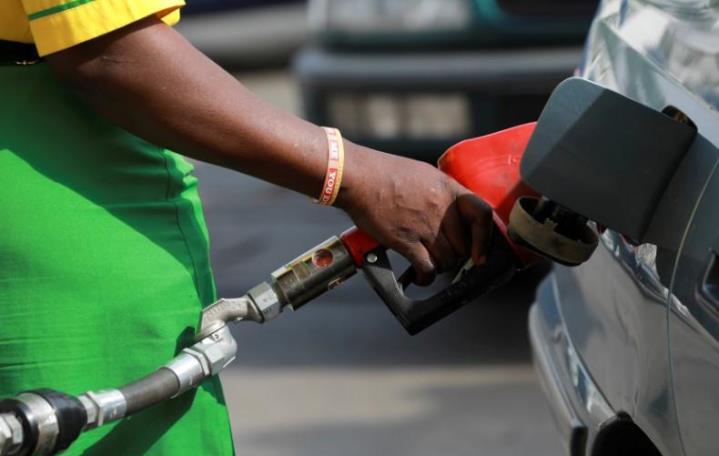
Motorists across South Africa are set to feel the pinch at the pumps this week, with steep fuel price hikes taking effect from Wednesday, 6 May 2026.
This is despite the R3 fuel levy relief, which was extended for May.
The Department of Mineral and Petroleum Resources announced significant increases across all major fuel types, driven largely by rising global oil prices and ongoing geopolitical tensions.
Both grades of petrol will increase by R3.27 per litre, while diesel users face an even sharper jump of R6.19 per litre.
Illuminating paraffin will rise by R4.22 per litre, adding further pressure on lower-income households that rely on it for cooking and heating.
The department says the spike is mainly due to a surge in global crude oil prices, with Brent Crude climbing from around $93 to $101 per barrel during the review period.
Supply disruptions linked to tensions between the United States and Iran, including the closure of the strategic Strait of Hormuz, have significantly tightened global supply.
International fuel product prices have followed suit, with diesel and paraffin seeing the biggest increases due to higher demand and constrained supply from the Persian Gulf.
While the rand remained relatively stable against the US dollar, this offered little relief.
A key additional factor is the implementation of a slate levy of 122.70 cents per litre to recover a negative balance in the fuel price stabilisation mechanism.
What is the slate levy?
The slate levy is essentially a recovery mechanism built into South Africa’s fuel pricing system.
Here’s how it influences prices:
When the Department of Mineral and Petroleum Resources sets fuel prices, it estimates what petrol and diesel should cost based on global oil prices and the rand. But in reality, those costs fluctuate daily.
If fuel is sold below the actual cost, oil companies lose money, creating a negative “slate balance.”
If it’s sold above cost, a positive balance builds up.
When that slate balance becomes too negative (as it has now), the government steps in and adds a slate levy, an extra charge per litre, to recover those losses.
In practice:
- The levy is added to the fuel price → pushing prices higher
- It stays in place until the shortfall is recovered
- Once the balance stabilises, the levy can be reduced or removed
In the latest adjustment, a fairly large slate levy (over R1 per litre) is being applied, which is one of the reasons behind the sharp increases, especially for petrol and diesel.
So even if global oil prices stabilise, the slate levy can still keep prices elevated until past under-recoveries are paid back.