


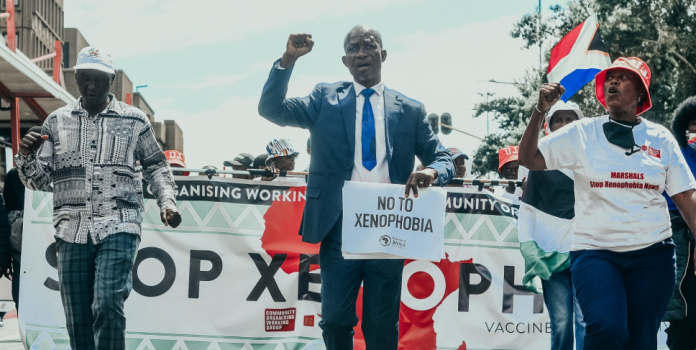
President Cyril Ramaphosa has warned that concerns over illegal migration must not fuel xenophobia, as international pressure mounts over reports of attacks and intimidation against foreign nationals in South Africa.
In his Freedom Day address, Ramaphosa stressed that while government will continue to enforce immigration laws, clamp down on undocumented work, and fight corruption in the system, citizens must not allow frustration over migration to “give rise to xenophobia” or prejudice against fellow Africans.
His remarks come amid growing regional concern, with Ghana summoning South Africa’s top envoy following reported “acts of intimidation and harassment” against Ghanaian citizens and other migrants.
Ghana’s foreign ministry raised a formal protest after videos circulated online showing vigilante groups confronting people they suspected of being in the country illegally, including a Ghanaian man whose documents were questioned despite being in South Africa legally.
Officials in Accra described the conduct as undermining the dignity and rights of law-abiding citizens.
The situation has also drawn reaction from Nigeria, which has advised its nationals in South Africa to exercise caution following renewed anti-foreigner demonstrations in cities including Durban and East London, now known as KuGompo City.
The Nigerians in Diaspora Commission reported incidents of looting, violence and property damage linked to the protests.
The United Nations has also voiced concern, with the Secretary-General’s office condemning reported xenophobic attacks and harassment of migrants, saying such violence and incitement to hatred “have no place in an inclusive, democratic society governed by the rule of law”.
The UN reminded South Africa that its own liberation struggle was sustained by international solidarity, and urged that responses to migration challenges must be lawful, non-discriminatory and rooted in human rights and dignity.
At the centre of the tensions are growing protests by vigilante groups such as Operation Dudula and March and March, which claim migrants are driving unemployment and social problems, and have staged demonstrations that in some cases turned violent.
South African authorities, including police leadership, have condemned the violence and insisted that no group has the right to take the law into its own hands.