
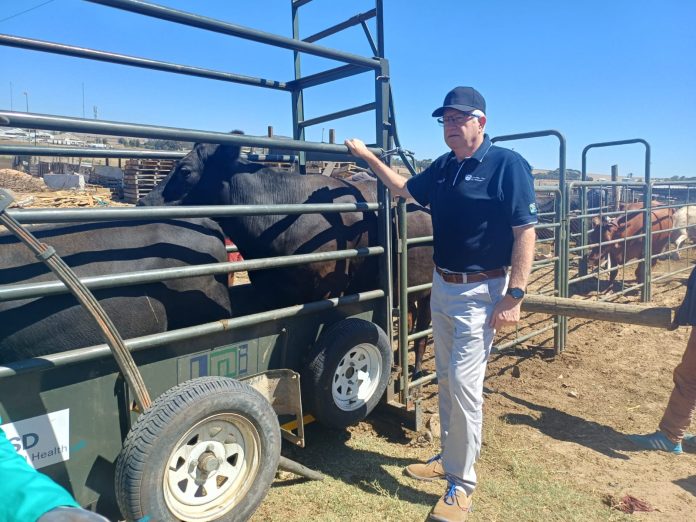
The Western Cape Government has ramped up efforts to vaccinate the entire cattle herd in the province against foot-and-mouth (FMD) disease, after a national disaster classification was confirmed during President Cyril Ramaphosa’s State of the Nation Address on 12 February.
On Sunday, 15 February, Premier Alan Winde visited a farm in Fisantekraal, near Durbanville, where 450 heads of cattle were vaccinated. The National Minister of Agriculture, John Steenhuisen, and provincial MEC Ivan Meyer were also in attendance.
Winde says while this herd has shown no signs of FMD infection, it is a proactive step to protect cattle in this area.
He says the provincial government will be receiving 200,000 vaccine doses over the coming weeks and will push to vaccinate all high-risk herds. The province will also request permission to procure its own vaccines.
It comes as South Africa recently resumed the local production of FMD vaccines, for the first time in 20 years.
The vaccinated animals have been tagged for optimal identification, surveillance, and monitoring.
It comes as the Drakenstein Municipality was placed under quarantine following a confirmed Foot-and-Mouth Disease case in Mbekweni, Paarl, in early February. That herd was also vaccinated immediately.
There have also been various localised outbreaks among cattle in Makhaza, Mfuleni, and in the Khayelitsha region.
A dairy farm in Hartenbos, near Mossel Bay, was placed under official quarantine last week, after a case of FMD disease was confirmed there.
Winde has requested regulated FMD permit controls and to move all physical cattle auctions online for 21 days.
The province has set aside R100 million to intensify efforts to deal with FMD, including a 21-point plan which has now been implemented.
The 21-point plan includes movement control, including 24/7 border monitoring, by-law enforcement, and major roadblocks and vehicle monitoring on various roads across 13 municipalities.
The Premier stressed, “This is part of a national crisis. We are working tirelessly to protect jobs and the agricultural economy. If you are transporting livestock or any materials used in the farming of livestock, you must take every precaution.”
Livestock farmers and the public have been urged to follow a few simple rules to prevent the spread of FMD:
- Do not move cattle, sheep, goats, or pigs without a signed health certificate and valid permits.
- Limit visitors to farms, and use disinfectant footbaths and vehicle sprays to ensure they are not carrying the virus on their shoes or tyres.
- Keep newly purchased livestock separate from the main herd for at least 28 days to ensure they are not carrying hidden diseases.
- To call the local state veterinarian immediately if they see animals drooling, limping, or showing sores on their mouths or feet.
- Ensure fences are in good repair to prevent animals from mixing with roaming herds or wildlife.