


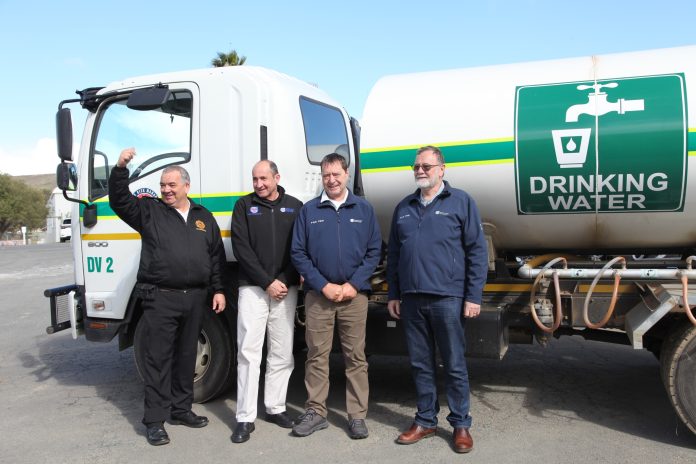
Some progress has been made with the water situation in Knysna.
Western Cape MEC for Local Government, Environmental Affairs and Development Planning, Anton Bredell, said in a statement on Tuesday that the water levels at the Akkerkloof Dam recently increased to 20.9% from 15%. Akkerkloof is the town’s main water source.
ALSO READ: Knysna faces potential “Day Zero” amid water crisis
Further details indicate that the improvement has translated into a more stable short-term water outlook for the town.
According to the Joint Operations Committee (JOC) overseeing the crisis, Knysna’s daily water usage is currently around 10.1 kilolitres per day, which resulted in “a water buffer of 17 days”.
“This is a notable improvement from the 10-day buffer reported just two weeks ago,” the statement read.
Bredell added that operational stability has also contributed to the improved situation. Plumbing teams have repaired dozens of minor leaks, while pump stations across the system are functioning within required specifications. He noted that there were also no major pipe bursts recently reported.
“The Charlsford and Eastford pump stations are currently abstracting water from the Knysna River at a rate of 210 liters per second. The Akkerkloof pump station currently operates at 44 liters per second, while the Glebe Dam pump station is also pumping at 33 liters per second.”
Bredell said he’s pleased with the progress made thus far, but noted that the broader region is still under pressure.
“The entire Southern Cape region remains water-stressed, and current weather forecasts for the Western Cape point to a dry winter ahead,” said Bredell.
In light of this, Bredell noted that efforts to strengthen long-term water management are ongoing. The JOC has committed to installing 1,000 water meters per week to address bypassed meters that have hampered accurate monitoring and control.
“Effective water management in all our towns will be critical in the year ahead. We cannot control the rain, but we have full control over how we manage the water resources at our disposal,” said Bredell.


