


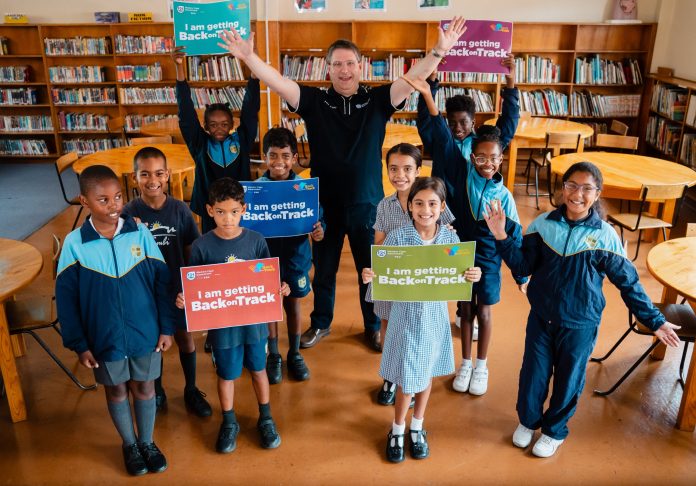
Western Cape Education MEC David Maynier has announced that the province’s Grade 3 learners have achieved their highest-ever results in the annual systemic tests for Mathematics and Language.
Releasing the results on Wednesday, 11 February, Maynier said the improvements mark a significant milestone in the province’s recovery from the learning losses experienced during the Covid-19 pandemic.
Since 2021, the Grade 3 Mathematics pass rate has increased by 17.7 percentage points, rising from 44.3% to 62.0%. Language pass rates have improved by 14.3 percentage points over the same period, climbing from 36.9% to 51.2%.
According to the Western Cape Education Department (WCED), these pass rates now exceed pre-pandemic levels and are the highest recorded since the current format of the systemic tests was introduced.
Maynier attributed the gains to the province’s #BackOnTrack programme, which prioritises strengthening early learning in the foundation phase.
“We have made a massive investment into early learning in the Western Cape, and it is paying off,” he said.
“More children in our province can now read and calculate effectively than ever before, which gives them a better chance of succeeding in higher grades and in their post-school careers.”
A key part of the strategy has been the introduction of a structured language programme. Initially piloted in 50 schools in 2021, the programme was rolled out to all primary schools by 2024. Teachers in Grades 1 to 3 received training in the science of reading, and schools were provided with dedicated teacher and learner support materials.
In addition, the WCED increased the time allocated to Reading and Mathematics during the school day for learners in Grades 1 to 3.
In 2025, more than 91,000 Grade 3 learners wrote the independently administered annual systemic tests. The department says the assessments provide critical data on which skills learners are mastering and where additional support is needed. Schools receive detailed reports to help them adjust their teaching and targeted interventions.
Maynier praised foundation phase teachers for their role in the improved results. “You have shown up in your numbers for additional training and made excellent use of the support we have provided. Thank you for the work that you do every day to ensure that your learners are on the right track,” he said.
Despite the progress, the MEC stressed that more work lies ahead. The WCED plans to expand its early learning focus in 2026 by introducing a structured numeracy programme and strengthening monitoring and evaluation measures across each grade. The language programme will also continue, with further training for novice teachers in the science of reading.
“Working together, we will build a strong foundation for our children here in the Western Cape,” Maynier said.