
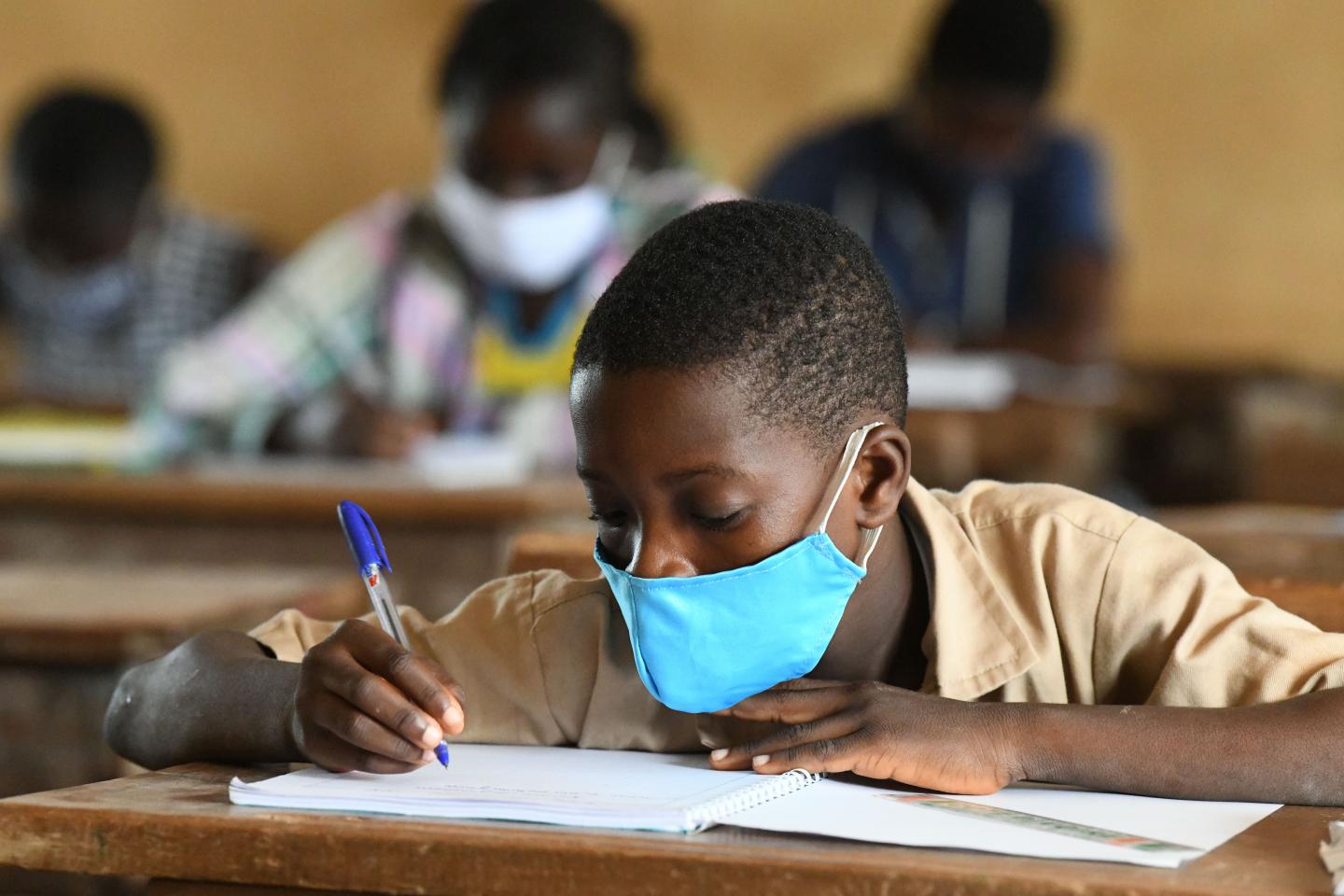
The United Nations Children’s Fund (UNICEF) says the negative impacts of the Covid-19 pandemic will be felt in the education sector for years to come.
The latest report from UNICEF says more school dropouts can be expected in the coming months as at least 23 countries, which are home to over 400-million children of school-going age, are yet to re-open schools on a full-time basis.
UNICEF’s Lienke van de Wiel, spoke to eNCA and says drastic action is needed to assist school kids to regain critical learning skills.
She says there is an urgent need for schools to adjust their learning plans to help children overcome these challenges.
The UNICEF report Are children really learning? features country-level data on the impact of the Covid-19 pandemic and related school closures on children.
The report points out that 147 million children missed more than half of their in-person schooling over the past 2 years. This amounts to 2 trillion hours of lost in-person learning globally.
In addition to data on learning loss, the report points to emerging evidence that shows many children did not return to school when their classrooms reopened.
Data from Liberia show 43% of students in public schools did not return when schools reopened in December 2020. The number of out-of-school children in South Africa tripled from 250,000 to 750,000 between March 2020 and July 2021.
In Uganda, around 1 in 10 schoolchildren did not report back to school in January 2022 after schools were closed for two years. In Malawi, the dropout rate among girls in secondary education increased by 48%, 6.4% to 9.5% between 2020 and 2021. \
In Kenya, a survey of 4,000 adolescents aged 10-19 years found that 16% of girls and 8% of boys did not return when schools reopened.
The report highlights that while out-of-school children suffer the greatest loss, pre-pandemic data from 32 countries and territories show a desperately poor level of learning, a situation that has likely been exacerbated by the scale of learning lost to the pandemic.
In the 32 countries and territories examined, a quarter of Grade 8 schoolchildren – around 14 years old – did not have foundational reading skills, and more than half did not have numeracy skills expected of a Grade 2 student, around 7 years old.
Related articles:
- Everything you need to know about the WCED Budget.
- Local company helps learners access study material via WhatsApp and Facebook Messenger.
- Improvement of broadband infrastructure holds positive benefits for Western Cape schools.
The rising inequality in access to learning means that education risks becoming the greatest divider, not the greatest equalizer. https://t.co/RXUqa3KcT1
— Catherine Russell (@unicefchief) March 30, 2022
Dear teachers, are you struggling with stress during COVID-19?
Here are some tips to help you cope. 👇
— UNICEF (@UNICEF) March 30, 2022