


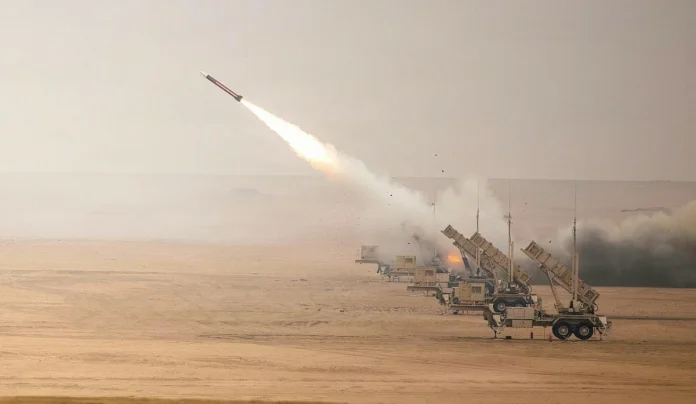
Some South Africans living in the Middle East have shared their experiences amid escalating military hostilities across the region.
ALSO READ: Emergency Contact Numbers for South African Nationals in the Middle East – Smile 90.4FM
This is as President Cyril Ramaphosa issued an urgent plea for de-escalation, insisting that history has shown “there is no military solution to political problems”.
The President’s warning comes as Israel reportedly extends its military operations into Lebanon.
In a statement, President Ramaphosa expressed “deep concern” regarding the rising tensions, noting that the situation poses a threat to international security.
“We urge the international community, including multilateral institutions and regional partners, to redouble efforts aimed at promoting mediation and peaceful resolution. As a nation that has emerged from conflict through dialogue and reconciliation, South Africa remains steadfast in its belief that peace is not only possible, but imperative for the shared future of the Middle East and the world,” said President Ramaphosa.
Despite this, and the multiple deaths that have been reported, some South Africans living in the region report a more nuanced reality. Riaan Swart, a Johannesburg native currently teaching in Baghdad, Iraq, told SmileFM that the recent escalation “hasn’t really affected us in any way, shape or form”.
“This recent escalation of terror and threat and violence and war, if you want, in the Middle East hasn’t really affected Iraq as such, because Iraq is not really involved in any of this, unlike before,” said Swart.
Similarly, Francois Stevens, a teacher from Bloemfontein living in Kuwait, told SmileFM that the atmosphere was reminiscent of the lockdown during the Covid-19 pandemic. He said his work, as a teacher, has shifted online and from home.
Despite an Iranian drone attack on a US military facility in Kuwait, Stevens remains calm, noting that the Kuwait government has everything under control.
“We feel that the authorities have been very proactive in handling the situation. We’ve been prepared, I think, already a month or two in advance with them putting on the sirens in the cities, checking if everything’s working and letting us know what they will sound like when things do happen. And in fact, when it did happen, it played out exactly as they anticipated. So we are forewarned, we know where to go to if it really escalates, which it hasn’t so far,” said Stevens.
However, humanitarian groups are less optimistic. Yusuf Mohamed, CEO of Islamic Relief South Africa, warned that the conflict risks “mass civilian displacement and further strain on already fragile humanitarian systems”.
He stressed that the cost of these attacks “will not be borne by governments, but by ordinary families who are already living on the margins of survival”.
Meanwhile, the conflict in the Middle East has resulted in a rise in global oil prices. According to Reuters, Brent Crude oil jumped about 10% on Sunday, as analysts suspect oil prices could climb as high as $100 a barrel.
This is as South Africans await news from the Mineral and Petroleum Resources Department on fuel price adjustments for March.


