


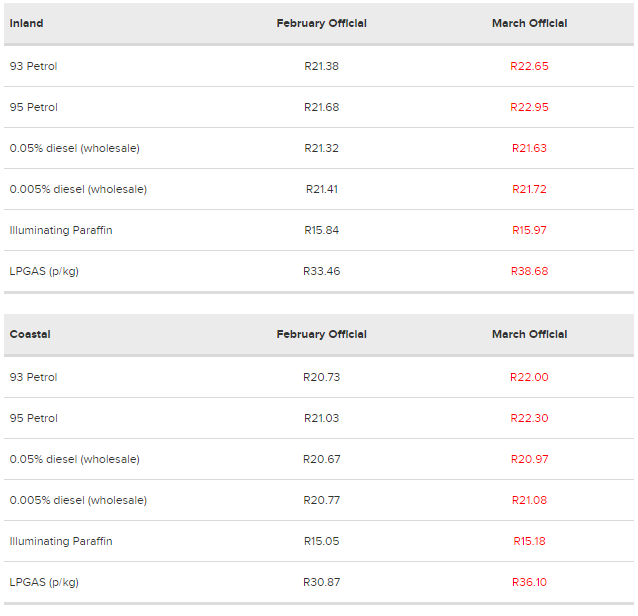
Motorists need to watch their petrol usage, and budget wisely, as fuel prices are expected to increase tonight. The increase is due to a weaker rand and a higher price of Brent crude oil, according to the Department of Mineral Resources and Energy (DMRE). The Department published the official fuel price adjustments that will come into effect from midnight, 1 March 2023:
- Both grades of petrol 93 and 95 increases by R1.27 per litre
- Diesel (0.05%) increases by 30 cents per litre
- Diesel (0.005%) increases by 31 cents per litre
- Illuminating paraffin (wholesale) 13 cents per litre
- LP gas increase by R5.22 per kilogram
READ MORE: Grey listing an ‘opportunity’ in fight against financial crimes – Ramaphosa
Spokesperson for the DMRE, Robert Maake, says there is several factors that contribute to the petrol price increase:
Petrol prices are increasing at a higher rate than diesel because of lower inventory levels globally and closures of refineries in some countries for seasonal maintenance. The impact of the EU sanctions on diesel imports from Russia was already priced in
AA spokesperson Layton Beard says he expected the fuel price increase given data from the Central Energy Fund. The AA spoke to The Mercury this week:
The increases to the petrol price are big and will have a negative impact on household budgets. A 50 litre tank of fuel, for instance, will now cost R61 more to fill, or R244 if filled four times a month, which is significant.
The AA is calling on consumers to watch their fuel usage and to carefully budget for it, says Beard:
The cumulative effect on personal finances will be a further reduction of disposable incomes which will be exacerbated by increases to goods and services, which must recoup the higher fuel input costs
READ MORE: City rates relief for lower and middle income ratepayers
Dr Sheunesu Zhou, an economist from the University of Zululand, says the fuel increase will happen, reports IOL:
The main driver is the international markets…unfortunately being an emerging economy when prices go up internationally it affects us. The rand has also been considerably weaker. The consumer is already paying more with the rising cost of living and this will undoubtedly filter through and make the consumer fork out even more money. The unfortunate thing is that salaries don’t increase at the same rate that prices go up
Maake adds that the main reasons for the price adjustments is the increase of Brent crude oil and a weakening rand, reports The Citizen:
The average Brent Crude oil price decreased slightly from 83.00 US Dollars (USD) per barrel to 82.14 USD per barrel during the period under review. The main contributing factors is the weekly report that showed that crude oil inventories continued to rise for the ninth month in a row
READ MORE: South Africa grey listed by the Financial Action Task Force