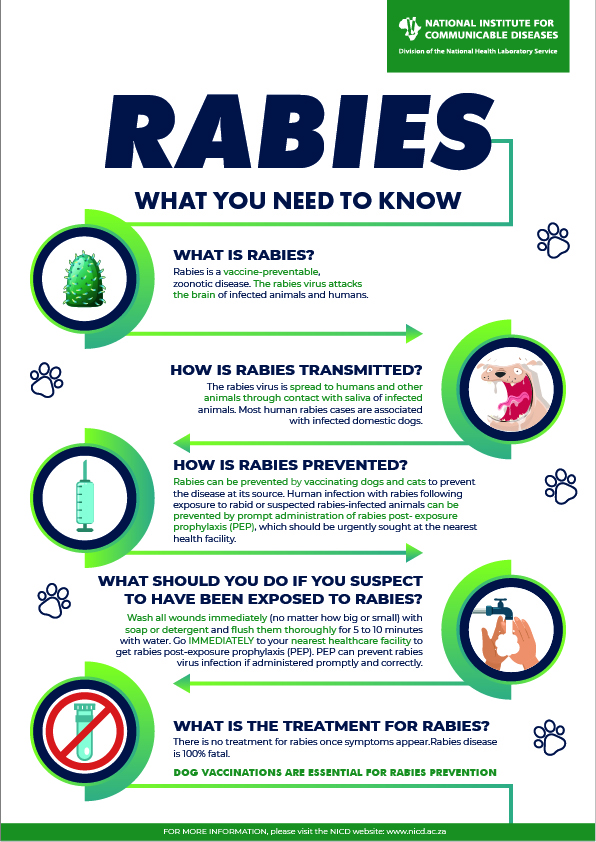


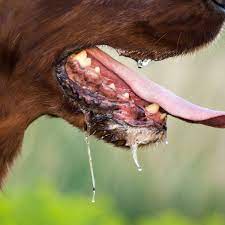
The last few months has seen an increase in the number of human rabies cases.
This is particularly worrying as with a 99.9% fatality rate, rabies is one of the deadliest diseases on earth.
As of 23 November, South Africa has confirmed 17 human rabies cases, equating to over 100% increase compared to the 7 cases reported in 2020.
Unlike most other vaccine-preventable diseases, rabies vaccines can be given for both pre- and post-exposure to rabies.
Medical Scientist at the NICD Dr Jacqueline Weyer says the biggest misconception the public appears to have is that “Rabies is not my problem!”
Dr Weyer says the situation in the Western Cape illustrated this perfectly:
“Dog rabies has not been reported in the Western Cape for decades, but due to raging epidemics in other parts of the country, and low dog rabies vaccination coverage, the disease spilled over from the affected areas in the country to parts of the Western Cape. You just need one rabid dog to come into contact with an unvaccinated dog to set off a new outbreak.”
While the increase in the number of dog rabies cases has hit the Eastern Cape and Kwa-Zulu Natal hardest, to-date outbreaks have also been reported in Limpopo and Gauteng. The Eastern Cape dog rabies outbreak is disastrous and one of the largest dog rabies outbreaks we have seen in South Africa for decades.
WHAT TO EXPECT:
Early symptoms may be very similar to those of the flu including general weakness or discomfort, fever, or headache, as well as pain and tingling, pricking, or burning sensation at the wound site. “Rabies is fatal if not treated before symptoms appear. The good news is that with timeous PEP the infection can be prevented in almost 100% of exposed people.”
WHAT TO DO:
If you’ve been bitten or scratched by a potentially rabid animal it’s important to do the following:
- Wash the wound thoroughly with soap and running water for at least 15 minutes.
- Apply a disinfectant to prevent secondary infection.
- Seek urgent medical attention. You need to start post-exposure prophylaxis as soon as possible.
“Modern vaccines are the only way to prevent the onset of rabies after exposure and even if you have already had pre-exposure prophylaxis, you still need further treatment.”
If you or someone you know has possibly been exposed to rabies, go directly to your doctor or seek urgent assistance at your nearest clinic.
For more information visit:The NICD website: www.nicd.ac.za/rabiesThe Global Alliance for Rabies Control (GARC) website: https://rabiesalliance.org