


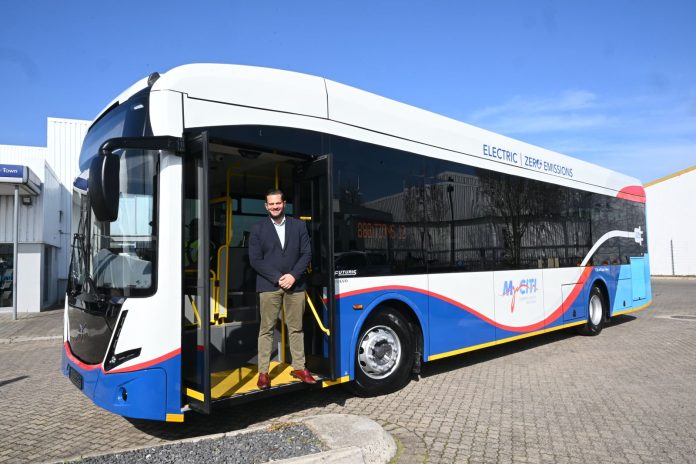
Cape Town has welcomed its first battery-electric MyCiTi bus, marking a major step towards cleaner and more sustainable public transport.
The prototype bus arrived from Johannesburg, where the bodies of the new MyCiTi electric bus fleet are being manufactured. It will now undergo extensive testing on routes across the City to assess its performance on steep hills, highways, in heavy traffic and over longer distances.
The City says the pilot will evaluate battery performance, energy consumption, charging times, passenger loading and how Cape Town’s climate affects the vehicle.
Mayoral Committee Member for Urban Mobility, Councillor Rob Quintas, says the arrival of the electric bus is an important milestone.
“The MyCiTi service is now 16 years old. The arrival of our first e-bus is a major highlight in this journey and supports our transition towards a cleaner, more sustainable public transport system that is not only more cost-effective to operate and maintain, but more resilient.”
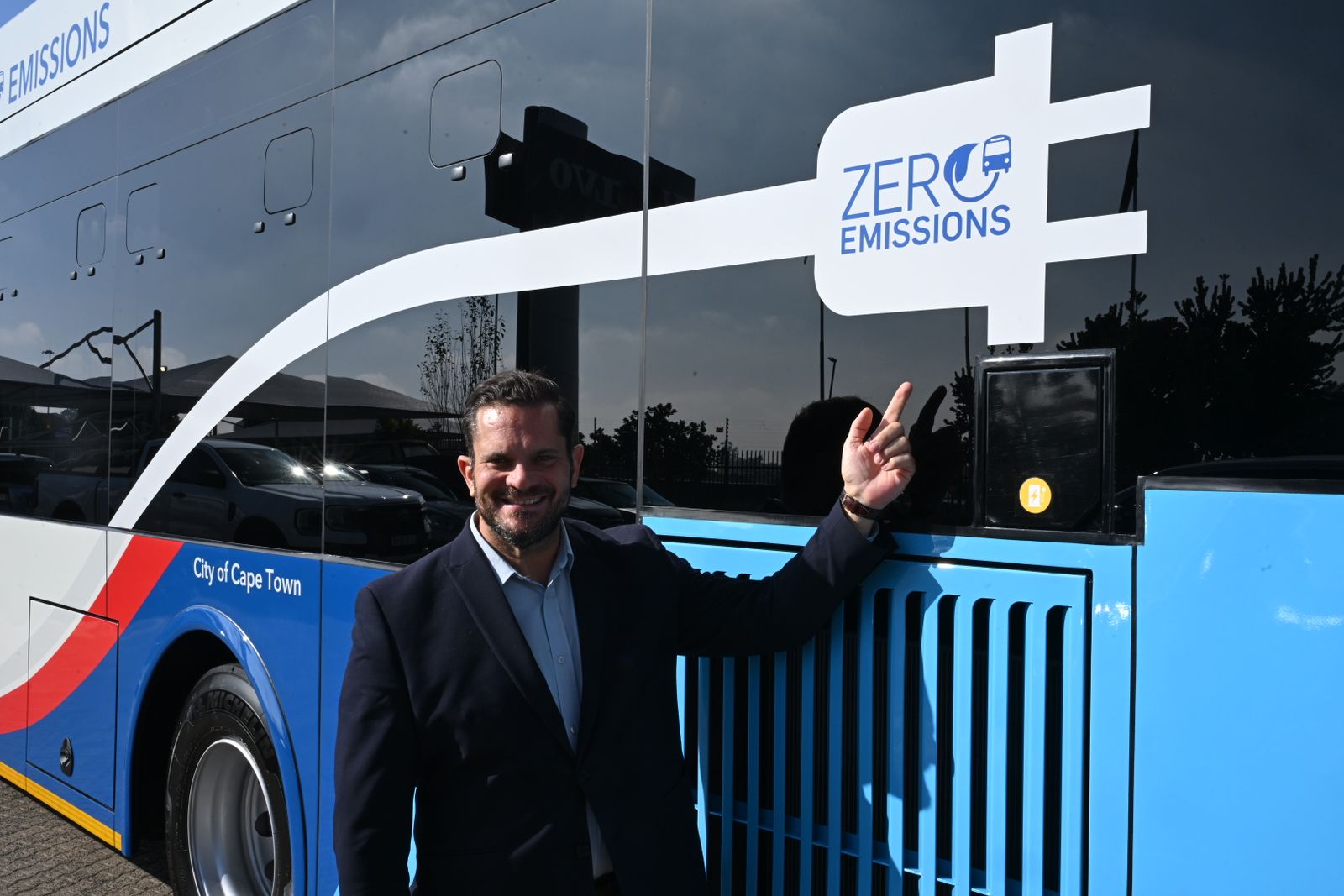
Quintas says the City is eager to see how the bus performs under local conditions.
“Some countries operating e-buses have noted a reduction of up to 70% in operating costs. We are eager to see how this bus performs in our local environment in coming weeks, in particular as we are operating in an increasingly volatile global energy market.”
The City plans to take delivery of 38 battery-electric buses during the current calendar year. The fleet will be deployed as part of the expansion of the MyCiTi service between Mitchells Plain and Khayelitsha, Wynberg and Claremont, as well as on routes in the Cape Town CBD.
If testing is successful, the first electric buses are expected to begin carrying passengers from 1 July 2027.
Quintas says the pilot will help the City prepare for the transition to electric public transport.
“The research will help us understand how the electric buses will perform in our local context, and what challenges we need to consider before we roll out the e-bus fleet in 2027.”