
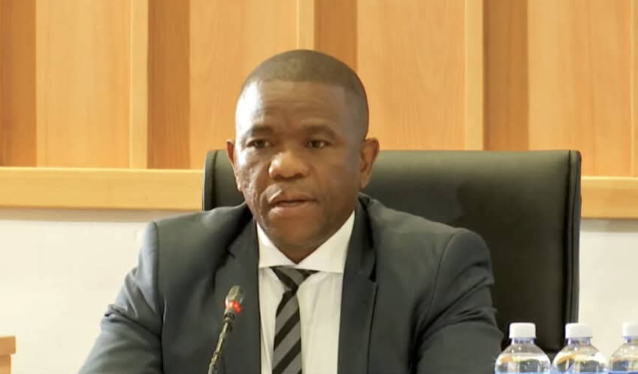
As the Judicial Commission of Inquiry into Criminality, Political Interference, and Corruption in the Criminal Justice System, better known as the Madlanga Commission, continues its work, parts of the inquiry will now be held in camera to protect witness identities and safeguard ongoing investigations.
Evidence leaders brought the application for certain testimony to be delivered exclusively before commissioners and evidence leaders. However, media houses News24 and Daily Maverick argued that closing the hearings to the public would undermine transparency and harm the integrity of the Commission’s work.
On Tuesday morning, 14 October, it was announced that the next witness will testify remotely. Their identity will remain confidential, and their evidence will be relayed through an intermediary.
Over the past month, the Commission has heard explosive testimony revealing alleged criminal infiltration, political interference, and deep-seated corruption within South Africa’s criminal justice system.
KwaZulu-Natal Police Commissioner Lieutenant-General Nhlanhla Mkhwanazi opened the hearings in mid-September, alleging that organised crime syndicates, including drug cartels, have penetrated law enforcement, intelligence, and prosecutorial structures.
WATCH: Commission on corruption in the criminal justice system gets underway
Mkhwanazi accused Police Minister Senzo Mchunu of interfering in police operations, including the controversial disbanding of the Political Killings Task Team (PKTT).
He also named several individuals, among them MPs Fadiel Adams and Dianne Kohler Barnard, and underworld figure Vusimuzi “Cat” Matlala, alleging that they were linked to breaches of protocol, misuse of state resources, and leaks of classified intelligence.
National Police Commissioner General Fannie Masemola and Major-General Petronella van Rooyen from SAPS Legal Services later confirmed that the minister had no legal authority to disband the PKTT.
Masemola testified that the directive exceeded ministerial powers, while van Rooyen said it violated established governance procedures.
Further evidence from Crime Intelligence head Lieutenant-General Dumisani Khumalo is also still expected, with reports indicating that this will be held in-camera due to the sensitivity of ongoing investigations. Khumalo is expected to detail how organised crime infiltrated state intelligence structures and compromised counterintelligence operations.
The Commission has also heard from Elaine Harrison, Director of Public Prosecutions in KwaZulu-Natal, about prosecutorial challenges linked to alleged interference and intimidation.
Across testimonies, a consistent picture has emerged: political meddling, the capture of police structures by criminal interests, and a pervasive lack of accountability within South Africa’s justice system.