


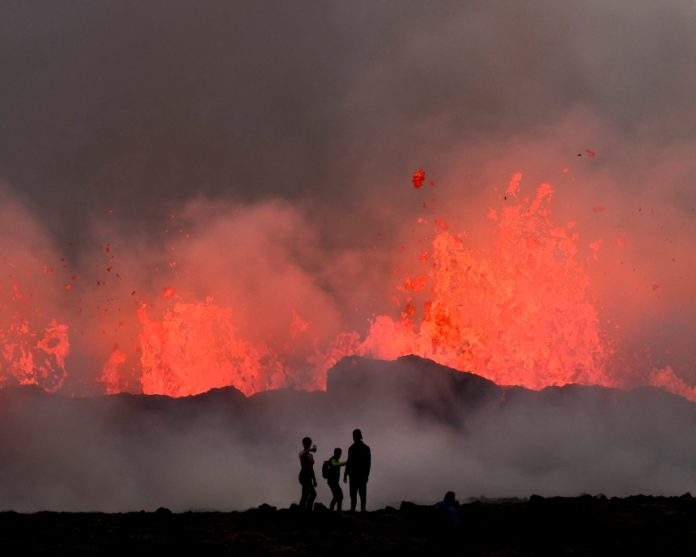
A volcano has erupted on the Reykjanes Peninsula in Iceland. The country’s meteorological office says the eruption marks the third time – in two years – that lava has spewed out of the area. The volcano which lies near – 30 kilometres – the capital Reykjavik.
RELATED: Snow way! South Africans enjoy winter wonderland
Known broadly as the Fagradalsfjall volcano, it is situated close to Iceland’s main Keflavik Airport. Luckily, recent eruptions have not affected air travel.
Experts warned of possible eruptions after they detected hundred of small earthquakes, weeks prior. Saying the activity signaled that the magma below ground was moving, and an eruption was imminent.
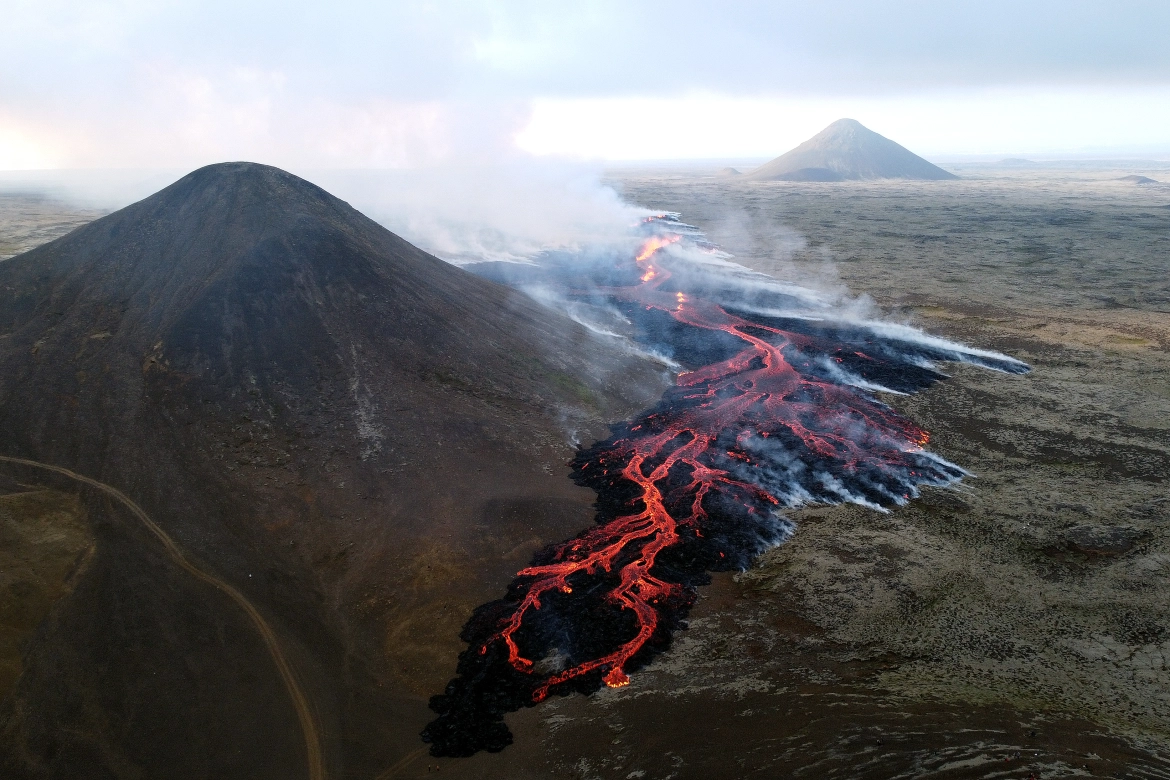
The first being on March 19, 2021, in the Geldingadalur valley and lasted six months. The second eruption occurred on August 3, 2022, in the Meradalir valley, lasting three weeks. It is interesting to note that prior to the 2021 eruption, the region remained dormant for eight centuries. However, experts believe this new cycle of increased activity could sustain for several years.
RELATED: 14 dead in Brazil apartment building collapse
Fagradalsfjall: ‘Orange like the sun’
Local media footage showed massive clouds of grey smoke rising from the ground into the sky. A substantial amount of lava could be seen flowing from Fagradalsfjall, which curious onlookers says burned “orange like the sun”.
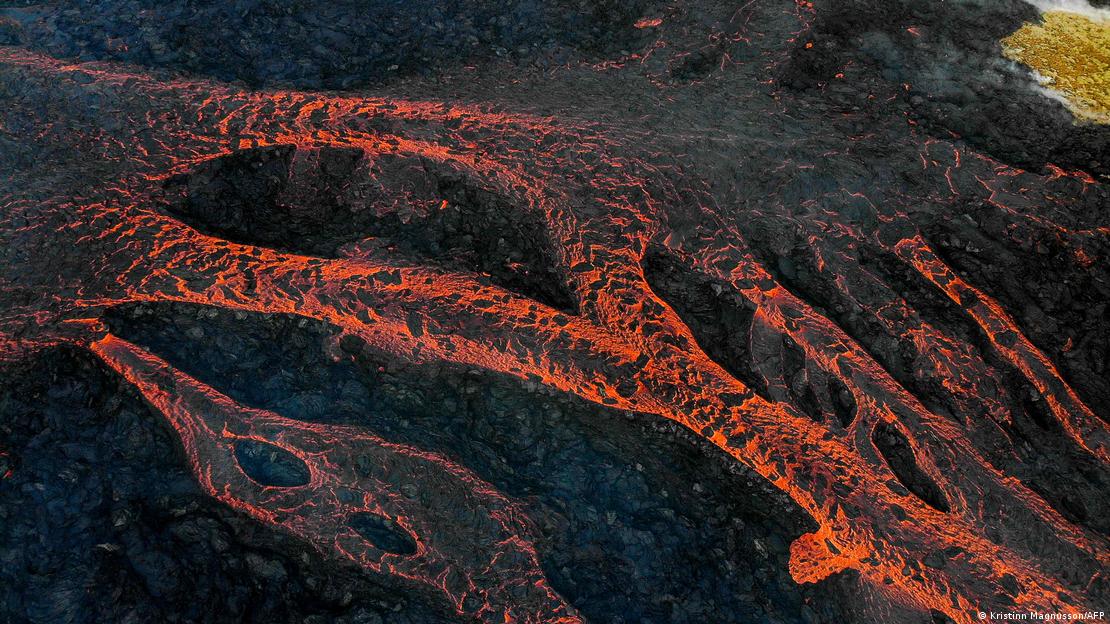
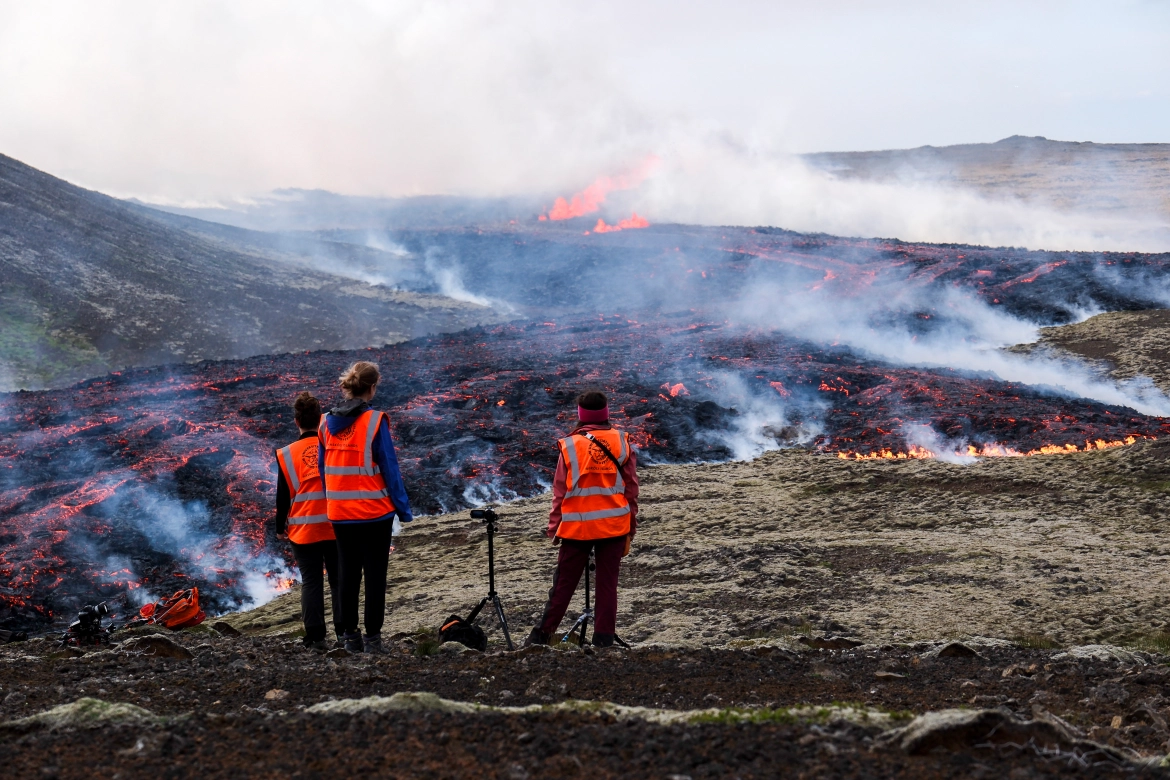
Iceland’s authorities advised the public against visiting the site, which is located in ‘difficult’ terrain, without a road connection. However, this did not stop intrigued visitors from the lure of the bright lava. Local media also showed cars pulled over, with people taking pictures.
Iceland is home to 33 active volcanic systems, the highest number in Europe. It experiences an eruption every five years on average.
Volcanologists say Fagradalsfjall’s eruption remains at a “low intensity” and is slowing. This update came on Tuesday, hours after officials warned the volcano was spewing out “life-threatening toxic gas“.
But they have noted that its flow is significantly more powerful than the previous two eruptions.
RELATED: Over 950 migrants died trying to reach Spain
One of the country’s most dangerous volcanoes is Katla. It stands near Iceland’s south coast. It last erupted in 1918, but has sustained an unusually long silence: suggesting an imminent reawakening.