

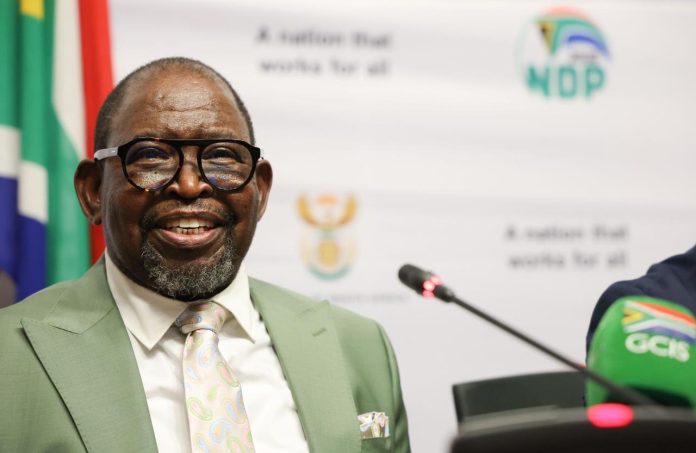
The Minister of Finance Enoch Godongwana today tabled the 2025 Medium-Term Budget Policy Statement (MTBPS), outlining a package of reforms aimed at anchoring inflation, restoring fiscal stability, and driving inclusive economic growth.
The statement marks a decisive shift toward price stability, infrastructure expansion, and structural reform under the theme “Choosing Growth, Stability and Reform.”
Real GDP growth is forecast at 1.2 % for 2025, more than double the growth in 2024. Real GDP growth is expected to average 1.8 per cent between 2026 and 2028.
Key Highlights from the 2025 MTBPS
1. New Inflation Target
South Africa adopts a new inflation target of 3% with a 1-percentage-point tolerance band, replacing the previous 3–6% range. This joint decision by the Minister of Finance and the South African Reserve Bank aims to strengthen price stability, better anchor inflation expectations, and align South Africa with international best practice. A lower target is expected to gradually reduce inflation, creating room for lower interest rates, which in turn support household spending, investment, and job creation.
2. Fiscal Consolidation and Debt Stabilisation
Government debt is projected to stabilise at 77.9% of GDP in 2025/26, marking the first halt in debt growth since 2008. A primary budget surplus of R68.5 billion (0.9% of GDP) is expected this year, rising to R224 billion by 2028/29. The Minister said the improved position reflects stronger revenue collection and continued spending discipline.
3. Revenue Strength and Possible Tax Relief
Tax revenue is expected to exceed estimates by R19.3 billion, driven by higher household spending and corporate earnings. If current trends persist, the government may withdraw the planned R20 billion tax increases proposed for the 2026 Budget. That decision will only be made ahead of the February budget.
4. Combating Illicit Trade
The South African Revenue Service (SARS) has intensified action against illicit trade in cigarettes, alcohol and fuel, suspending non-compliant licences and partnering with the Financial Intelligence Centre. This crackdown is expected to recover up to R40 billion in lost annual revenue.
5. Infrastructure and Private Investment Reforms
A new Infrastructure Finance and Implementation Support Agency will be launched by March 2026 to drive delivery and unlock investment. National Treasury will also issue a R15 billion infrastructure bond to attract private capital and simplify public-private partnerships (PPPs).
6. Energy, Water and Logistics Reforms
A R2 billion Credit Guarantee Vehicle will support investment in electricity transmission and energy security. The National Water Resources Infrastructure Agency and Water Services Amendment Bill will take effect in April 2026. Eleven private train operators have been approved for rail access, and the Durban Pier 2 terminal has been opened to private partners. Together, these reforms aim to impro
7. Operation Vulindlela Progress
Load-shedding has eased as 2,200 MW of renewable and battery projects advance, and Eskom’s Kusile Unit 6 adds another 800 MW to the grid. The reforms continue to improve energy reliability and attract new generation investment.
8. Transparency and Governance
The National Treasury has launched a Procurement Payments Dashboard on the eTender portal to enhance transparency in government spending. Meanwhile, audits have identified over 9,000 “ghost workers” across departments, saving approximately R3.5 billion annually.
9. Targeted and Responsible Savings (TARS)
A total of R6.7 billion will be saved over the medium term by scaling down underperforming programmes, ensuring funds are redirected to high-impact priorities.
10. Municipal Reforms and Service Delivery
Pilot projects in Mpumalanga municipalities will stabilise water and electricity services, while R19.3 billion has been reallocated to strengthen urban utilities and improve billing systems.
11. The Covid-19 SRD Grant has been extended to March 2027.
For more on the 2025 MTBPS, visit Treasury’s website.