16.5 C
Cape Town
Saturday, July 4, 2026
Home Blog Page 88

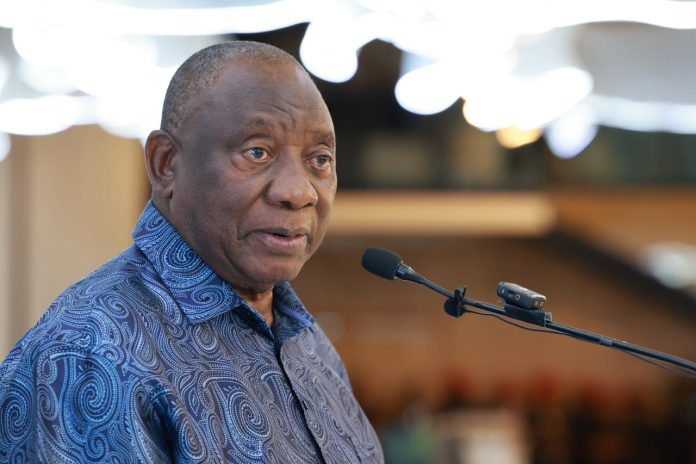
Calls growing for President Ramaphosa to step down

president
IMAGE: GCIS


The President is facing growing political pressure, with calls for his resignation mounting.


 This follows last week’s Constitutional Court decision that prima facie evidence of alleged wrongdoing by the president in the Phala Phala scandal warrants an investigation, contrary to what the National Assembly had decided in 2022. 


READ MORE: ConCourt orders Parliament to revisit Ramaphosa impeachment process over Phala Phala – Smile 90.4FM


Since that ruling, the EFF, which had brought the case to court with the ATM party, wrote to the National Assembly Speaker Thoko Didiza requesting that the Section 89 Impeachment Committee begin its work.


“In light of the judgment, we hereby demand that your office urgently initiate the necessary processes to refer the matter to the Section 89 Impeachment Committee of the National Assembly in compliance with the order and reasoning of the Constitutional Court,” read the party’s letter dated 8 May to Didiza.


The party warned that it would take the matter back to court if there is no clear indication of what the Speaker’s next steps would be in this regard.


Meanwhile, the MK Party and ATM have both expressed their intention to file a motion of no confidence in the president.


The MK Party requested that the motion take place by secret ballot, to protect MPs, “to ensure they are able to exercise their responsibilities freely and effectively”.


“It is only appropriate that we demand his resignation and impeachment. The MK Party stands ready to debate this motion at the earliest possible opportunity,” read the party’s statement.


The ATM has also noted that it has lost its confidence in the president and called on not only him but the rest of his Cabinet to resign.


“The House further resolves that the continued tenure of President Cyril Ramaphosa is incompatible with the constitutional principles of accountability, transparency and the rule of law,” read the 8 May letter by the ATM’s Vuyo Zungula to the speaker.


The Presidency said President Ramaphosa respects the court’s ruling, and “reaffirms his commitment to the Constitution, the independence of the judiciary and the rule of law”.


“President Ramaphosa has been consistent in providing his full assistance to the various enquiries into this matter. President Ramaphosa maintains that no person is above the law and that any allegations should be subjected to due process without fear, favour or prejudice. The President calls on all South Africans to respect the Constitutional Court judgment and all judicial institutions,”  read the Presidency’s statement.

Severe weather: Some schools to be closed on Monday 11 May

schools


The Western Cape Education Department (WCED) has confirmed that schools in parts of the Cape Winelands Education District, as well as selected schools in the Eden and Central Karoo District, will be closed on Monday, 11 May 2026, due to severe weather conditions and storm-related access problems.

The closures follow consultations between the WCED, the Provincial Disaster Management Centre and the South African Weather Service.

Cape Winelands Education District


Circuit 3


  • Alfred Stamper Public Primary School
  • Bet El Primêre Skool
  • Bonne Esperance Primêre Skool
  • Botha’s Halte NGK Primêre Skool
  • Brandwacht NGK Primêre Skool
  • Breerivier Laerskool
  • De Doorns Primary School
  • De Kruine Sekondêr
  • F.J. Conradie Primêre Skool
  • Glen Heatlie AME Primêre Skool
  • H.F Van Cutsem High School
  • Hexvallei Hoërskool
  • Hexvallei Sekondêr
  • Huguenoot VGK Primêre Skool
  • Orchard Primêre Skool
  • P.J.B. Cona Primary School
  • Petra Gedenk Primêre Skool
  • Rabie Primêre Skool
  • Sandhills NGK Primêre Skool
  • Sibabalwe Primary School
  • Siyafuneka Primary School
  • Steenvliet Primêre Skool
  • Touwsrivier Laerskool
  • Vinkrivier Primêre Skool
  • Vusisizwe Secondary School
  • Wysersdrift Primêre Skool
  • Zwelethemba High School

Circuit 4


  • Avian Park Primêre Skool
  • Breede Valley School of Skills
  • Breërivier Hoërskool
  • De La Bat Skool
  • De Tuinen Primêre Skool
  • Drostdy HTS
  • Eden Skool
  • Esselenpark Primêre Skool
  • Esselenpark Sekondêr
  • Goudini Bad NGK Primêre Skool
  • Goudini Hoërskool
  • Hexpark Primêre Skool
  • Hugo Naude Kunssentrum
  • Langerugskool
  • Lorraine NGK Primêre Skool
  • Montana Hoërskool
  • Pionier Skool
  • Rawsonville Primêre Skool
  • Riverview Primêre Skool
  • Roodewal Primêre Skool
  • Slanghoek NGK Primêre Skool
  • Somerset High School
  • Victoriapark Primary School
  • Weltevrede NGK Primêre Skool (Worcester)
  • Winelands Primary
  • Worcester Gimnasium
  • Worcester Laerskool
  • Worcester Moslem Primêr
  • Worcester NGK Oefen Primêre Skool
  • Worcester RK Primary School
  • Worcester School of Skills
  • Worcester Sekondêr
  • Worcester Noord Primêre Skool
  • Worcester Oos Laerskool

Circuit 5


  • Achtertuin AME Primêre Skool
  • Agterwitzenberg VGK Primêre Skool
  • Bella Vista Hoërskool
  • Bella Vista Primêre Skool
  • Boplaas NGK Primêre Skool
  • Boy Muller Primêre Skool
  • Britsüm NGK Primêre Skool
  • Ceres Primêre Skool
  • Ceres Sekondêr
  • Charlie Hofmeyr Hoërskool
  • De Meul NGK Primêre Skool
  • Die Eike VGK Primêre Skool
  • Driefontein NGK Primêre Skool
  • Ezelfontein NGK Primêre Skool
  • F.D. Conradie Laerskool
  • Fairfield NGK Primêre Skool
  • Gericke Laerskool
  • Iingcinga Zethu Secondary School
  • Koelfontein NGK Primêre Skool
  • Koue Bokkeveld Laerskool
  • Kromlin Primêre Skool
  • Laastedrif NGK Primêre Skool
  • Matjiesrivier NGK Primêre Skool
  • Mooi Uitsig Primêre Skool
  • Morrisdale Primêre Skool
  • Nduli Primary School
  • Northridge NGK Primêre Skool
  • Paardekloof NGK Primêre Skool
  • Piet Hugo Gedenk NGK Primêre Skool
  • Rietfontein NGK Primêre Skool (Worc)
  • Skurweberg Sekondêre Skool
  • St. Mark’s Primêre Skool (Worc)
  • Tandfontein NGK Primêre Skool
  • Voorsorg NGK Primêre Skool
  • Wanganella NGK Primêre Skool
  • Welgemoed NGK Primêre Skool
  • Welvaart NGK Primêre Skool

Circuit 6


  • Bakerville Primêre Skool
  • Bergrivier NGK Primêre Skool
  • Bergrivier Sekondêr
  • Drostdy SSKV Primêre Skool
  • Errie Moller NGK Primêre Skool
  • Groenberg NGK Primêre Skool
  • Hillcrest Primêre Skool
  • La Plaisante NGK Primêre Skool
  • Laerskool Waveren
  • Lingomso Primary School
  • Montrouge VGK Primêre Skool
  • Rondeheuwel Primêre Skool
  • Roodezandt Sekondêr
  • Saron Primêre Skool
  • Soetendal NGK Primêre Skool
  • St. Albans Primêre Skool
  • Steinthal Vaardigheidskool
  • Tulbagh Hoërskool
  • Twee Jonge Gezellen VGK Primêre Skool
  • W.F. Loots Primary School
  • Wagenmakersvallei NGK Primêre Skool
  • Witzenberg Primêre Skool
  • Wolseley Laerskool
  • Wolseley Sekondêr

Eden and Central Karoo Education District


Circuit 1


  • Goedgegun VGK PS

Circuit 5


  • De Jager VGK PS
  • Grootkraal UCC PS
  • Lategansvlei SSKV PS

Circuit 6


  • Britsevlakte NGK PS
  • Mooi Uitsig PS No. 2
  • Rooiheuwel VGK PS

Circuit 7


  • Klaarstroom PS

Circuit 8


  • Geelhoutboom VGK PS
  • Hoogekraal SSKV PS
  • Kommandantsdrift SSKV PS

The WCED says all other schools in the province are expected to remain open unless approval for closure has been granted on a case-by-case basis.

Authorities are continuing to monitor weather conditions closely, with all schools currently expected to reopen on Tuesday, 12 May 2026.


Severe Weather classified a National Disaster

western cape
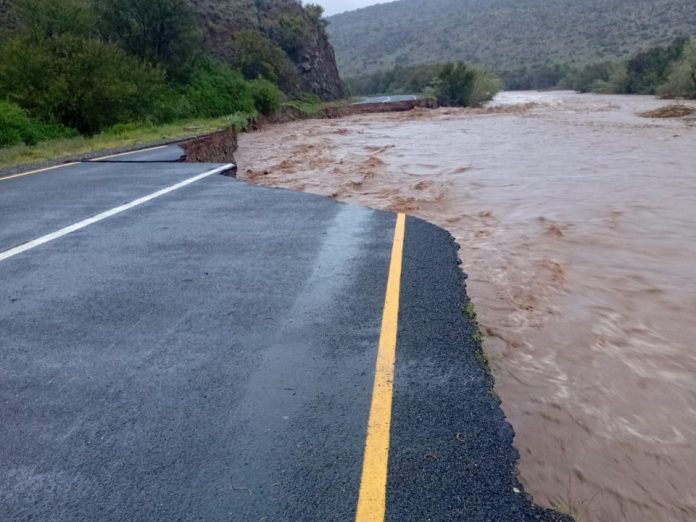
The Meiringspoort Pass has suffered extensive damage due to heavy rainfall washing away part of the road.


The Head of Disaster Management in the Western Cape, Colin Deiner, has confirmed that the severe weather experienced over large parts of the province and the country since 4 May has been classified as a National Disaster.


Deiner says they received the classification from the National Disaster Risk Management Centre late yesterday, 9 May.


Heavy rainfall, flooding, thunderstorms, damaging winds and snowfall have caused widespread destruction, loss of life, damage to infrastructure and disruption of essential services in parts of the Western Cape, Eastern Cape, Northern Cape, North West, Free State and Mpumalanga.


The Garden Route and the Central Karoo in the Western Cape have borne the brunt of the severe weather in the province.


The Disaster Classification comes amid a Level 8 warning for disruptive rainfall, leading to flooding of roads, bridges and formal and informal settlements, mudslides and danger to life due to fast-flowing rivers over the mountainous regions of the Drakenstein, Stellenbosch, the western parts of the Theewaterskloof, City of Cape Town, Breede Valley and Witzenberg local municipalities from today,  Sunday 10 May, to Tuesday.


There is also an Orange level 6 warning for disruptive rainfall over the West Coast, Cape Winelands, and western parts of the Overberg District from Sunday to Tuesday.


The Disaster Classification means government structures across all spheres can now strengthen their coordinated disaster response, relief and recovery efforts to support affected communities.


Funding can be used to repair infrastructure once damage assessments are concluded.


How far will 800 new posts take Western Cape Health?

health
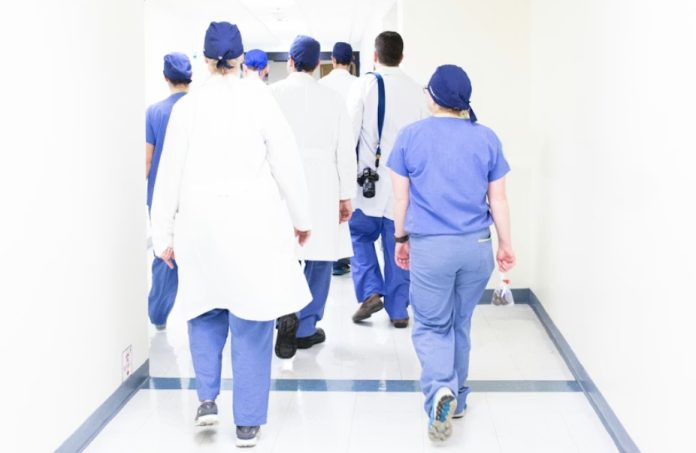
The Western Cape health department is targeting 800 new posts in a rare reprieve from the persistent strain on staff capacity countrywide. (Photo: Unsplash)


By Christina Pitt for Spotlight


The Western Cape health department is ramping up its workforce with 800 new frontline posts. After years of austerity and with long lists of vacancies, questions now turn to how soon the new posts will translate into staff on the ground.


The Western Cape health department is adding more than 800 staff to frontline and support services in a bid to strengthen a health system in which hiring has been stifled by years of austerity.


Health MEC Mireille Wenger announced a recruitment drive, which includes 316 nurses, 124 doctors and 80 emergency medical personnel. For medical workers to have more time at their patients’ bedsides, she said this plan also targets 38 allied health professionals, such as physiotherapists and dieticians, alongside 278 administrative and management staff.


As it stands, more than 33 000 staff in the province helped patients more than 20 million times in the last year, according to Wenger. For public hospitals and clinics, the news of the new jobs offers some hope that the constant pressure on staff capacity will be relieved.


One example of where the new jobs may make a difference is with surgical backlogs in the province. Of the nearly 100 000 people waiting for surgery in 2025, 87 975 have been waiting for more than a year, while 20 027 have been on the list for more than 60 months.


Some of these people entered the system during the height of the Covid-19 pandemic and have been left in limbo through years of budget cycles and hiring freezes.


The budget paradox


While governance has been poor in most of South Africa’s nine provincial health departments, with corruption and looting in Gauteng being a particular concern, the Western Cape health department has received seven consecutive clean audits, maintained stable leadership and largely avoided controversy.


As part of a total R106.8 billion package over three years, the Western Cape health department’s 2026/27 budget is R34.47 billion, which is a 6.25% increase from last year. When adjusted for inflation, provincial health budgets have been falling for most of the last decade.


This has contributed to constrained hiring budgets and exacerbated staff shortages. The tide finally turned with above-inflation increases in the 2025 and 2026 budgets – although belts remain very tight.


Professor Alex van den Heever, Chair of Social Security Systems Administration and Management Studies at the University of the Witwatersrand, said that the Western Cape’s health department is a relatively well-run machine yet is dogged by underfunding.


Understanding this requires a look at how provincial health departments are funded.


While provincial health departments get some funds via sources such as provincial revenue and conditional grants, most of their funding flows from the province’s slice of the national budget. For the 2026/27 financial year, the country’s nine provinces was allocated R810.5 billion.


How much each province gets is determined by the provincial equitable share formula, which has been under review since 2015. The provincial equitable share formula considers factors, such as the size of the school-aged population and the number of people living in poverty.


Its health component considers factors like the population without medical aid, adjusted for health risk, medical aid membership, and clinic and hospital visits.


Provinces decide how they divide their share of the budget between their provincial departments.


There are however some issues with the provincial equitable share formula.


Firstly, it makes use of certain data from the South African census, which means that the information does not reflect current demographic and service realities, said Van den Heever (the census is conducted only every 10 years).


Secondly, the usefulness of the results from the latest census of 2022 is in question because certain data sets, such as income, mortality, fertility, and employment figures, were missing.


As a result, National Treasury has been unable to fully update its calculations to factor in the census 2022 data, contributing to a lag in how population changes are reflected in budget formulas.


As far as we can tell, National Treasury has relied on datasets updated at different times in the year, such as Stats SA’s mid-year population estimates, allowing it to phase in changes gradually rather than introduce sudden adjustments.


Broadly, Van den Heever said the result is a system forced to pick up the tab for a population the national budget hasn’t yet acknowledged.


Citing an example linked to health, he says the formula ignores patients who travel from other provinces to access specialist care at tertiary hubs like Groote Schuur Hospital in Cape Town.


The claw-back


Some of the vacancies in the Western Cape health department reflect periods when the government cut funding due to broader economic challenges, Doctor Saadiq Kariem, the department’s Chief Operating Officer, told Spotlight.


Indeed, between 2021 and 2024, the province absorbed an R8.4 billion reduction in its budget allocation.


This has forced leadership to make some tough calls, including vacancies for frontline services like health.


Kariem explained: “It was a process of consciously delaying the filling of those posts so that we could make up for the loss in funding. Sometimes we, along with local managers, decided to shift posts from a vacancy to another part of the service platform based on service needs and pressures.”


He added:


“You know, these are heart-wrenching choices because all of those posts are absolutely essential and I know that not filling them will have an impact on the service provision and result in poorer health outcomes. So yes, the austerity measures had a significant impact on the post-filling rate.”


According to the health department’s annual report, 3 737 people left the department’s employment in the 2024/2025 financial year. By the end of March 2025, 2 772 funded posts remained vacant.


Nationally, vacancies among nursing staff are particularly acute. As of 2023, across enrolled, auxiliary, community service, professional, primary healthcare and specialist nurses, there were about 14 000 vacant posts across the country.


Sabelo Ntshanga, Western Cape provincial secretary of the Democratic Nursing Organisation of South Africa, said burnout caused by workload is the main driver of attrition.


“The reality is that it’s not being filled quickly. It takes up to a year sometimes while the demand in the communities remains high,” he said. “Burnout is underreported and when the nurses get sick from burnout, that’s another burden on top of the shortage of staff.”


Overall, while the 800 new posts represent a step in the right direction, it appears to be more about holding the line than an actual growth spurt. As Kariem says, it represents an effort to “claw back” towards a stable staffing baseline while attempting to invest in future service capacity.


The red tape


Things won’t change overnight, though. Wenger noted in her speech that “it will take time to fill these posts”.


Kariem explained that recruitment follows a multi-stage process as vacancies are advertised, followed by shortlisting and interviews. Final appointments then require approval at different levels of the system, depending on the seniority and specialty of the role. “We see delays throughout the process,” he said.


“Once there is the ability to advertise a post, we have to give sufficient time for an advert to run… then for interviews and for permissions to follow.”


This means that even funded posts can remain unfilled for extended periods as they move through administrative and approval processes.


Adding further delays to an already complex process, the National Treasury and the Department of Public Service and Administration (DPSA) advised cost-containment measures in October 2023, which was extended until March 2025. It required additional approvals before recruitment could proceed.


Wenger bemoaned these regulations when it was rolled out. “The DPSA’s recent regulations, intended to slow down recruitment, are doing real harm to large service delivery departments like Health. Staff retire or move on, and yet our system lacks the agility to replace them fast enough. This leaves remaining healthcare workers overburdened, and services strained,” she said.


At the same time, not all vacancies can be filled due to shortages of suitably qualified candidates, particularly specialist nurses. Kariem explained that this in part reflects longer-term gaps in investment in postgraduate training. He said the department is using recent budget increases to strengthen human resources information systems to better identify skills gaps and fill vacancies.


These staffing pressures also affect training and retention. Ntshanga said they limit the system’s ability to release nurses for professional development, constraining career progression and contributing to low morale.


At Groote Schuur Hospital, the department noted that nursing staff shortages have affected multiple units across the hospital in 2024/25, contributing to reduced service capacity.


For Ntshanga, the new posts are a small drop in a very large bucket. “As much as it is a good deed from the department, it doesn’t come close to what we need on the shop floor,” he said.


This article was first published by Spotlight – health journalism in the public interest. Sign up for the Spotlight newsletter.

Vusimuzi Matlala and Co-Accused to Stand Trial in Johannesburg High Court in July

Image: Screenshot


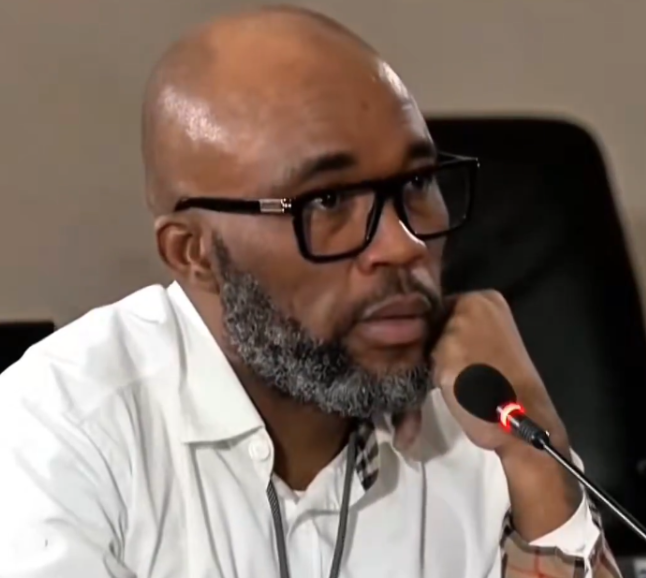
Controversial businessman Vusimuzi “Cat” Matlala and four co-accused are scheduled to stand trial in the Johannesburg High Court from 20 July, facing a range of serious charges linked to alleged organised violent incidents spanning several years.


The group faces 25 charges in total, including multiple counts of attempted murder. The charges relate to a series of alleged shooting incidents that reportedly took place between 2022 and 2024.


According to the National Prosecuting Authority (NPA), the case is centred on what is described as organised and coordinated attacks.


Prosecutors allege that the incidents form part of a broader pattern of planned violence, although full details of the individual allegations are expected to emerge during the trial.


Ahead of the scheduled court date, the defence team is reportedly contesting access to key evidence that the prosecution intends to rely on during proceedings.

error: Content is protected !!