
13.9 C
Cape Town
Sunday, July 12, 2026
Home Blog Page 227

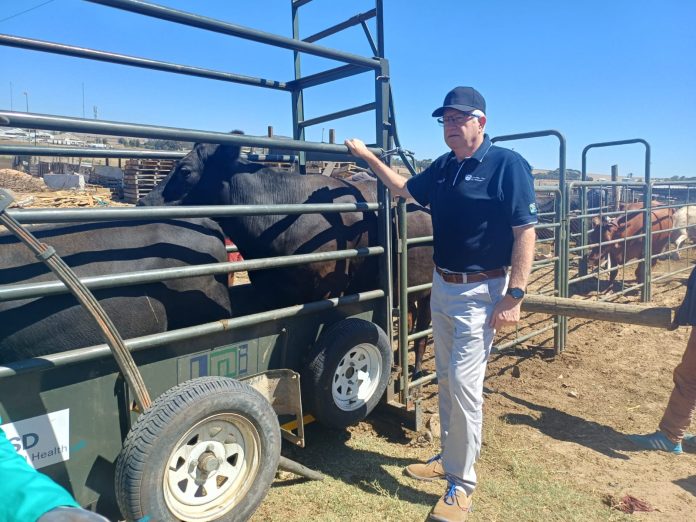
Mass FMD Vaccination Drive Underway in the Western Cape

fmd


The Western Cape Government has ramped up efforts to vaccinate the entire cattle herd in the province against foot-and-mouth (FMD) disease, after a national disaster classification was confirmed during President Cyril Ramaphosa’s State of the Nation Address on 12 February.


On Sunday, 15 February, Premier Alan Winde visited a farm in Fisantekraal, near Durbanville, where 450 heads of cattle were vaccinated. The National Minister of Agriculture, John Steenhuisen, and provincial MEC Ivan Meyer were also in attendance.


Winde says while this herd has shown no signs of FMD infection, it is a proactive step to protect cattle in this area.


He says the provincial government will be receiving 200,000 vaccine doses over the coming weeks and will push to vaccinate all high-risk herds. The province will also request permission to procure its own vaccines.


It comes as South Africa recently resumed the local production of FMD vaccines, for the first time in 20 years.


The vaccinated animals have been tagged for optimal identification, surveillance, and monitoring.


It comes as the Drakenstein Municipality was placed under quarantine following a confirmed Foot-and-Mouth Disease case in Mbekweni, Paarl, in early February. That herd was also vaccinated immediately.


There have also been various localised outbreaks among cattle in Makhaza, Mfuleni, and in the Khayelitsha region.


A dairy farm in Hartenbos, near Mossel Bay, was placed under official quarantine last week, after a case of FMD disease was confirmed there.


Winde has requested regulated FMD permit controls and to move all physical cattle auctions online for 21 days.


The province has set aside R100 million to intensify efforts to deal with FMD, including a 21-point plan which has now been implemented.


The 21-point plan includes movement control, including 24/7 border monitoring, by-law enforcement, and major roadblocks and vehicle monitoring on various roads across 13 municipalities.


The Premier stressed, “This is part of a national crisis. We are working tirelessly to protect jobs and the agricultural economy. If you are transporting livestock or any materials used in the farming of livestock, you must take every precaution.”


Livestock farmers and the public have been urged to follow a few simple rules to prevent the spread of FMD:


  • Do not move cattle, sheep, goats, or pigs without a signed health certificate and valid permits.
  • Limit visitors to farms, and use disinfectant footbaths and vehicle sprays to ensure they are not carrying the virus on their shoes or tyres.
  • Keep newly purchased livestock separate from the main herd for at least 28 days to ensure they are not carrying hidden diseases.
  • To call the local state veterinarian immediately if they see animals drooling, limping, or showing sores on their mouths or feet.
  • Ensure fences are in good repair to prevent animals from mixing with roaming herds or wildlife.
Anti-crime group slams plan to deploy army to Cape Flats

sandf
Image: SA National Defence Force


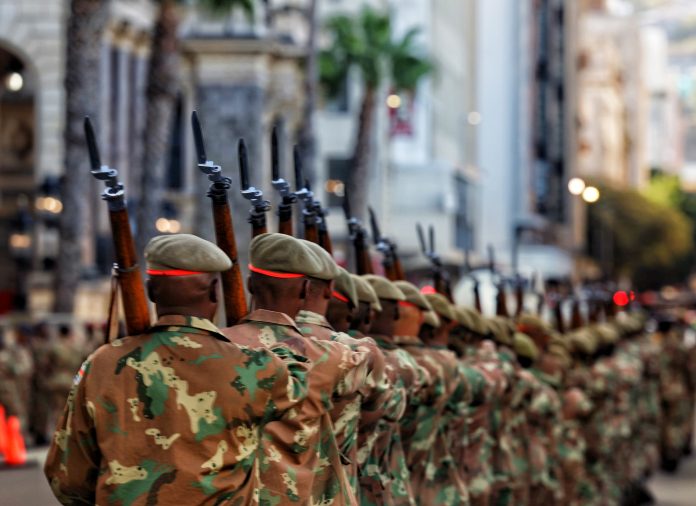
The Cape Crime Crisis Coalition (C4) have voiced its opposition to plans to deploy the South African National Defence Force (SANDF) to fight gang violence on the Cape Flats. 


The decision was announced by President Cyril Ramaphosa during the State of the Nation Address (SONA) last Thursday, where he confirmed that soldiers would be sent to gang-affected areas in the Western Cape and Gauteng.  


However, C4, in a statement, rejected the decision, noting that the decision would not solve the problem.  


“When a government calls in the army to perform civilian policing, it confesses that its police leadership is broken, its political oversight has failed, and its reserves of competent governance are exhausted,” read C4’s 13 February statement. 


It said the decision showed a lack of strategic initiative. 


Further to this, the organisation noted that an evaluation of the army’s 2019 deployment to the Cape Flats, including areas like Mitchell’s Plain and Nyanga, showed that their presence had little impact. 


“In a 2020 evaluation of Operation Prosper examining the role and impact of the SANDF, including its impact on the murder rate the findings show: ‘That there does appear to have been a reduction in murders in the month when the deployment started but found no evidence that the army presence significantly reduced murders in the affected communities over the deployment period, as compared with similar ones where the army was absent.’” 


The organisation noted that when soldiers left, gangs continued “terrorising” communities, with the level of killings having risen over the last year and mass shootings having become commonplace.  


C4 spokesperson, Imraahn Mukkadam, said a different approach is needed.  


“There are much more viable alternatives that could have been employed, such as declaring a provincial state of disaster, which would have unleashed a lot of state resources and created a situation where the state and its various departments would have to coordinate much better to address the root causes of crime and gangsterism,” said Mukkadam.  


C4 maintains that gangs are highly organised criminal syndicates requiring experienced detectives and a capable police service.  


“Gangs and organised crime are embedded social institutions. They are not weakened by these deployments. They adapt. They consolidate. They watch the state cycle through the same performative gestures and understand that the underlying machinery remains broken,” read the C4 statement.  


It continues its call for a provincial State of Disaster to address the social and economic roots of gangsterism. 


“You cannot patrol your way out of organised crime. There is a third path one that does not treat the Cape Flats as a war zone, but as a disaster area deserving of the same urgency and resources we extend to communities struck by flood, fire, or pandemic.” 

Some Afrikaner ‘refugees’ in the US barely scraping by – Report

afrikaners


A new report has highlighted the challenges faced by some Afrikaner “refugees” in the US, as they allege they have been left to fend for themselves, with very poor housing set-ups, no access to government agencies to apply for social security and Medicaid and relying on handouts from neighbours.


The report by the Free Press (which is affiliated with CBS News) has found that some Afrikaners are “languishing in cockroach-infested apartments, walking miles to the grocery store for food, and eating just one meal a day to save money.”


President Donald Trump has prioritised giving refugee status to Afrikaners, and according to the Free Press, just more than 1,600 Afrikaners have arrived in the US, with more than 5,000 others to follow by September this year.


But for many, the dream of a new life in America has had a very bumpy start.


Free Press Investigative reporter Madeleine Rowley spoke to 10 Afrikaner refugees who said they’re spending weeks in motels and unsafe areas, and they’re being offered housing that is full of mould.


Each refugee is allotted $2,000, and all of that has been going to rent, which means they are left with nothing, while getting very little help from government agencies, which are supposed to help them apply to jobs, obtain temporary benefits such as SNAP and Medicaid.


Rowley says neighbours are having to step in because they can’t even get a hold of their resettlement agencies.


She says there is a network of Afrikaners through social media groups and WhatsApp sharing their experiences, and many are realising they are stuck in hotels, they only have a certain amount of food, no transportation, and they don’t have the right clothing to withstand the cold American winter.


Read the full report by Free Press HERE.


The President Wants To End Child Stunting – Here’s How

stunting
Photo: Rene Terp/Pexels


The DG Murray Trust (DGMT) has welcomed President Cyril Ramaphosa’s commitment to end child stunting by 2030, announced during his State of the Nation Address (SONA) on Thursday, 12 February.


The organisation says practical, evidence-based interventions, particularly during the first 1,000 days of a child’s life, could significantly accelerate progress in reducing stunting in South Africa.


DGMT highlighted several priority measures, including Multiple Micronutrient Supplementation for pregnant women, the introduction of a Maternal Support Grant, targeted nutrition support for high-risk mothers and babies, and stronger alcohol regulation.


The announcement comes just two months after Cabinet approved the National Strategy to Accelerate Action for Children (NSAAC), which outlines 10 national priorities aimed at improving the well-being of children and teenagers.


During his address, the President said government would focus on interventions in the first 1,000 days of life, from conception until a child’s second birthday, a period widely recognised as critical for growth and brain development.


Research shows the risk of stunting increases when babies are born with a low birth weight, defined as under 2.5 kilograms, and fail to catch up due to maternal malnutrition or alcohol exposure during pregnancy.


DGMT said it is encouraged by the President’s commitment to implement targeted interventions to ensure pregnant women and low-birth-weight children receive adequate protein and nutrients.


Funding for the government’s stunting eradication plan is expected to be allocated during the upcoming Medium Term Budget Policy Statement. The organisation has called for sufficient investment in programmes with proven impact and strong returns.


Among the proposals put forward are:


  • Multiple Micronutrient Supplementation (MMS) for pregnant women, a single tablet containing 15 essential vitamins and minerals, which has been shown to reduce low birth weight, preterm birth and early infant mortality. The intervention can be delivered through existing healthcare systems.
  • A Maternal Support Grant, beginning in the second trimester of pregnancy and transitioning into the Child Support Grant after birth. Evidence shows income support during pregnancy improves maternal nutrition, increases clinic attendance and lowers the risk of low birth weight.
  • Targeted nutrition support for pregnant women at risk of delivering low-birth-weight babies, alongside enhanced healthcare support through community health workers and regular clinic monitoring.


DGMT also raised concern about alcohol exposure during pregnancy, noting that South Africa has one of the highest rates of Foetal Alcohol Syndrome globally. Over the past decade, an estimated 800,000 babies have been born underweight or suffered developmental harm linked to alcohol exposure in the womb.


To address the problem, the organisation is urging government to introduce minimum unit pricing for alcohol and to follow through on calls for provinces to tighten liquor trading hours and limit the density of liquor outlets.


READ MORE: Rethink Your Drink applauds the President’s alcohol reform push

Incidents of vandalism and theft saw a decrease

taxi
Education MEC David Maynier


Incidents of vandalism and theft saw a decrease during the 20-25-26 summer school holidays. The Western Cape Education Department says 36 cases were reported at 32 schools, over that time. This is down from 47 incidents (at 32 schools) the previous year.  MEC David Maynier says the drop is linked to increased security at more than 440 schools and closer cooperation with South African Police Service.


Education MEC, David Maynier says “Nevertheless, this is still 36 incidents too many.”


Incidents of vandalism and theft saw a decrease


He says the department subsidized holiday security at 441 schools during the holidays to protect school properties. At the same time, officials worked closely with the South African Police Service and law enforcement to increase vigilance around schools.


“Stealing from a school is stealing from a child’s future,” stressed the MEC.


More effective target hardening and monitoring of school properties


MEC Maynier says items stolen or damaged include fencing, electrical cables, plumbing fixtures, kitchen equipment as well as food for learners. He says in one particularly alarming incident, over 100 windows at a school were deliberately damaged. He has labeled it, an act of senseless criminality.


Incidents of vandalism and theft in the spotlight


According to a statement by the Department, every single item that is damaged or stolen must be replaced. This will divert funding from the core task of educating learners so that they can get a job or study further when they leave school.


Report the incidents to the WCED’s Safe Schools hotline


MEC Maynier added that a watchful school community can thwart even the most dedicated of criminals and vandals. He has urged the public to keep a close eye on their neighbourhood schools. People should report any suspicious activity to SAPS or on the WCED’s Safe Schools hotline (0800 45 46 47) immediately.


“If you have any information about the incidents that occurred over the school holidays, please speak up. You may hold the key piece of information that will allow SAPS to arrest the perpetrators and recover our schools’ stolen properly!”

error: Content is protected !!