14 C
Cape Town
Sunday, July 5, 2026
Home Blog Page 105

Nominations open for the National Teaching Awards

teaching
Chantelle Carstens (Paarl School) was the 2025 National and Provincial Winner for Excellence in Special Needs Teaching


Western Cape Education MEC David Maynier has encouraged teachers, governing bodies and districts to submit their nominations for the 2026 National Teaching Awards, which are open until 15 May.


“Every day, our teachers go above and beyond to shape the future lives and careers of our learners. The National Teaching Awards give us the opportunity to honour those who demonstrate commitment, innovation and meaningful impact in our classrooms.”


Teachers can be nominated in the following categories:


• Excellence in Grade R Teaching
• Excellence in Primary School Teaching (Grades 1–7)
• Excellence in Primary School Leadership
• Excellence in Secondary School Teaching (Grades 8–12)
• Excellence in Secondary School Leadership
• Excellence in Inclusive Education Teaching
• Excellence in Inclusive Education Leadership
• Excellence in Teaching Mathematics (GET)
• Excellence in Teaching Mathematics (FET)
• Excellence in Teaching Natural Sciences
• Excellence in Teaching Physical Sciences
• Excellence in Teaching Life Skills (Grades 1–6)
• Excellence in Technology – Enhanced Teaching and Learning
• National Best Teacher Award
• Kader Asmal Lifetime Achievement Award


The qualifying criteria and the nomination guide are available on the WCED website.


The provincial awards ceremony will be held on 28 August 2026, and the winners will represent the Western Cape at the national ceremony in October 2026.


Read more about our 2025 provincial winners HERE.

How 2 men smashed through a marathon barrier long thought unbreakable

marathon

Mark Connick, Queensland University of Technology


On May 6 1954, Sir Roger Bannister did what was deemed impossible in athletics: he ran a mile in less than four minutes.


The milestone was celebrated worldwide, not just by athletics fans. It was considered at the time to be a similar achievement to scaling Mount Everest for the first time, which Sir Edmund Hilary and Tenzing Norgay had done the year before.


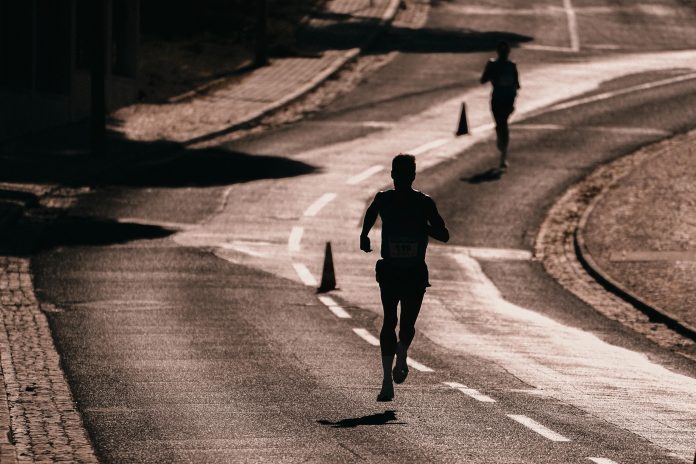
On Sunday, Kenya’s Sabastian Sawe and Ethiopia’s Yomif Kejelcha achieved a breakthrough comparable to Bannister’s some 72 years ago: running the 42 kilometres of a marathon in less than two hours.


Let’s break down this new benchmark and work out how these athletes were able to do it.


What happened in London?


Sawe smashed the men’s world record by an astonishing 65 seconds in winning the event in 1 hour, 59 minutes and 30 seconds.


Kejelcha – remarkably running in his first marathon – also crossed the line in under two hours (1:59:41).


The race was blisteringly fast. Even third-place getter Jacob Kiplimo of Uganda broke the previous world record – set in 2023 by Kenya’s Kelvin Kiptum in the United States – by seven seconds (finishing in 2:00:28).


Sawe ran quicker as the marathon went on, covering the second half of the race in 59:01. He pulled clear of Kejelcha after about 30 kilometres and made his solo break in the final two kilometres.


After the race, Sawe said:


I’ve made history today in London, and for the next generation I’ve shown them that nothing is impossible. Everything is possible, with a matter of time.

The training and nutrition


Sawe’s team said he trained by running up to 240 kilometres a week and fuelled himself before the race with bread and honey.


This reported training volume is likely an important factor in running a sub-two-hour marathon.


Running up to 240 kilometres a week is beyond what most runners can tolerate. But high training volume, especially when much of it is done at relatively low intensity, is associated with faster marathon performances.


Nutrition during the race was also well planned.


A two-hour marathon is run at such high intensity that carbohydrate intake becomes important to maintain performance. The body stores carbohydrate in the muscles and liver but those stores are limited.


According to his nutrition team, Sawe took a carbohydrate drink and a gel leading up to the start, then used carbohydrate drinks and gels throughout the race.


His reported intake averaged about 115 grams of carbohydrate per hour.


While this is not a recommendation for the recreational runner, at the intensity required to run a two-hour marathon, it helps to maintain energy supply and pace late in the race.


The physiology


Although Sawe and Kejelcha’s laboratory data are not public, the physiology required to run a fast marathon is due to three main attributes:


  • an exceptional capacity to take in and use oxygen during running
  • the ability to maintain a high fraction of that capacity for prolonged periods
  • an exceptional running economy, which means using less oxygen at a given speed.


Exceptional marathon performances also depend on durability, which is the ability to prevent deterioration of these qualities throughout the race.


What about the shoe?


Sawe and Kejelcha wore the lightest “supershoe” in history: Adidas’ Adios Pro Evo 3.


Adidas says it is “the fastest and lightest supershoe ever made”. It weighs less than 100 grams.


Supershoes can improve running economy by about 4% compared with conventional racing shoes.


The Adios Pro Evo 3 combines several features common in supershoes: very low weight, thick resilient foam and a stiff carbon-based structure in the midsole. The heel thickness is reported to be 39 millimetres, just under the 40mm limit permitted by World Athletics.


While most runners benefit from supershoes, the effect is variable and not the same for all runners.


Researchers have suggested this is due to two ways in which the footwear interacts with the runner.


Firstly, the foam and stiffening element can affect the “spring-like” bounce of the body as the foot hits and leaves the ground.


Secondly, they can change how the runner moves, including how the foot and ankle work, how long the foot stays on the ground, and the timing of energy return. As such, a shoe may be capable of storing and returning more energy, but the athlete still has to interact with it effectively.


The exact benefit of the Adios Pro Evo 3 over other supershoes has not been independently measured, but even small improvements are likely to be important over a marathon.


The conditions in London also likely contributed to these performances. While London is considered to be a relatively fast course (although not as fast as Berlin), the weather conditions were close to ideal: between 13-17°C during the race, which is at the upper end of the theoretical optimum for marathon running but within the range associated with fast endurance performance.


A perfect storm


As recently as 2017, a sub-two-hour marathon was considered unlikely to occur for generations.


The best explanation for the performances in London is the convergence of many factors, including exceptional physiology, years of high-volume training, efficient biomechanics helped by the use of advanced footwear, optimised fuelling and favourable weather conditions.

The Conversation

Mark Connick, Postdoctoral Research Fellow, School of Exercise & Nutrition Sciences, Queensland University of Technology


This article is republished from The Conversation under a Creative Commons license. Read the original article.

Dam levels rise after strong April rains, but water conservation still urged

cape town dam
Steenbras dam


Dam storage levels in the Western Cape rose sharply over the past week, but residents are still urged to use water wisely.


The provincial water storage level over the entire Western Cape increased from last week’s 42,18% to 44,27%, following early winter rainfall experienced in most parts of the province.


Rainfall over the period from the 17th to the 21st of April measured 91.2mm in Cape Town.


Cape Town’s dam levels rose from 44,51% to 47,16% this week. This time last year, the levels were hovering at around 60%.


Besides Upper Steenbras, the other five dams that make up the Cape Town system, including Theewaterskloof, rose by between one and two per cent. The Upper Steenbras went down by just below one per cent.


The Acting Provincial Head of the Department of Water and Sanitation, Simphiwe Mashicila, has welcomed the increase in dam levels, but warned that water should still be used cautiously.


“Any drop that we get is good news, but this does not call for celebration yet. The weather experts predict more rain showers next week, so we are optimistic that the situation can only get better as we approach winter.”


Light rain is forecast over the Mother City on Saturday, 2 May.


While Capetonians can breathe a sigh of relief, the Department is still very concerned about the water situation in Knysna.


Currently, Knysna’s major dam, Akkerkloof, is at 23%, but the four main reservoirs are at around 90% on average. Knysna’s water crisis is primarily driven by severely ageing, neglected infrastructure, with broken pumps and high water losses through leaks.


Two more drug mules arrested at OR Tambo airport

drug mule
One of the suspect drug mules recently arrested at O.R. Tambo International Airport. IMAGE: Supplied


The National SAPS confirmed that a total of four suspected drug traffickers have been arrested at O.R. Tambo International Airport in less than a week, after two more alleged drug mules were apprehended. 


The latest arrests include a 33-year-old South African woman reportedly en route to Hong Kong, with drugs suspected to be cocaine and tik hidden in her luggage.  


“Further investigation led to the discovery of drugs worth more than R500 000, suspected to be cocaine and crystal methamphetamine, concealed inside her luggage,” said Lt Col Amanda van Wyk, noting that the suspect was arrested on 25 April. 


Van Wyk noted that a 66-year-old Somali national, who was in possession of a Netherlands passport, was also arrested after being found with the drug khat.  


She said officers stationed at the airport received information about “suspected drug traffickers allegedly planning to travel to Frankfurt and London via Doha”. 


A search of the suspect’s luggage allegedly led to the discovery. 


“A search of the suspect’s luggage led to the discovery of 55 kilograms of khat, with an estimated street value of more than R100 000.” 


Police also found abandoned luggage on the same day containing approximately 45 kilograms of khat, valued at more than R90,000. 


Authorities said the latest arrests bring “the total number of drug traffickers arrested at this international gateway to four over the past three days”. 


Over the weekend, police carried out arrests following the discovery of more than R8 million worth of cocaine and 60 kilograms of khat linked to travellers at the airport.  


READ MORE: Two big drug busts at OR Tambo Airport this weekend – Smile 90.4FM


All suspects are due to appear at the Kempton Park Magistrate’s Court this week on charges related to drug trafficking, as the SAPS continue investigations. 

Fuel levy relief extended for May, with diesel levy reduced to zero

fuel


South Africa’s temporary fuel levy relief has been extended for another month, as government moves to shield consumers from persistently high fuel prices.


In a joint statement on Tuesday, National Treasury and the Department of Mineral and Petroleum Resources confirmed that the R3 per litre reduction in the general fuel levy will remain in place until 2 June 2026.


The relief, introduced on 1 April, was aimed at easing pressure on households after global oil prices surged due to the ongoing Middle East conflict. Since then, continued volatility has kept domestic fuel prices elevated.


For May, the relief on petrol will stay at R3 per litre, maintaining the general fuel levy at R1.10 per litre.


Diesel users will benefit from additional support, with the levy effectively reduced to zero after a further 93 cents per litre cut, bringing total relief to R3.93 per litre from 6 May to 2 June.


A phased withdrawal is planned for June. From 3 June to 30 June, relief will be reduced to R1.50 per litre for petrol and R1.96 per litre for diesel.


The levy is set to return to its full rates of R4.10 per litre for petrol and R3.93 per litre for diesel from 1 July 2026.


Government estimates the cost of the relief between April and June at R17.2 billion in foregone revenue, but maintains the measure is revenue-neutral, funded through higher-than-expected tax collections and underspending elsewhere.


While supporting the extension, the DA said it would oppose any move to fund the relief through higher taxes or increased debt. Instead, he called on government to tap into surplus funds held by underperforming state entities.


According to the DA, institutions such as the Compensation Fund routinely retain billions in annual surpluses despite poor audit outcomes, with approval from Treasury. The party argues that reclaiming these funds would provide a fiscally responsible way to sustain relief.

error: Content is protected !!