


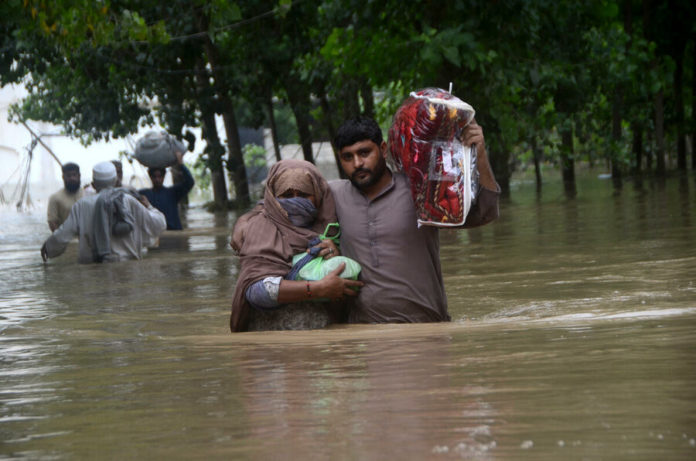
WHO chief Tedros Adhanom Ghebreyesus said the UN agency has classified the situation as a grade 3 emergency – the highest level of its internal grading system – which means all three levels of the organization are involved in the response: the country and regional offices, as well as its headquarters in Geneva.
“Floods in Pakistan, drought and famine in the Greater Horn of Africa, and more frequent and intense cyclones in the Pacific and Caribbean all point to the urgent need for action against the existential threat of climate change,” he said, speaking during his regular briefing from WHO headquarters.
WHO is responding as districts in #Pakistan🇵🇰 continue to be affected by unprecedented levels of flooding.
The impact of the heavy monsoon ⛈️ rains is drastic, affecting 3⃣3⃣ million people in 116 districts across the country.
📌 https://t.co/iUkHk3m2Ig pic.twitter.com/yQ9uwJIoGR
— World Health Organization (WHO) (@WHO) August 31, 2022
More than 33 million people in Pakistan, and three-quarters of all districts, have been affected by the flooding, which was brought on by monsoon rains.
At least 1,000 people have been killed and 1,500 injured, WHO said, citing national health authorities. More than 161,000 others are now in camps.
Nearly 900 health facilities across the country have been damaged, of which 180 are completely damaged. Millions have been left without access to health care and medical treatment.
The Government has declared a state of emergency, and the UN has launched a $160 million appeal for the country. Tedros also released $10 million from a WHO emergency fund to support the response.
“WHO has initiated an immediate response to treat the injured, provide life-saving supplies to health facilities, support mobile health teams, and prevent the spread of infectious diseases,” said Dr. Ahmed Al-Mandhari, Regional Director for the Eastern Mediterranean.
The UN agency and partners have conducted a preliminary assessment which revealed that the current level of devastation is much more severe than in previous floods, including those that devastated the country in 2010.
Prior to the floods, WHO and partners had undertaken vaccinations against cholera in response to the pre-existing outbreak.
Pakistan is also one of the two remaining polio-endemic countries in the world, and teams in affected areas are expanding surveillance for both polio and other diseases. Furthermore, polio workers are now working closely with the authorities to support relief efforts, particularly in the worst-hit areas.