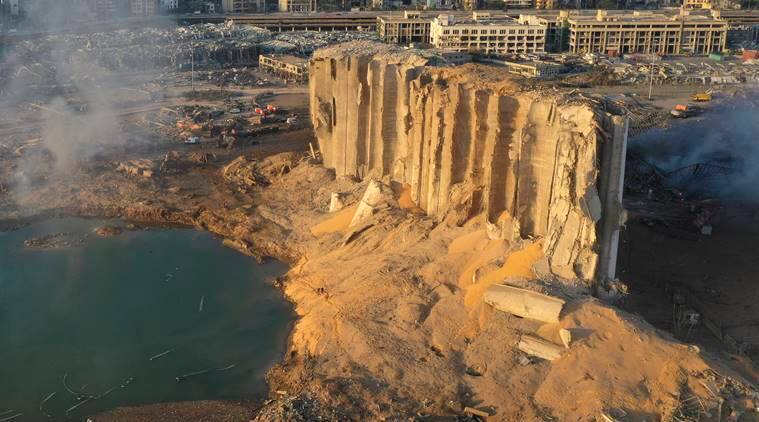


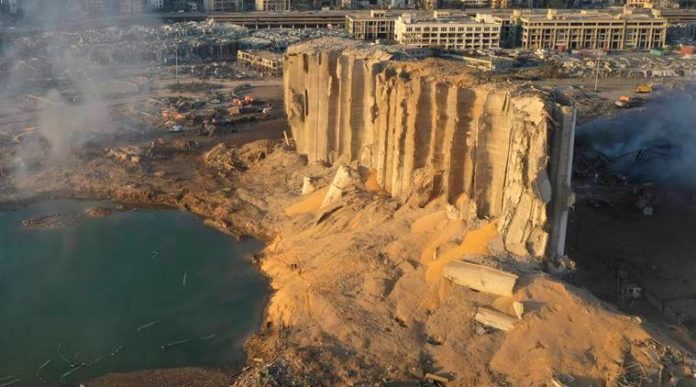
The northern section of the damaged silos caught by the Beirut Blasts collapsed after warnings that it was leaning too far to stay up. A cloud of dust rose over the Beirut port in Lebanon, where two years ago, a deadly blast left over 200 people dead, with at least 7,000 people injured and over 300,000 people homeless. The eight collapsed silos were more heavily damaged in the explosions, being further damaged by a fire that had been burning since July. A French civil engineer, Emmanuel Durand, says the remaining southern section is not at imminent risk of collapse.
Before this, parts of the 48-meter tall silos collapsed on July 31st and another section fell on August 4th – the second anniversary of the blast. The 2020 blast occurred when tonnes of incorrectly stored ammonium nitrate fertiliser went up in a massive explosion. The silos absorbed much of the impact, ultimately shielding part of the port from the destruction.
What has happened since?
Since then, investigations were launched, but the process of holding government officials to account was blocked several times. More recently. a fire was burning in the silos since July, while the remaining grains fermented under the heat. As a result, Lebanon’s health ministry said that samples showed that the air contained high amounts of a common mould. Which is not dangerous unless inhaled in large quantities over an extended period.
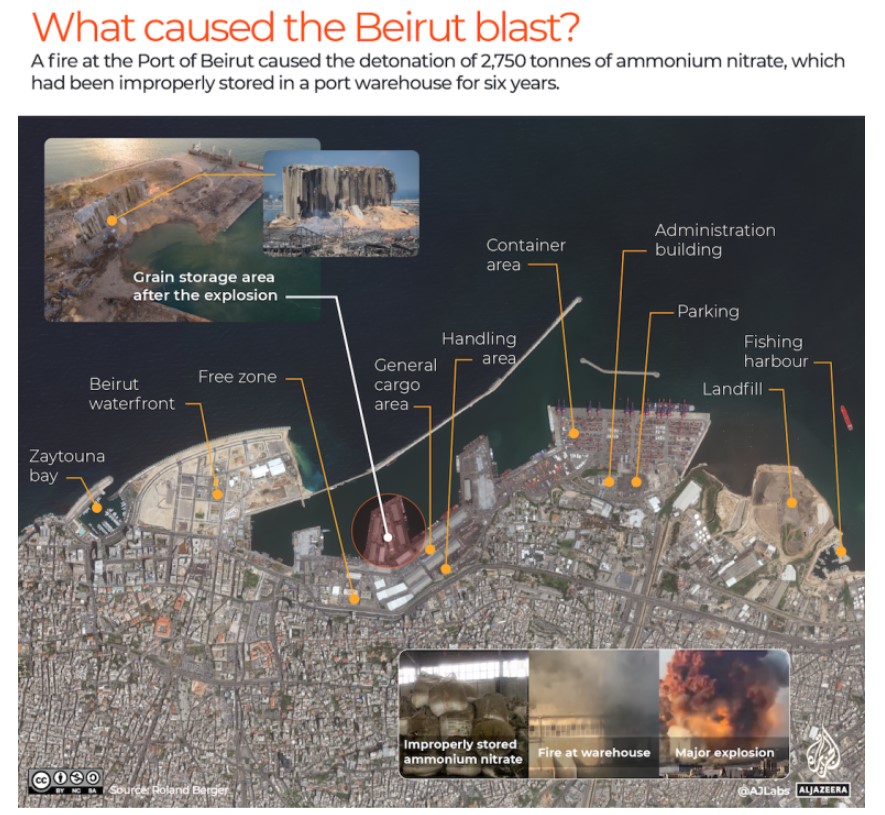
In April of this year, the government ordered the demolition of the 50-year-old grain silos. But yet again, this was halted. Mainly due to objections from relatives of blast victims, who wanted the silos to be preserved as a memorial. They further added that the area may contain useful evidence in the judicial probe of the blast.
Public Works Minister, Ali Hamieh, said that the government agreed to reserve 25,000 metres to construct new grain silos. This is larger than the current complex – which stands at 21,000 square metres. Hamieh said funding would come from international donors and the Lebanese government – who currently faces bankruptcy.
Those who survived the blast, or who live close to the Beirut port, say that watching the flames from their homes is like reliving the trauma from that day on August 4, 2020.
zahraa@smile904.fm